
INDUSTRIAL TANK HEATING
Electric Tank Heater
Custom Electric Tank Heaters for Storage Tanks, Process Vessels and Industrial Liquid Heating
Xiangyuan Machinery designs and manufactures electric tank heaters for storage tanks, process vessels and industrial liquid heating applications that require temperature holding, freeze protection, viscosity reduction or controlled process heating.
The heater can be installed from the side, bottom or top of the tank according to tank structure, liquid level, maintenance space and process requirements. It can be customized for water, oil, thermal oil, crude oil, heavy oil, chemical liquids, wastewater and other industrial fluids.
Product Overview
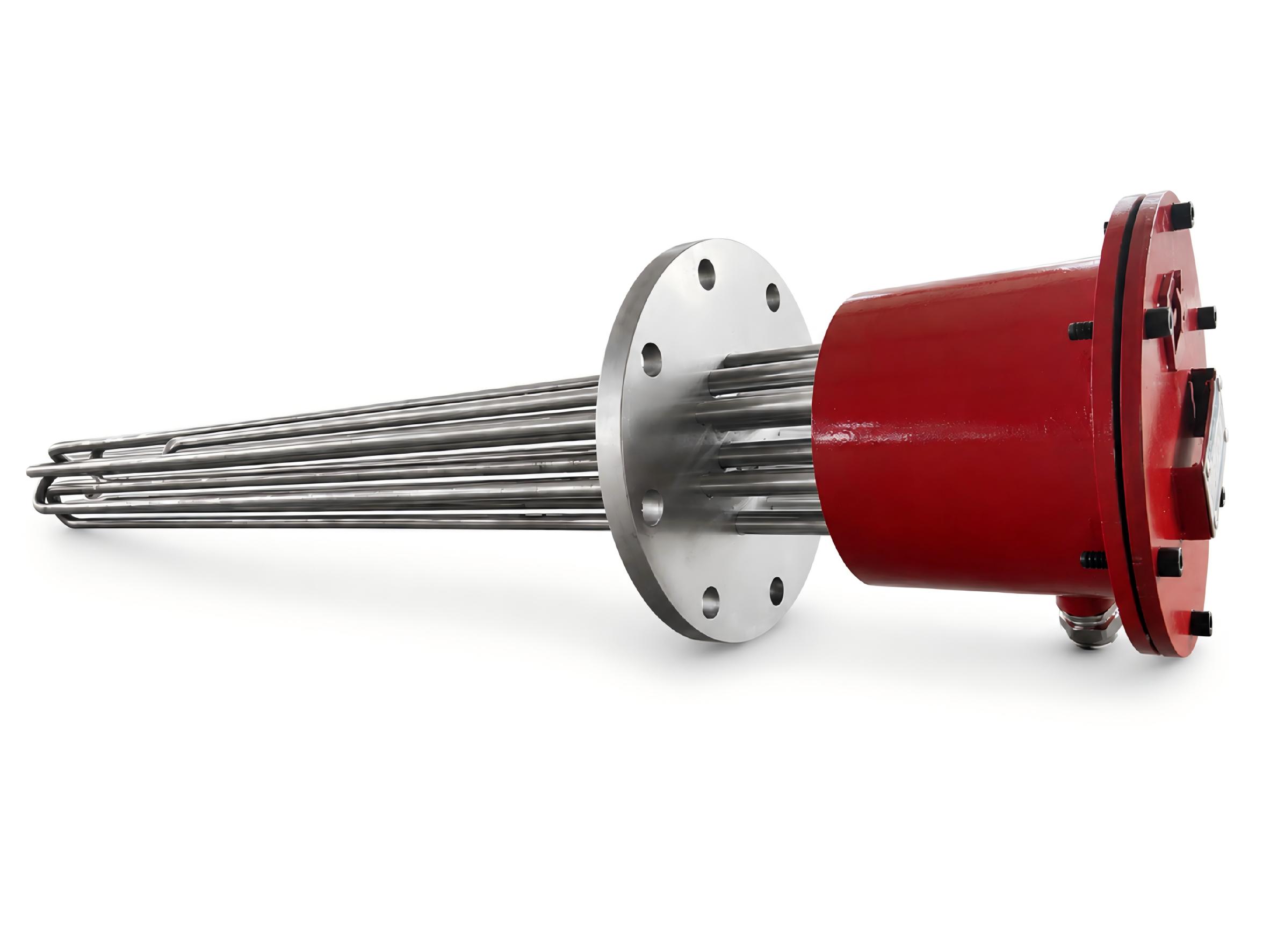
An electric tank heater is an industrial electric heating unit used to heat, maintain or control the temperature of liquid stored in tanks, vessels or containers. It can be designed as a flanged immersion heater, screw-plug heater, over-the-side heater, bottom-mounted heater, side-entry heater or customized tank heating system.
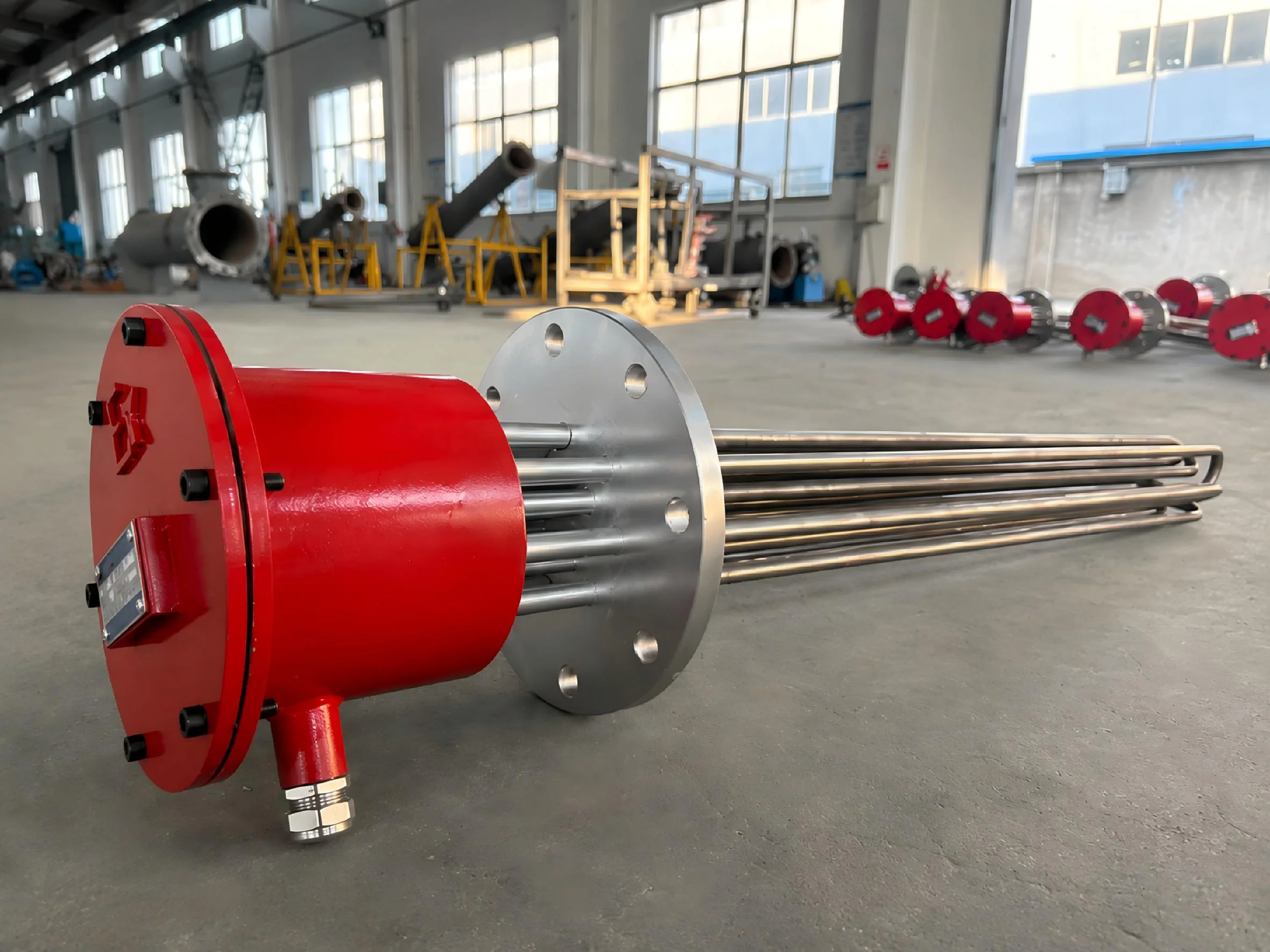
The heater usually consists of an electric heating element bundle, flange or mounting connection, terminal box, temperature sensor, optional protective sleeve, liquid level protection and control cabinet.
Compared with inline liquid heaters, tank heaters are more suitable for stored liquid heating, temperature holding, freeze protection, viscosity control and batch process heating where the liquid remains inside a tank or vessel.
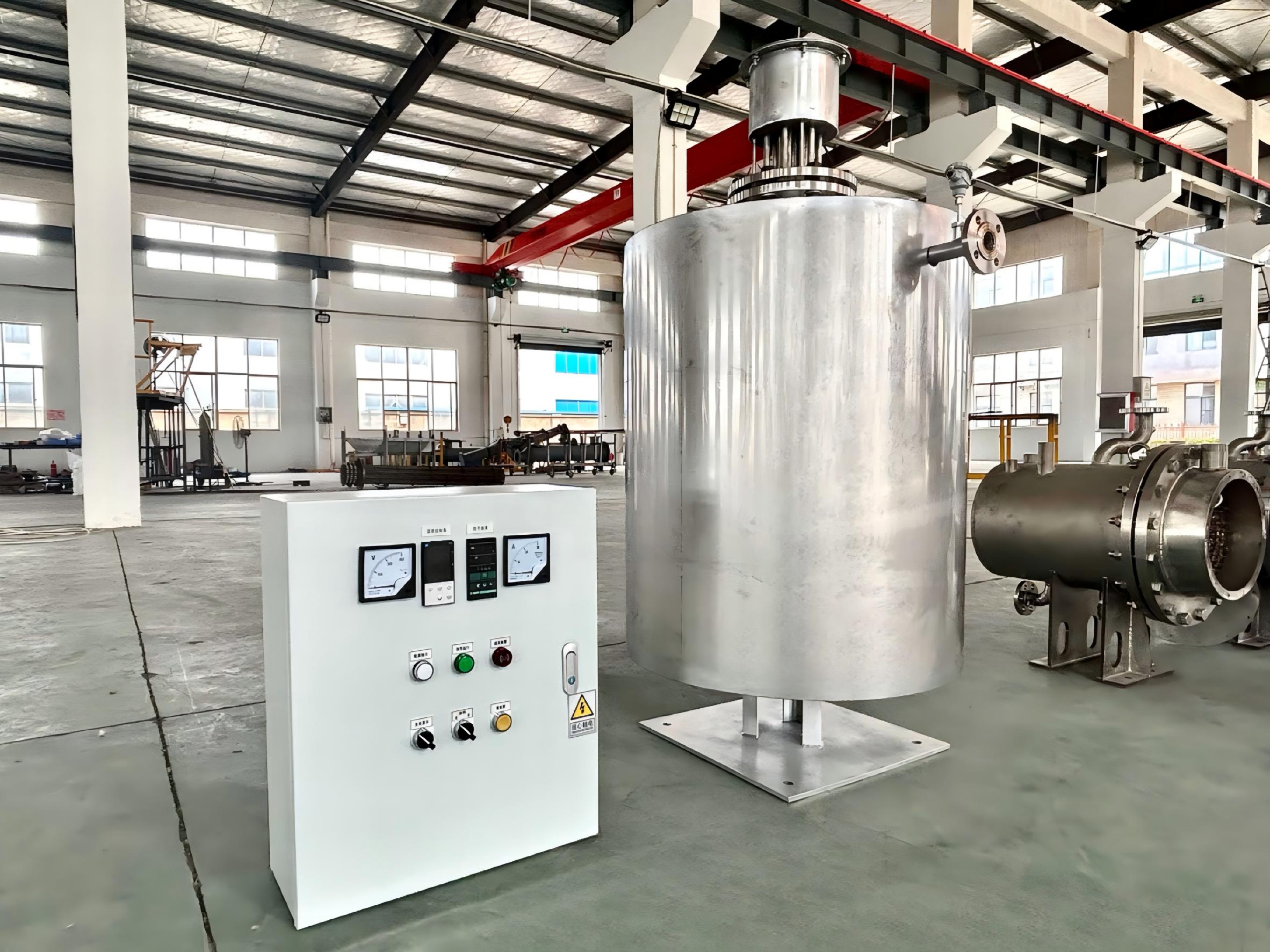
For large tanks, multiple heaters, temperature sensors and a control cabinet can be combined to achieve stable temperature control and staged heating operation.
Key Features
Key design features of the Electric Tank Heater can be customized according to tank size, liquid type, liquid level, required temperature, heating time, installation method, material compatibility, control method and safety requirements.
Suitable for tanks and vessels
Designed for storage tanks, process vessels, oil tanks, water tanks, chemical tanks and other industrial containers.
Multiple installation methods
Side-entry, bottom-entry, top-entry, flanged immersion, screw-plug and over-the-side designs can be selected according to tank structure.
Heating and temperature holding
Used for liquid heating, temperature maintenance, freeze protection, viscosity reduction and batch process heating.
Custom immersion length
Heating element length, cold section length and installation depth can be designed according to tank size and liquid level range.
Material selection by liquid type
SS304, SS316L, SS310S, Incoloy and selected corrosion-resistant materials can be used according to liquid properties and temperature.
Power density design
Heating element watt density can be selected according to liquid viscosity, heat sensitivity, flow condition and fouling tendency.
Optional control cabinet
The heater can be supplied with a thermostat, PID controller, SCR power regulation, staged control or complete control cabinet.
Low-level protection
Low-liquid-level interlock and dry-heating protection can be configured to help protect the heating elements during operation.
Explosion-proof option
Explosion-proof terminal box and control system can be provided for hazardous-area tank heating applications when required.
Typical Technical Parameters
The following parameters are for reference only. Final electric tank heater design can be customized according to process conditions and project requirements.
| Parameter | Customizable Range / Options |
|---|---|
| Product Name | Electric Tank Heater |
| Heating Medium | Water, oil, thermal oil, hydraulic oil, crude oil, heavy oil, chemical liquid, wastewater and other process fluids |
| Tank Type | Storage tank, process vessel, oil tank, water tank, chemical tank or customized industrial container |
| Heater Type | Flanged immersion heater, screw-plug heater, over-the-side heater, side-entry heater, bottom-mounted heater or customized tank heating system |
| Heating Power | Customized according to tank volume, liquid properties, initial temperature, target temperature and heating time requirement |
| Temperature Range | Customized according to liquid type, tank condition and process temperature requirement |
| Installation Method | Side-entry, bottom-entry, top-entry, over-the-side, flanged or threaded installation |
| Immersion Length | Customized according to tank size, liquid level range and maintenance space |
| Watt Density | Designed according to liquid viscosity, heat sensitivity, fouling tendency and allowable sheath temperature |
| Mounting Connection | Flange, threaded fitting, bracket or customized mounting structure |
| Sheath Material | SS304, SS316L, SS310S, Incoloy or selected corrosion-resistant material |
| Terminal Box | Standard terminal box, high-temperature terminal box or explosion-proof terminal box optional |
| Temperature Sensor | PT100, thermocouple, thermostat or customized temperature sensor |
| Control Method | Thermostat, PID control, SCR power control, staged control, PLC control or complete control cabinet |
| Protection Options | Over-temperature, low-liquid-level, dry-heating, leakage, grounding, short-circuit and emergency stop protection |
| Optional Design | Control cabinet, explosion-proof design, anti-corrosion material, protective sleeve, multi-heater group control and skid integration |
Structure, Materials, Control and Safety
Structure of the Heater
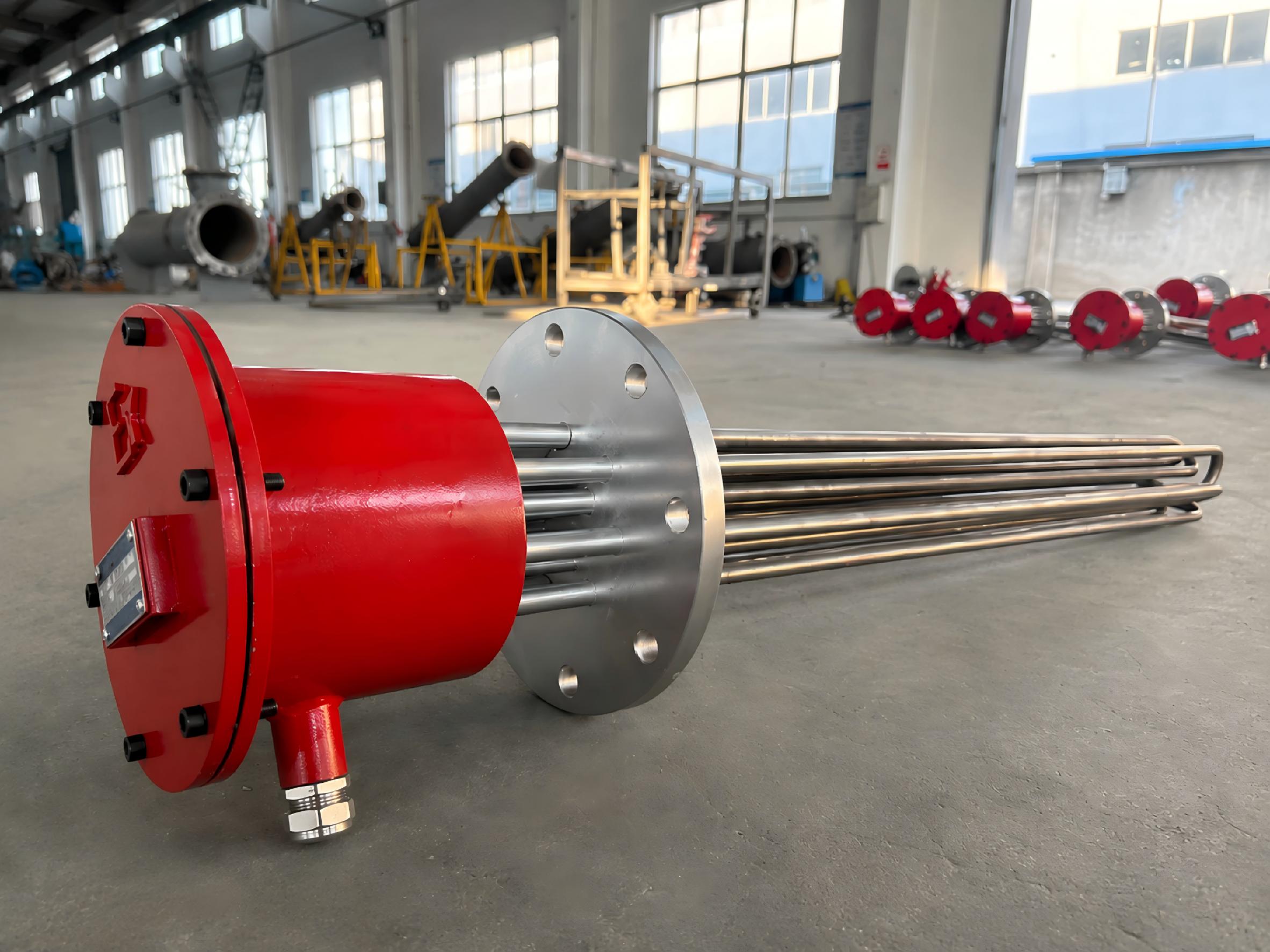
The electric tank heater is installed on the tank through a flange, threaded fitting, bracket or customized mounting structure. The heating element bundle is immersed in the liquid and transfers heat directly to the surrounding medium for heating or temperature holding.
Main structure can include:
- Flange or mounting connection
- Electric heating element bundle
- Cold section and heated section
- Terminal box or explosion-proof junction box
- Temperature sensor
- Support structure
- Protective sleeve if required
- Low-liquid-level protection device
- Control cabinet optional
Heating element length, power density, installation position and maintenance direction should be designed according to tank size, liquid level range, liquid properties and site maintenance requirements.
Materials and Customization
Material selection depends on liquid type, working temperature, corrosion level, viscosity, fouling tendency and tank environment.
For water and normal oil heating, SS304 or carbon steel structures can be used for common applications. For corrosive chemical liquids or humid tank environments, SS316L or selected corrosion-resistant materials can be considered. For higher-temperature oil, heavy oil or special process fluids, Incoloy or high-temperature alloy heating elements may be selected.
Heating element watt density should be reviewed carefully for viscous liquids, heat-sensitive liquids and liquids with scaling or fouling risk.
Customization options include
- Heating power
- Immersion length
- Flange size
- Element diameter
- Power density
- Cold section length
- Terminal box direction
- Installation position
- Low-level protection
- Explosion-proof design
- Anti-corrosion material
- Control cabinet and sensors

Control System
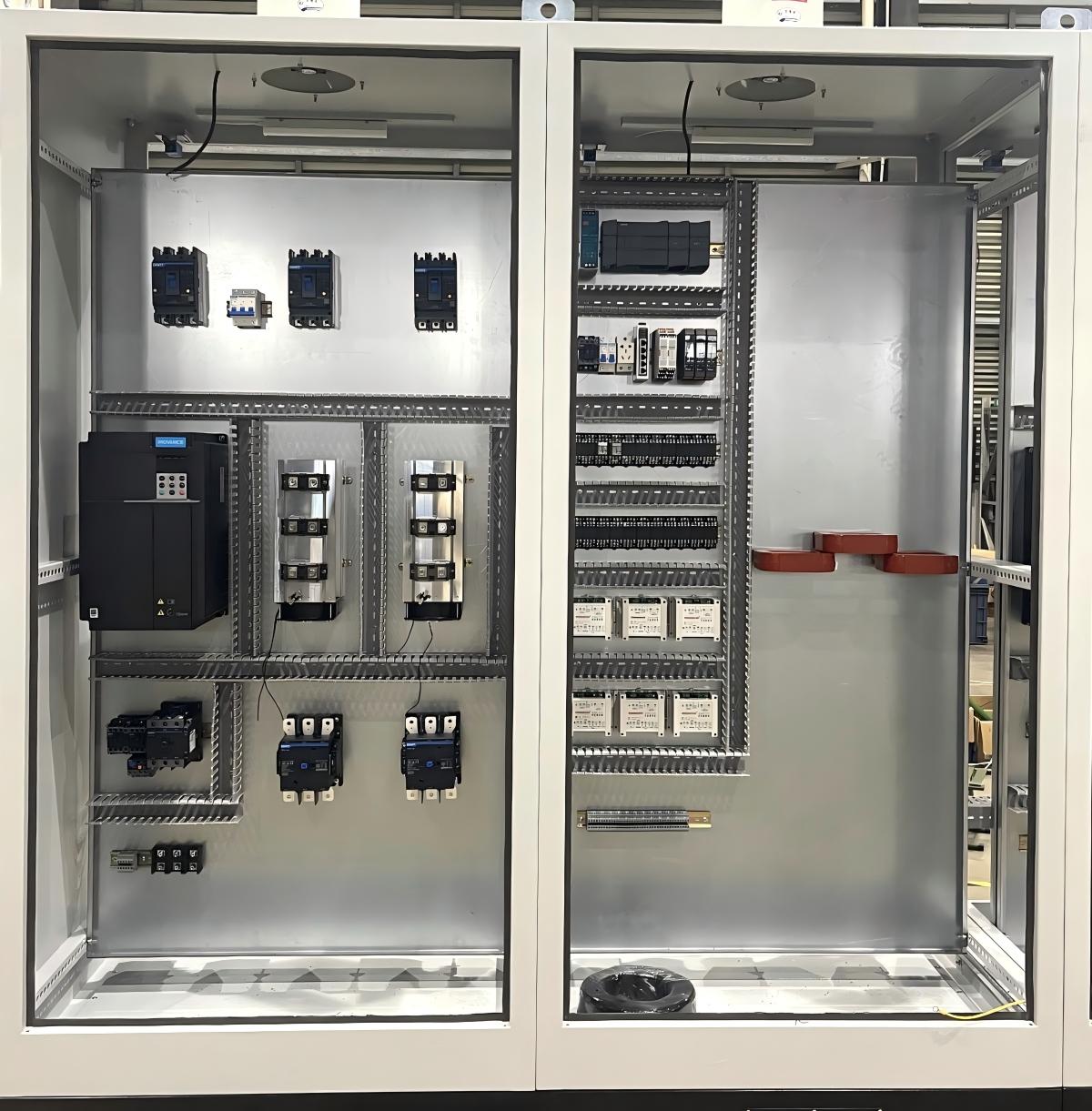
The electric tank heater can be controlled by a thermostat, temperature controller or complete control cabinet depending on tank size, heating power and process requirements.
Control options can include:
- Tank temperature control
- Heating power step control
- SCR / thyristor power regulation
- PID closed-loop control
- Liquid level interlock
- Over-temperature alarm and shutdown
- Manual and automatic operation
- Remote signal output
- Multi-heater group control
- PLC or DCS signal interface
Safety Protection
Tank heating applications require reliable protection against element overheating, low liquid level, dry heating, leakage and electrical failure.
Available safety protection options include:
- High-limit temperature protection
- Tank liquid temperature monitoring
- Low-liquid-level interlock
- Dry-heating protection
- Overload, short-circuit, leakage and grounding protection
- Emergency stop
- High-temperature terminal box design
- Explosion-proof terminal box or explosion-proof control system for hazardous-area applications
Typical Applications
Electric tank heaters are used where liquid stored in a tank, vessel or container needs to be heated, maintained at temperature, protected from freezing or kept at a suitable viscosity.
Crude Oil Storage Tank Heating
Used for crude oil storage tanks to maintain suitable oil temperature, reduce viscosity and support easier transfer, circulation or pumping.
Chemical tank heating
Custom materials can be selected for chemical tanks according to liquid composition, corrosion level and process temperature.
Water tank heating
Provides electric heating and temperature maintenance for industrial water tanks and process water storage systems.
Wastewater tank heating
Supports wastewater temperature maintenance, treatment process stability and freeze protection in industrial tanks.
Viscous liquid temperature holding
Helps maintain suitable temperature for viscous liquids to improve flowability and reduce pumping difficulty.
Process vessel heating
Used for batch process heating, temperature holding and controlled heating inside industrial process vessels.
Heavy Oil Tank Heating
Used for heavy oil storage and process tanks where controlled heating is required for viscosity reduction, temperature maintenance and transfer operations.
Industrial cleaning tank heating
Provides heated liquid for cleaning, washing, degreasing and surface treatment tanks.
Marine tank heating
Can be customized for shipboard oil, water or auxiliary fluid tanks according to marine installation requirements.
Freeze protection
Maintains liquid temperature in outdoor or low-temperature environments to reduce freezing and solidification risk.
Thermal oil tank heating
Used for heat transfer oil tanks where controlled preheating or temperature maintenance is required.
Hazardous-area tank heating
Explosion-proof terminal boxes and control systems can be configured for hazardous-area tank heating applications.
How to Select the Right Tank Heater
To design a suitable electric tank heater, please provide the following tank, liquid, installation and control information when available.
1. Tank volume
Provide tank capacity, liquid volume and whether the tank operates at full level, low level or variable liquid level.
2. Liquid type
Provide liquid name, composition, viscosity, corrosion level and whether the liquid is heat-sensitive, dirty or easy to foul.
3. Liquid level range
Provide normal liquid level and minimum liquid level. This is important for immersion length and dry-heating protection design.
4. Initial temperature
Provide the starting liquid temperature, especially during winter operation or cold startup conditions.
5. Required temperature
Provide target liquid temperature, temperature holding range and allowable temperature tolerance.
6. Heating time requirement
Confirm how quickly the liquid needs to reach the target temperature so heating power can be calculated correctly.
7. Tank material
Provide tank material and internal coating information so material compatibility and mounting design can be reviewed.
8. Installation position
Confirm side-entry, bottom-entry, top-entry, over-the-side or customized installation and provide available maintenance space.
9. Flange or connection size
Provide flange standard, flange rating, threaded size or required mounting dimensions if the tank opening already exists.
10. Hazardous-area requirement
Confirm whether the tank is located in a hazardous area and whether explosion-proof terminal box or control system is required.
11. Control method
Confirm whether thermostat control, PID control, SCR power regulation, staged control, PLC control or remote signal is required.
12. Low-level protection requirement
Confirm whether low-liquid-level interlock, dry-heating protection or independent level monitoring is required.
13. Heating element material
Select SS304, SS316L, SS310S, Incoloy or corrosion-resistant material according to liquid temperature and chemical compatibility.
14. Power density requirement
For viscous, heat-sensitive or scaling liquids, lower watt density may be needed to reduce local overheating and fouling risk.
15. Complete system requirement
Confirm whether you need only the heater element, a tank heater with control cabinet, or a complete tank heating package.
Frequently Asked Questions
Common questions about electric tank heaters for industrial liquid storage tanks and process vessels.
What is an electric tank heater?
An electric tank heater is used to heat, maintain or control the temperature of liquid stored in tanks, vessels or industrial containers.
What tank heating methods are available?
The heater can be designed as a flanged immersion heater, screw-plug heater, over-the-side heater, side-entry heater, bottom-mounted heater or customized tank heating system.
What liquids can be heated in tanks?
It can be customized for water, oil, thermal oil, crude oil, heavy oil, chemical liquids, wastewater and other industrial fluids according to material compatibility.
What information is needed for design?
Tank volume, liquid type, liquid level range, initial temperature, target temperature, heating time, installation position, flange size, voltage and safety requirements are normally needed.
Can low-liquid-level protection be included?
Yes. Low-level protection, dry-heating protection, over-temperature shutdown and control cabinet interlocks can be configured when required.
Can an electric tank heater be used for crude oil storage tanks?
Yes. Electric tank heaters can be customized for crude oil storage tanks according to tank volume, oil properties, initial and target temperature, heating time, liquid level and installation conditions. Heating power and watt density should be selected according to the required viscosity reduction and temperature maintenance conditions.
Related Heating Solutions
For removable flange-mounted heater assemblies, review our Flanged Immersion Heater . For continuous pipeline liquid heating, see Electric Inline Process Liquid Heater . For hazardous-area tank heating, Explosion-Proof Electric Heater configurations can be customized according to site requirements.
Why Choose Xiangyuan Machinery
Xiangyuan Machinery manufactures custom industrial electric heaters, heating elements and complete electric heating systems for demanding process applications. Each electric tank heater can be engineered according to tank size, liquid properties, liquid level, temperature requirement, heating time, installation layout, material compatibility, control logic and safety requirements.
Thermal & Material Engineering
Custom design according to tank size and liquid volume Material selection for water, oil, chemical liquid and wastewater heating
Flexible Mechanical Arrangement
Heating element length and power density matched to real liquid conditions
Control & Safety Integration
Integrated tank heater and control cabinet supply Low-liquid-level and dry-heating protection options
Complete Project Supply
Optional explosion-proof design for hazardous areas Factory inspection before delivery
Need a custom electric tank heater?
Tell us your tank size, liquid type, liquid volume, initial temperature, required temperature, heating time, installation position, voltage and control requirements. Xiangyuan Machinery can customize electric tank heaters for storage tanks, process vessels and industrial liquid heating applications.