

CUSTOM ELECTRIC HEATING ELEMENT
Tubular Heating Element
Custom straight and formed electric tubular heating elements for air, water, oil, tanks, ovens and industrial equipment.
The Tubular Heating Element is an electric resistance heater formed from a metal sheath, resistance wire and compacted magnesium-oxide insulation. It can be manufactured as a straight tube or bent into custom shapes for air heating, liquid immersion, contact heating and equipment integration.
Tube diameter, length, shape, voltage, power, watt density, sheath material, cold zones, fittings and terminals can be customized according to the medium and installation drawing. The element can be supplied individually or assembled into flanged bundles, duct heaters or complete heating equipment.
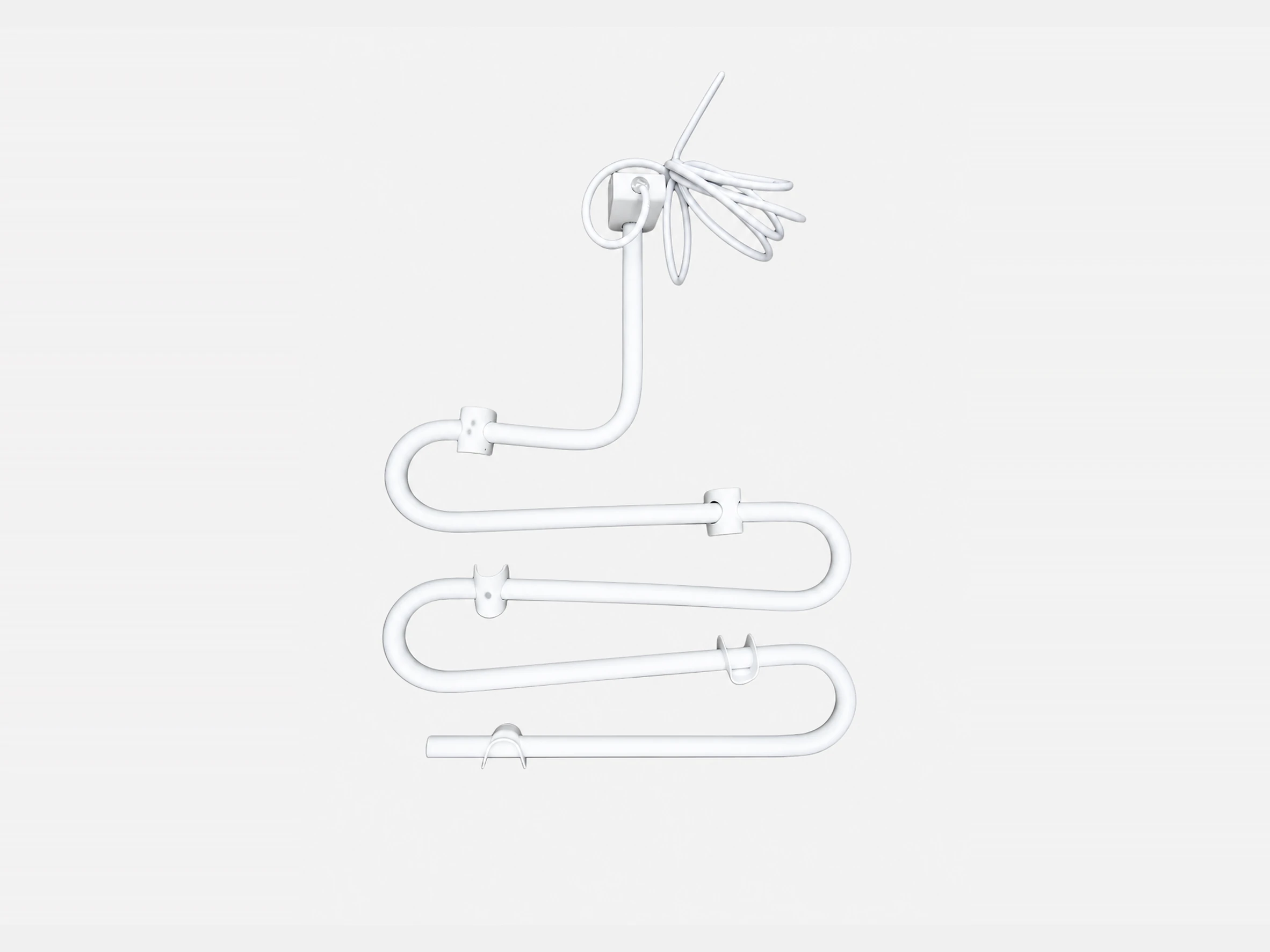
Product Overview
The Tubular Heating Element is a basic industrial electric heating component used across air, gas, water, oil and equipment-heating applications. Electrical resistance generates heat inside the tube, while compacted magnesium oxide transfers heat to the metal sheath and provides electrical insulation.
A typical element includes a metal sheath, resistance coil, magnesium-oxide insulation, cold pins, terminals or leads and sealed ends. It can remain straight or be formed into U, W, M, spiral or drawing-specific shapes when the bend radius and material permit.
This page covers non-finned tubular elements. For air heating where increased surface area is required, see Finned Tubular Heating Element. For flange-mounted liquid bundles, see Flanged Immersion Heater.
Xiangyuan Machinery can manufacture individual elements or complete assemblies according to the customer’s voltage, power, medium, dimensions and installation requirements.
Key Features
Straight or Formed Shapes
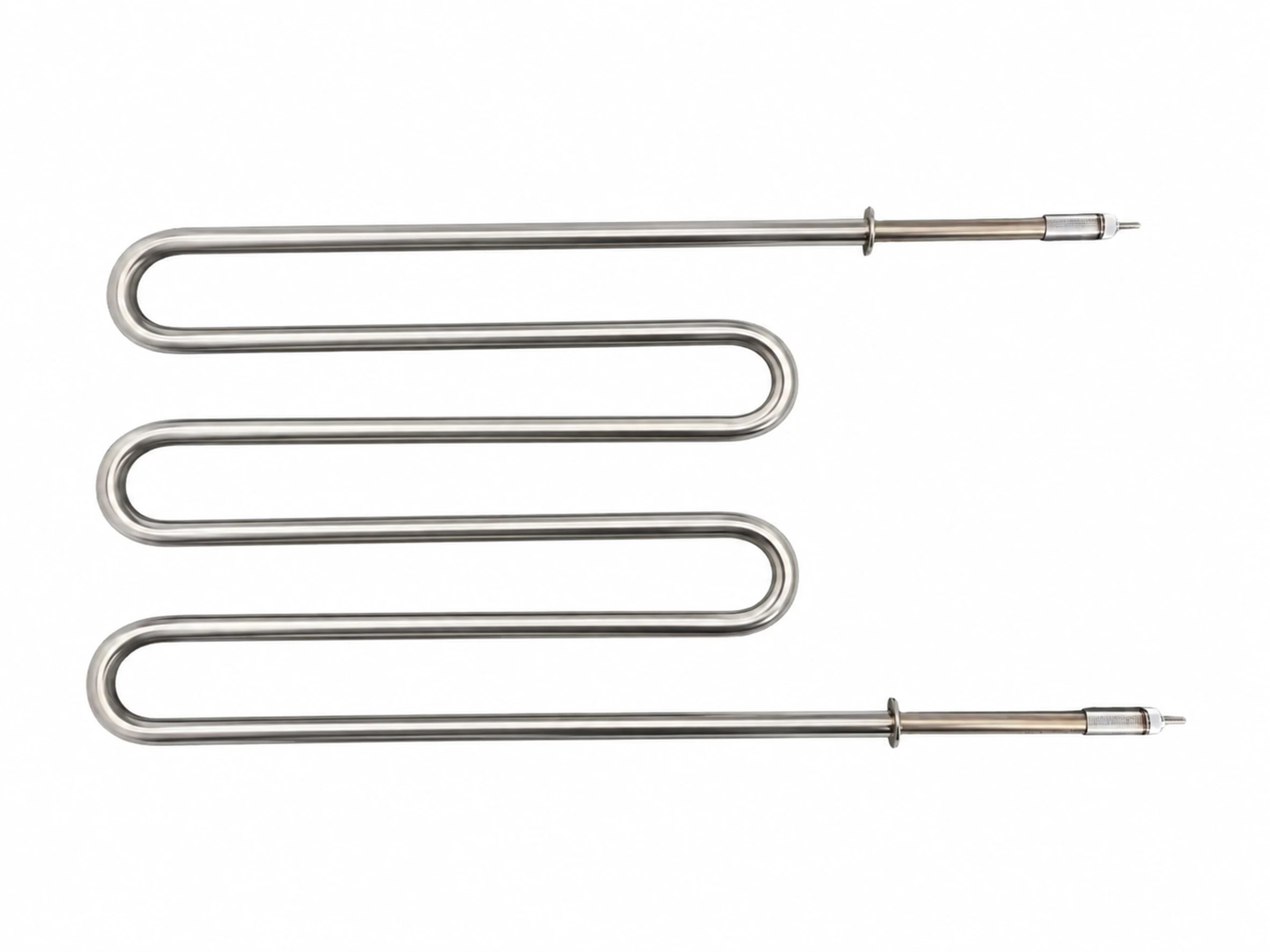
Elements can be supplied straight or formed into W-shaped, M-shaped, serpentine and drawing-specific configurations.
Multiple Heating Media
Designs are available for air, water, oil and compatible industrial media.
Custom Voltage and Power
Electrical rating is selected according to the supply voltage, required power, heated length, allowable watt density and connection method.
Sheath Material Options
SS304, SS316L, SS310S, Incoloy 800, Incoloy 840 and selected alloys are available.
Controlled Watt Density
Surface loading is selected from medium, flow, temperature and fouling risk.
Fittings and Mounting Options
Threaded fittings, flanges, brackets and custom fixing parts can be added.
Terminal Options
Threaded studs, terminal pins, lead wires and protected exits can be supplied.
Cold-Zone Customization
Unheated lengths can be arranged around fittings and terminals.
Assembly Capability
Elements can be built into bundles, tanks, ducts and complete heater systems.
Typical Technical Parameters
The following parameters are for reference only. Final design is confirmed according to the heating medium, operating temperature, required dimensions, watt density, mounting method, electrical supply and project requirements.
| Parameter | Customizable Range or Options |
|---|---|
| Product Name | Tubular Heating Element |
| Heating Medium | Air, water, oil, gas or compatible process medium |
| Tube Diameter | Customized according to element design, forming requirements and minimum bend radius |
| Element Length / Shape | Straight, W-shaped, M-shaped, serpentine or drawing-specific form |
| Heating Power | Customized according to supply voltage, heated length, allowable watt density and process duty |
| Voltage | Customized according to element dimensions, power and project electrical supply |
| Watt Density | Selected according to medium and operating conditions |
| Sheath Material | SS304, SS316L, SS310S, Incoloy 800, Incoloy 840 or selected alloy |
| Insulation | Compacted magnesium oxide |
| Cold Zone | Customized around terminals and mounting fittings |
| Mounting | Threaded fitting, flange, bracket, compression fitting or custom |
| Terminal / Lead | Stud, pin, flexible lead or custom connection |
| Surface Treatment | Passivation, polishing or other treatment where applicable |
| Sensor Option | Thermocouple or separate sensor where suitable |
| Optional Design | Straight, formed, threaded, flanged, bundled or equipment-integrated assembly |
Structure, Materials, Control and Safety
Structure of the Heater
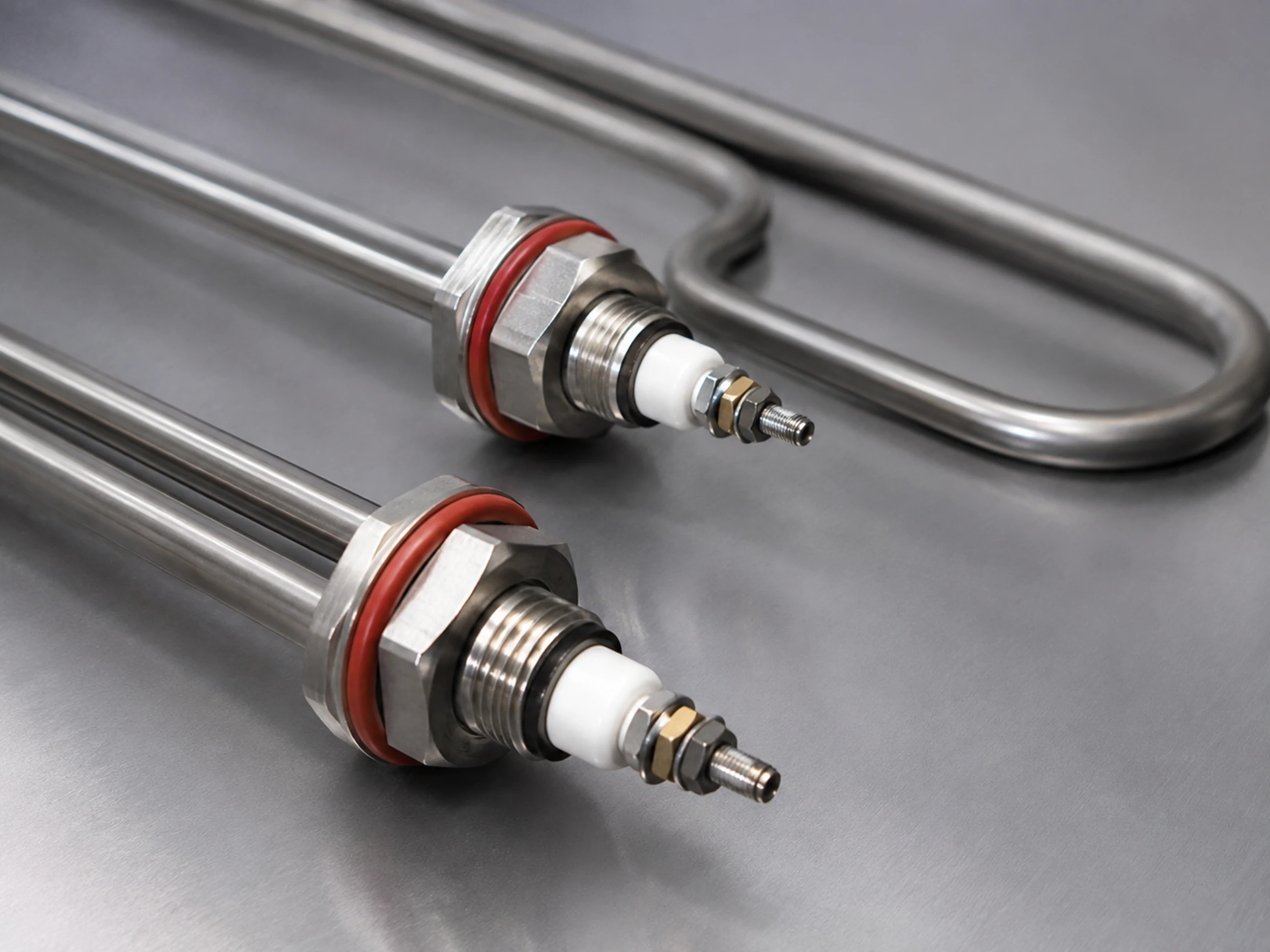
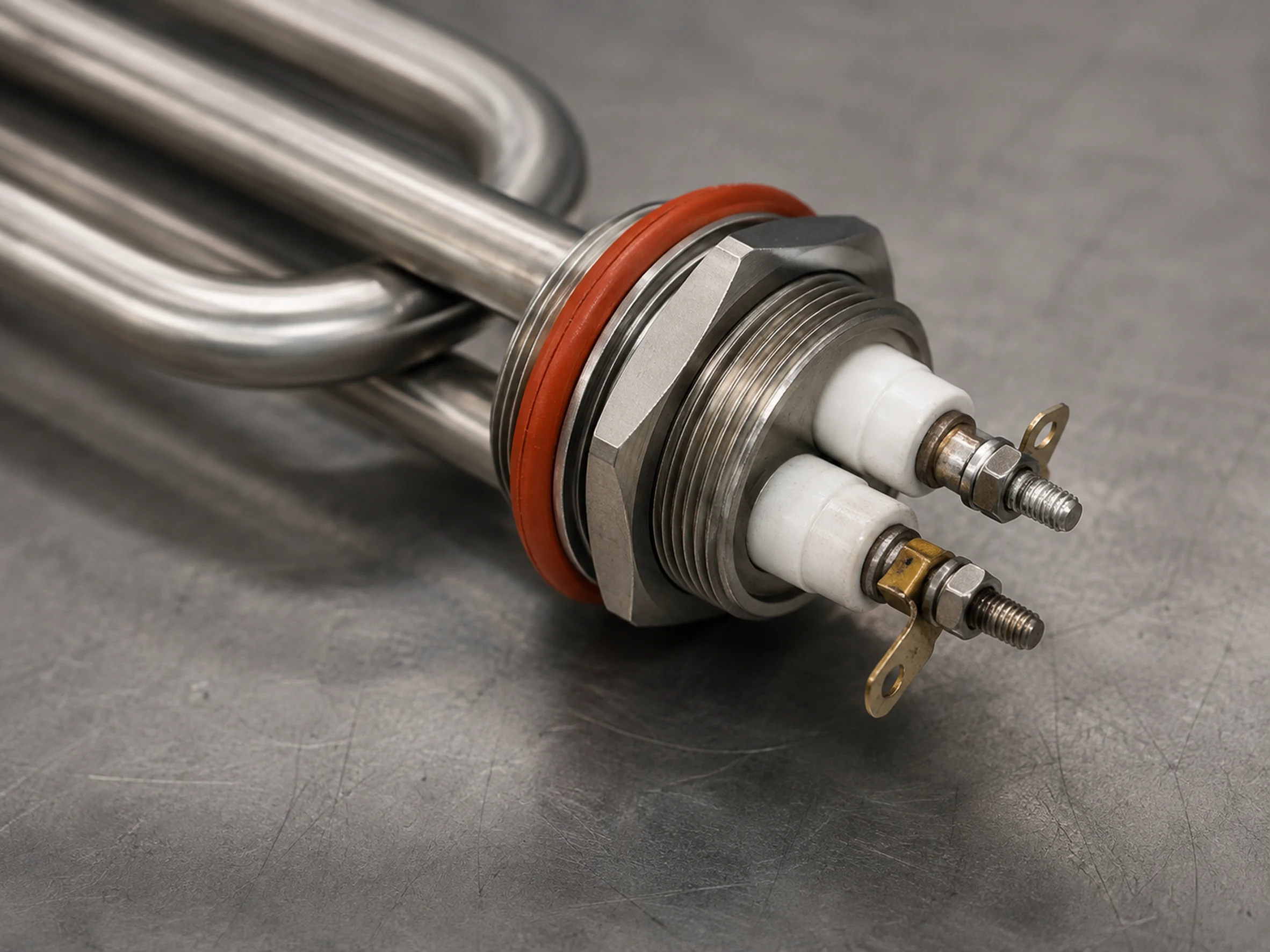
The element contains a resistance wire centered inside a metal tube and electrically insulated by compacted magnesium oxide. Cold pins connect the internal coil to the external terminal or lead while reducing heat near the connection area.
After filling and compaction, the tube can be annealed and bent into the required shape within the allowable bend radius. Threaded fittings, flanges, brackets or mounting plates can be welded or brazed according to the application.
The terminal end can use ceramic insulators, studs, pins, lead wires, protective sleeves or sealed enclosures according to temperature, moisture and installation conditions.
Materials and Customization
Sheath material is selected according to the heating medium, operating temperature, oxidation, corrosion and required service conditions.
The resistance wire, magnesium oxide, cold pins, terminals and seals are also selected according to the electrical and thermal requirements. Material compatibility must be evaluated for corrosive liquids and gases.
Diameter, length, shape, cold zones, fittings, flanges, terminal direction, surface finish and element spacing can be customized.
Control System
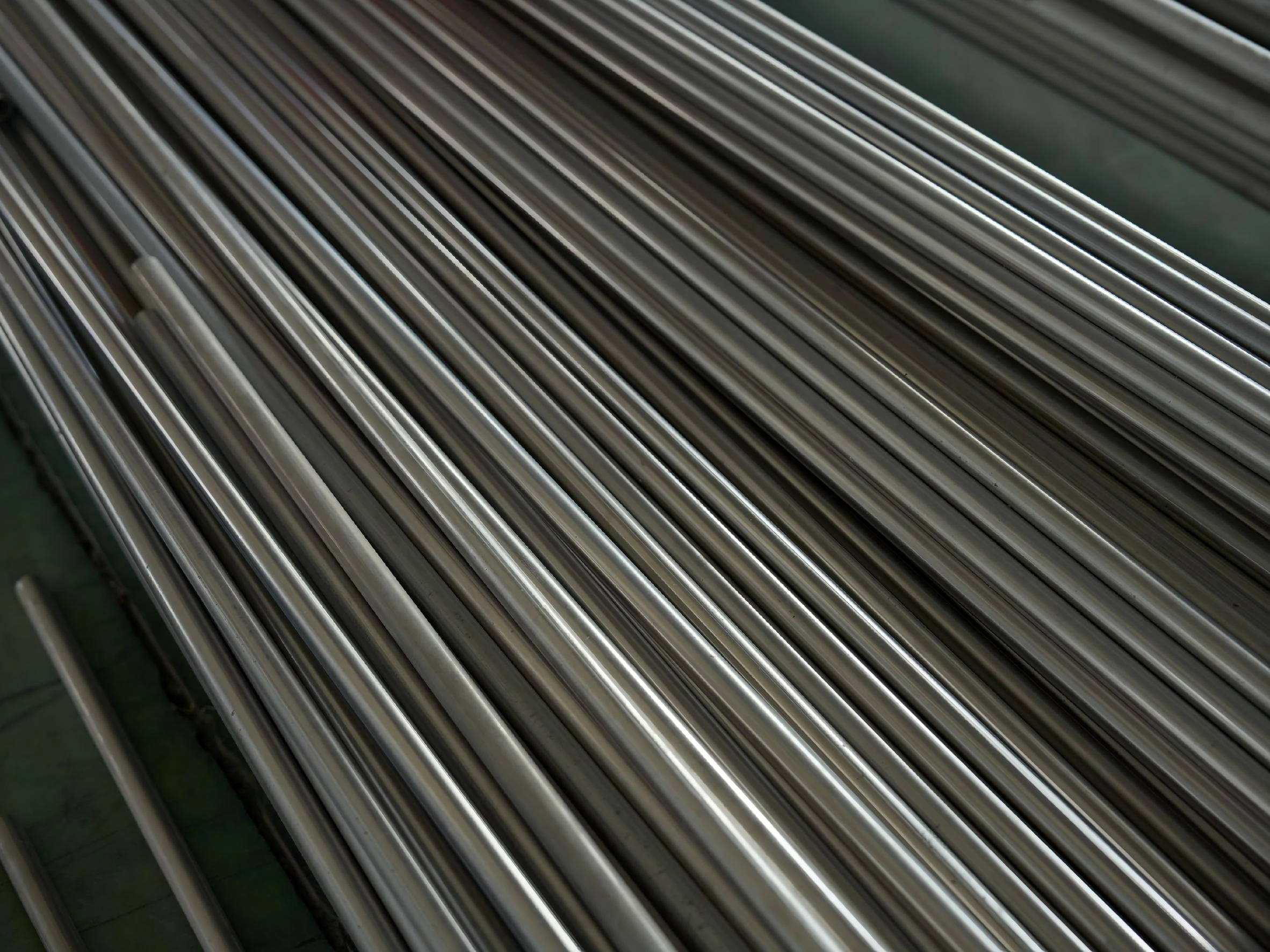
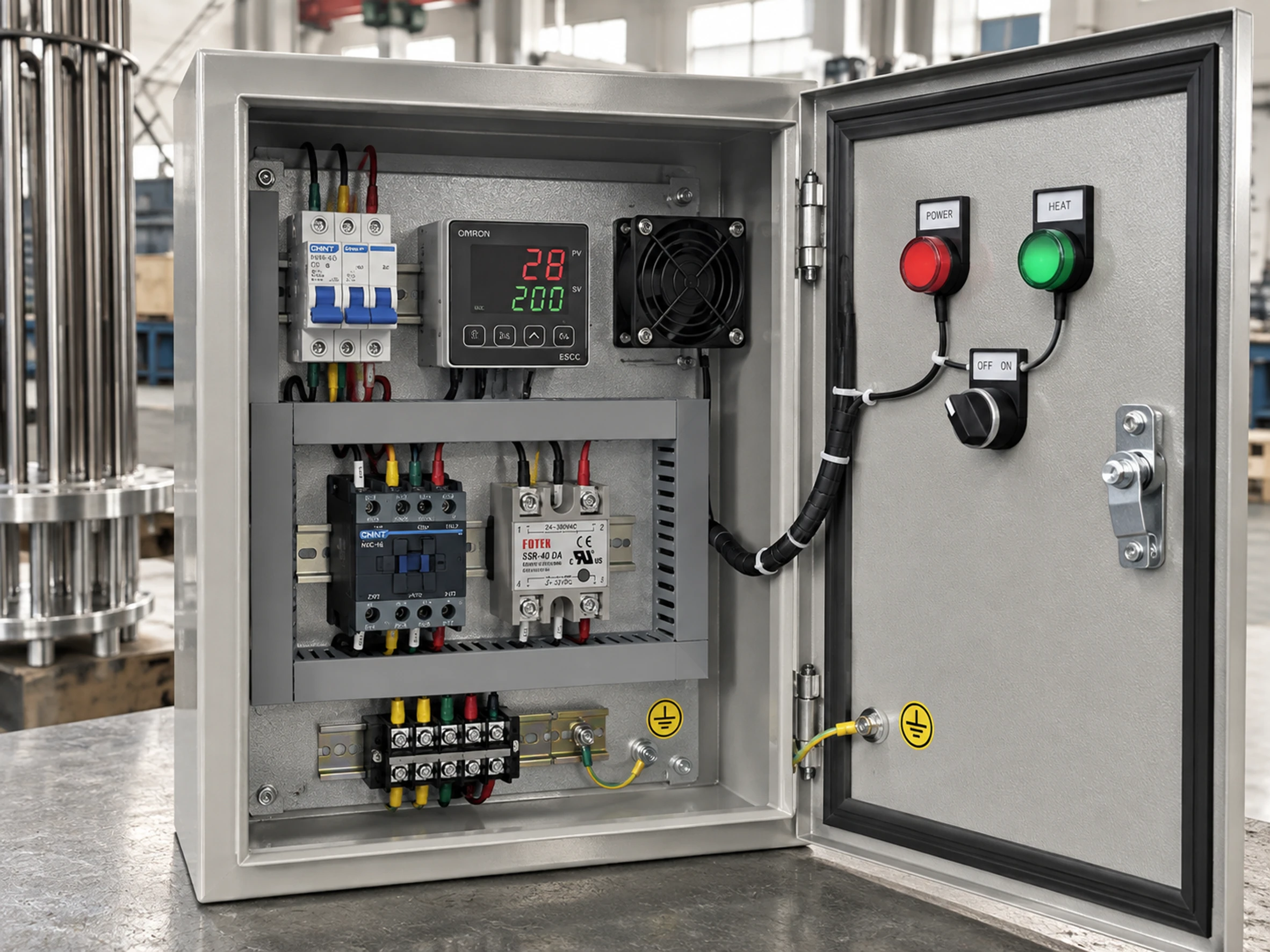
Tubular heating elements are normally operated by an external control system. PID temperature control with contactor, SSR or SCR switching can be used according to total power and required accuracy.
For liquid heating, the control scheme should include level or flow confirmation and over-temperature protection. For air heating, fan or airflow interlocks should be used where required.
Multiple elements can be connected in stages or zones and integrated with a control cabinet, PLC or equipment controller.
Safety Protection
The selected watt density must match the heating medium and heat-transfer condition. An element intended for flowing water should not be operated dry, and an air-heating element should not operate without the required airflow.
Cold zones should be positioned through mounting fittings and terminal areas. Terminals and leads must be protected from moisture, excessive temperature, mechanical damage and contamination.
Grounding, insulation-resistance testing, earth-leakage protection, over-temperature cutout and appropriate process interlocks should be included in the final equipment design.
Typical Applications
Water Heating
Direct immersion heating in tanks and process equipment.
Oil Heating
Heating compatible oils with selected watt density.
Air Heating
Heating air in equipment, ovens and small duct systems.
Gas Heating
Heating compatible process gases after design review.
Industrial Ovens
Providing radiant or convective heat in ovens and dryers.
Molds and Platens
Contact heating for metal blocks and production equipment.
Tank and Vessel Heating
Installing elements through threaded fittings or flanges.
Equipment-Integrated Heating
Custom-formed tubular elements installed in industrial machinery, production equipment and process assemblies.
Packaging Machinery
Heating sealing bars, plates and process components.
Chemical Equipment
Heating compatible liquids with suitable alloy selection.
Marine Equipment
Heating water, oil and machinery systems.
Custom Heater Assemblies
Building bundles and complete industrial electric heaters.
How to Select the Right Tubular Heating Element
1. Heating Medium
State air, water, oil, gas or other medium.
2. Operating Temperature
Provide normal and maximum temperature.
3. Voltage
Provide the operating voltage, phase, frequency and wiring connection method.
4. Power
Provide total power or required watt density.
5. Tube Diameter
State required diameter and dimensional limits.
6. Length and Shape
Provide straight length, bends and drawing.
7. Sheath Material
State corrosion and temperature requirements.
8. Flow or Immersion Condition
Describe flow velocity, liquid level or air movement.
9. Mounting Method
Specify fitting, flange, bracket or compression connection.
10. Cold Zones
Provide unheated lengths at terminals and fittings.
11. Terminal or Lead
Specify terminal type, lead length and direction.
12. Surface Treatment
State passivation, polishing or cleanliness needs.
13. Sensor Requirement
Confirm thermocouple or external sensor.
14. Control and Protection
Provide controller and interlock requirements.
15. Drawing and Quantity
Supply dimensions, tolerances, quantity and testing requirements.
Frequently Asked Questions
Common questions about Tubular Heating Element selection, customization and industrial use.
What is a Tubular Heating Element?
What media can it heat?
Can the element be bent into a custom shape?
What information is needed for customization?
Can complete heater assemblies be supplied?
Are you a manufacturer of custom tubular heating elements?
Can you manufacture replacement tubular heating elements from drawings or samples?
Related Heating Solutions
For standard two-leg designs with customized leg length, center distance and bend radius, see U-Shaped Tubular Heating Element . For air heating with increased heat-transfer area, see Finned Tubular Heating Element . For flange-mounted liquid-heating bundles, see Flanged Immersion Heater . For compact insertion heating in drilled holes, see Cartridge Heater .
Why Choose Xiangyuan Machinery
Xiangyuan Machinery manufactures tubular heating elements and complete heater assemblies from the customer’s medium, dimensions, electrical rating and installation drawing.
Thermal & Material Engineering
Straight, formed and drawing-specific element production. Multiple sheath materials and watt-density options.
Flexible Mechanical Arrangement
Threaded, flanged, bracket and custom mounting arrangements.
Control & Safety Integration
Terminal, lead, cold-zone and sensor customization. Integration into bundles, ducts, tanks and systems.
Complete Project Supply
Compatible control and protection solutions. Electrical, dimensional and insulation testing according to order scope.
Request a Custom Tubular Heating Element Quote
Provide heating medium, dimensions, shape, voltage, power, watt density, sheath, fitting, cold zones, terminals, control and quantity. Xiangyuan Machinery will prepare a confirmed specification and quotation.