

CUSTOM ELECTRIC HEATING ELEMENT
Cartridge Heater
Custom Cylindrical Electric Heating Elements for Molds, Dies and Industrial Machinery
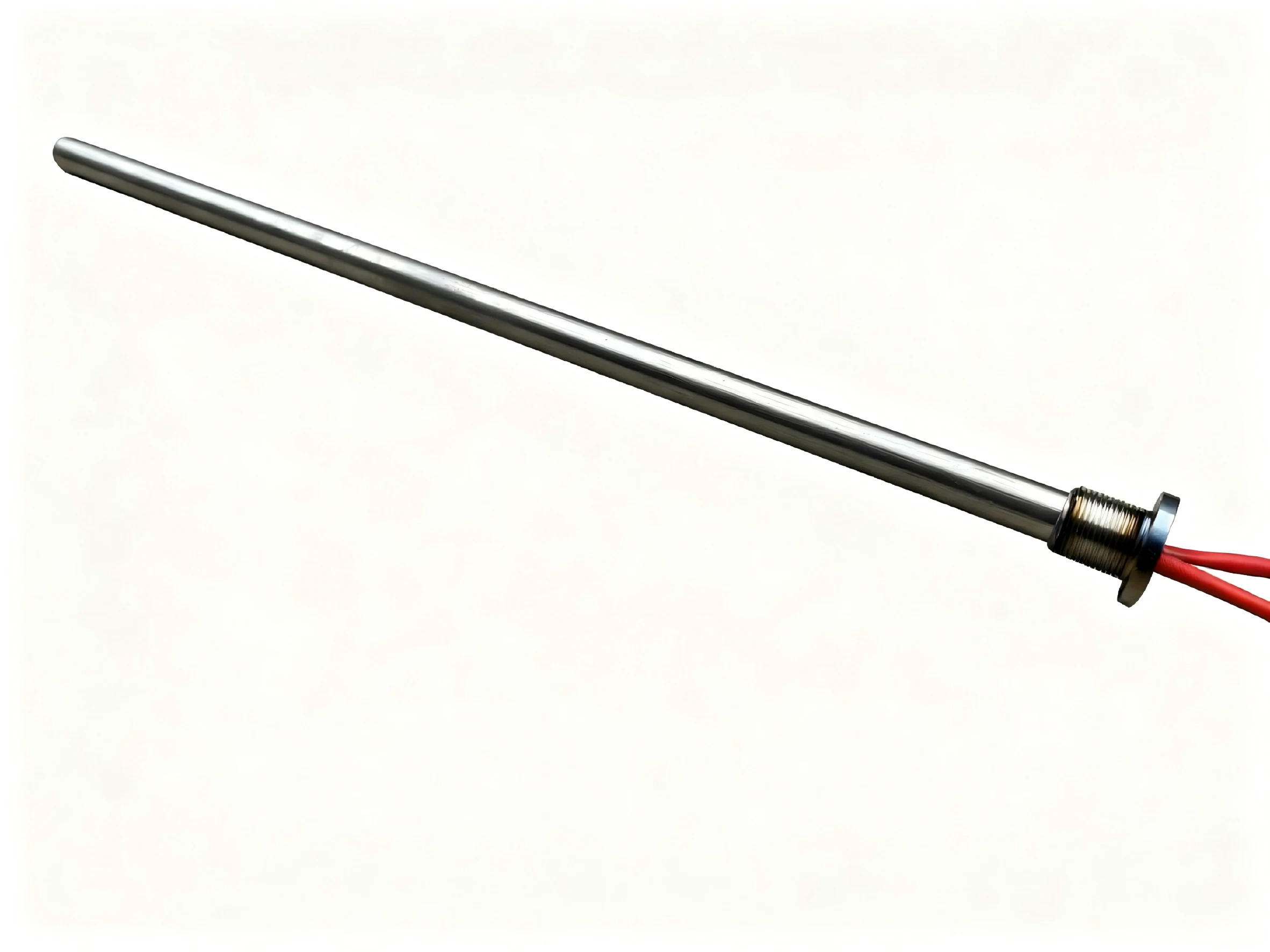
A Cartridge Heater is a compact cylindrical electric heating element designed to fit into a drilled hole and transfer heat to a metal block, mold, die, platen or machine component. Diameter, heated length, power, voltage, watt density, sheath material and lead termination are selected according to the equipment and installation fit.
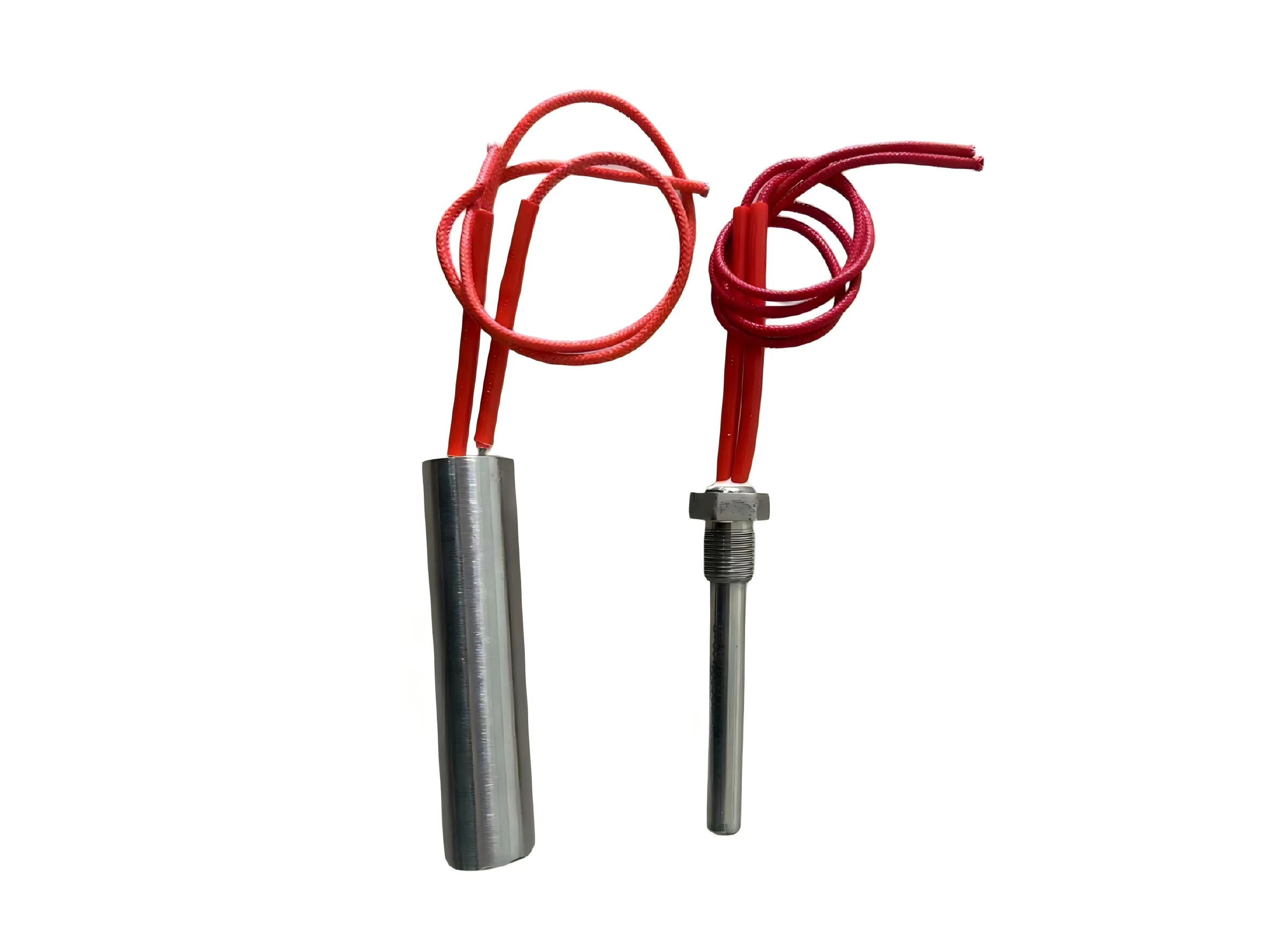
The heater can be supplied in standard or customized diameters and lengths, with flexible leads, terminal pins, right-angle exits, built-in thermocouple options and different cold zones. Proper bore tolerance, heat transfer and temperature control are important to operating stability and service life.
Product Overview
A cartridge heater uses an internal resistance wire electrically insulated from a cylindrical metal sheath by compacted magnesium oxide. This construction provides concentrated heat output in a small diameter for insertion into a close-fitting bore.
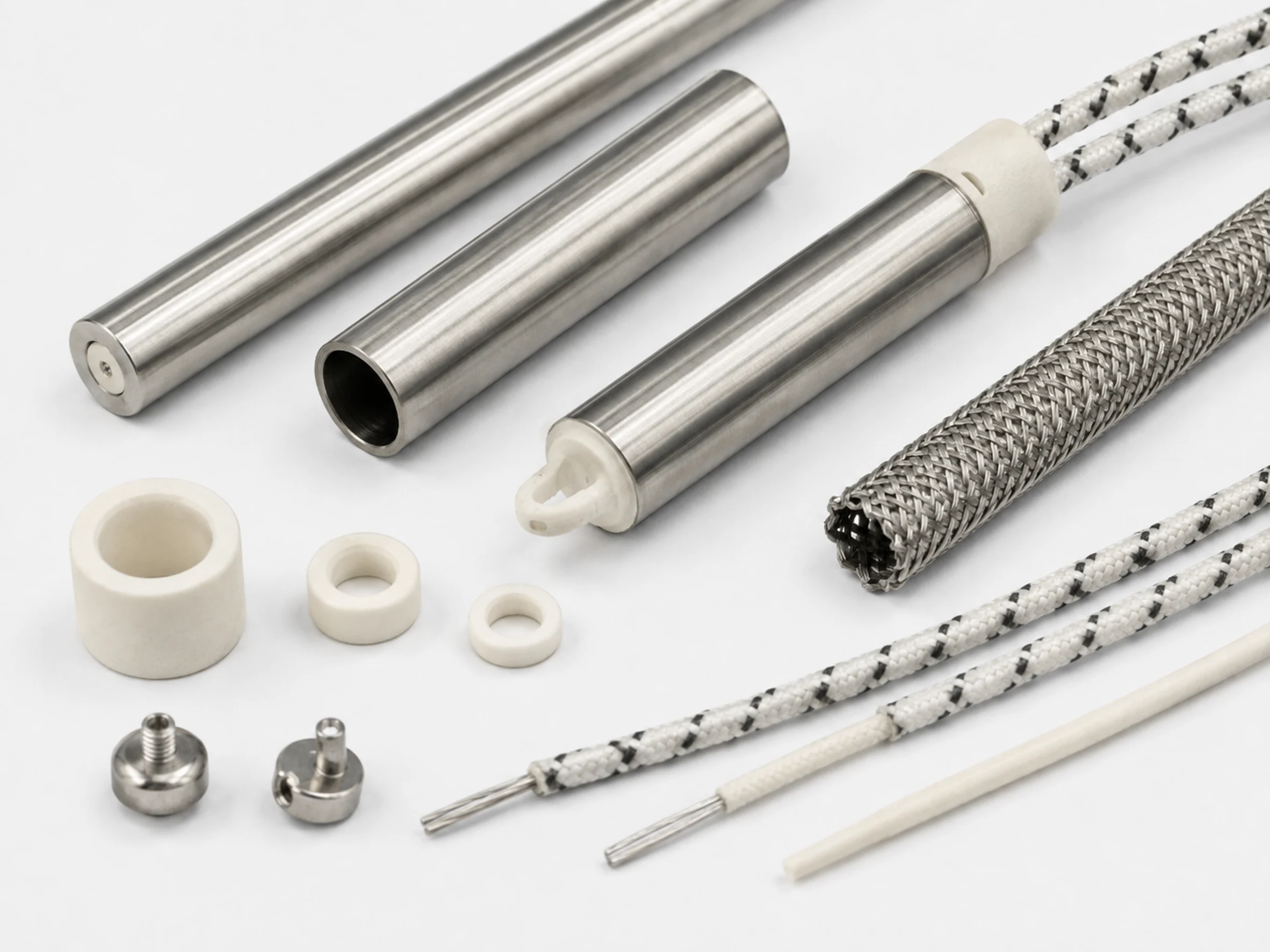
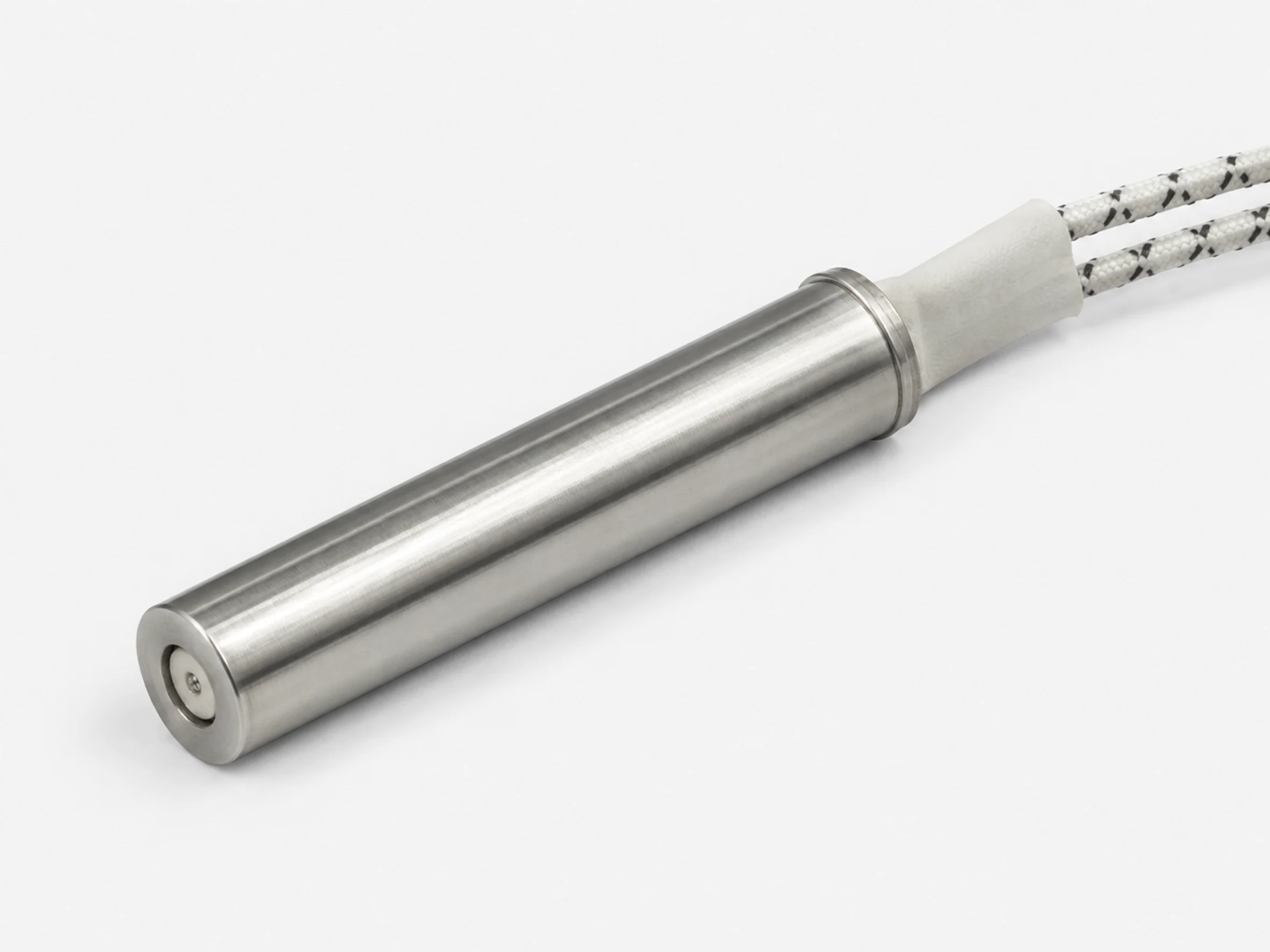
A typical heater includes a metal sheath, resistance coil, magnesium-oxide insulation, cold pins, terminal or lead-wire connection and end seal. Options can include an internal thermocouple, distributed wattage, right-angle lead exit, threaded fitting or customized unheated zones.
A cartridge heater is different from a formed tubular heating element because it is normally straight, compact and designed for insertion into a machined hole. It is also different from a flanged immersion heater, which is assembled as a bundle for direct liquid heating.
Xiangyuan Machinery can manufacture cartridge heaters according to the customer’s drawing, installation bore, voltage, power, operating temperature and lead configuration.
Key Features
Compact Cylindrical Design
Provides concentrated heat for insertion into drilled holes, molds and metal blocks.
Custom Diameter and Length
Dimensions can be manufactured according to the equipment drawing and finished bore.
Selectable Watt Density
Surface loading is selected according to bore fit, temperature and heat-transfer conditions.
Sheath Material Options
Stainless steel and selected alloys are available according to operating temperature and environment.
Lead and Terminal Options
Flexible leads, terminal pins, right-angle exits and protective sleeves can be supplied.
Built-In Sensor Option
Thermocouple or temperature-sensor options can be evaluated where the dimensions allow.
Cold-Zone Customization
Unheated lengths can be arranged at the lead end, tip end or other specified positions.
Distributed Wattage Option
Power distribution can be adjusted for selected equipment heating profiles where applicable.
Drawing-Based Production
Diameter, length, voltage, power, leads and dimensional tolerances are confirmed from the drawing.
Typical Technical Parameters
The following parameters are for reference only. Final design is confirmed according to the finished bore, heater diameter, overall and heated length, operating temperature, allowable watt density, lead termination and project requirements.
| Parameter | Customizable Range or Options |
|---|---|
| Product Name | Cartridge Heater |
| Heating Method | Insertion heating inside a close-fitting drilled hole |
| Diameter | Customized according to the finished bore and design requirements |
| Overall / Heated Length | Customized according to equipment drawing and heating area |
| Heating Power | Selected according to diameter, heated length, watt density and required temperature |
| Voltage | Customized according to the equipment power supply and confirmed heater rating |
| Watt Density | Selected according to bore fit, operating temperature and heat-transfer conditions |
| Sheath Material | SS304, SS321, SS310S, Incoloy or selected material where suitable |
| Insulation | Compacted magnesium oxide |
| Lead / Terminal | Flexible lead, terminal pin, threaded stud, right-angle or customized exit |
| Cold Zone | Customized at lead and tip sections |
| Sensor Option | Built-in thermocouple or separate sensor where applicable |
| Dimensional Tolerance | According to approved drawing and manufacturing method |
| Control Method | External PID temperature controller with SSR or SCR switching |
| Optional Design | Distributed wattage, built-in thermocouple, threaded fitting, right-angle lead exit, protective metal braid or customized termination |
Structure, Materials, Control and Safety
Structure of the Heater
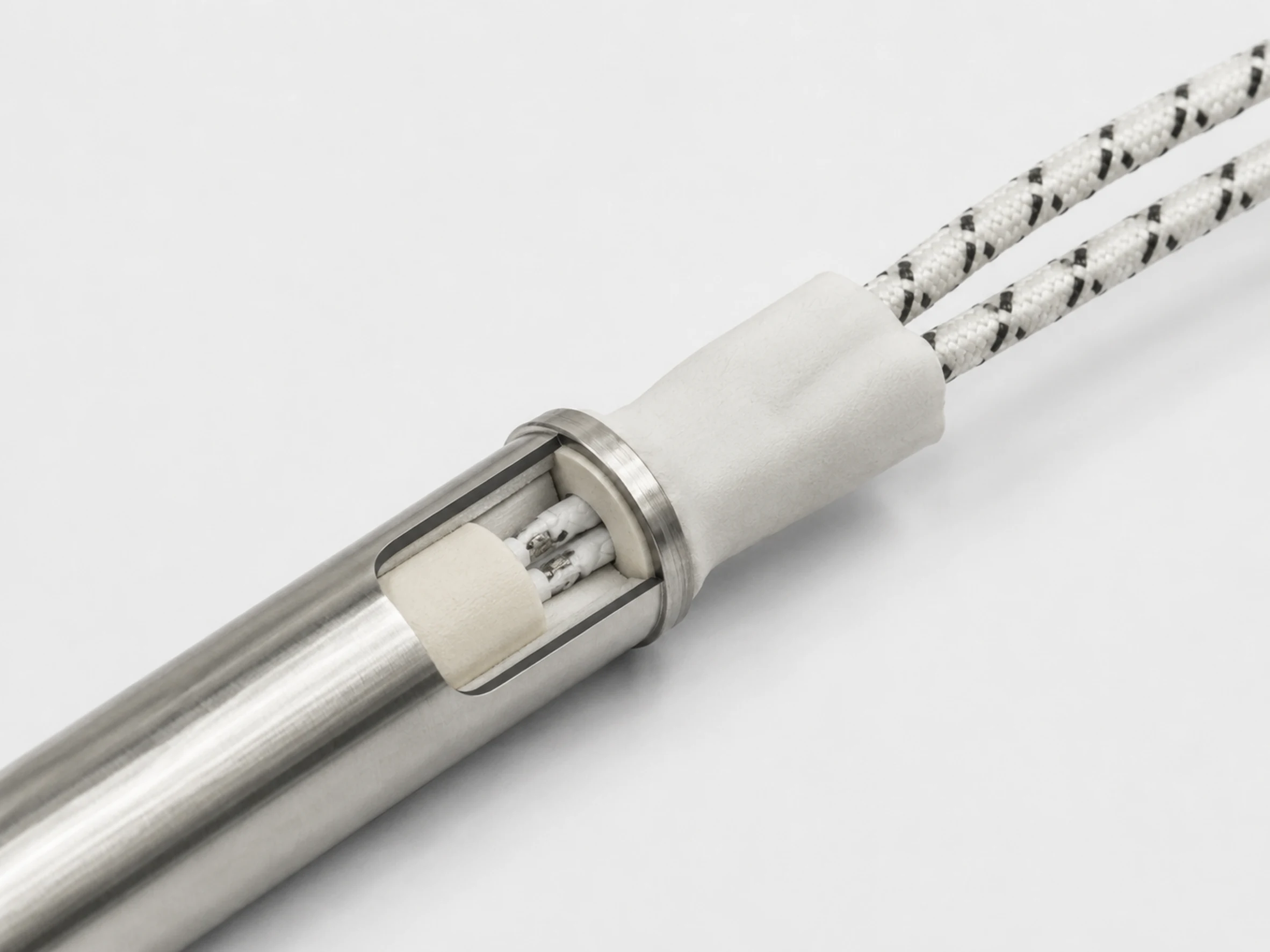
The Cartridge Heater contains a resistance coil centered inside a cylindrical metal sheath. Compacted magnesium oxide electrically insulates the coil while transferring heat to the sheath. Cold pins connect the resistance coil to the external leads or terminals.
The lead end can use flexible wires, terminal pins, threaded studs, ceramic caps, right-angle exits or protective metal braid. The opposite tip is sealed and can include a defined unheated section.
For sensor-integrated designs, a thermocouple can be positioned inside or near the heater according to the available dimensions and measurement requirements.
Main structure can include:
- Metal sheath
- Resistance coil
- Compacted magnesium-oxide insulation
- Cold pins
- Flexible leads or terminals
- End seal
- Defined cold zones
- Optional built-in thermocouple
- Optional protective sleeve or threaded fitting
Materials and Customization
Sheath material is selected according to operating temperature, oxidation, corrosion and mechanical conditions. SS304, SS321, SS310S, Incoloy and selected alloys can be considered where suitable.
Lead insulation, end seals and protective sleeves should be selected according to ambient temperature, oil, moisture, mechanical movement and electrical requirements. Magnesium-oxide insulation should remain dry during storage, installation and operation.
Diameter, length, heated length, cold zone, lead length, exit direction, termination, surface finish and sensor arrangement can be customized according to the approved drawing.
Control System
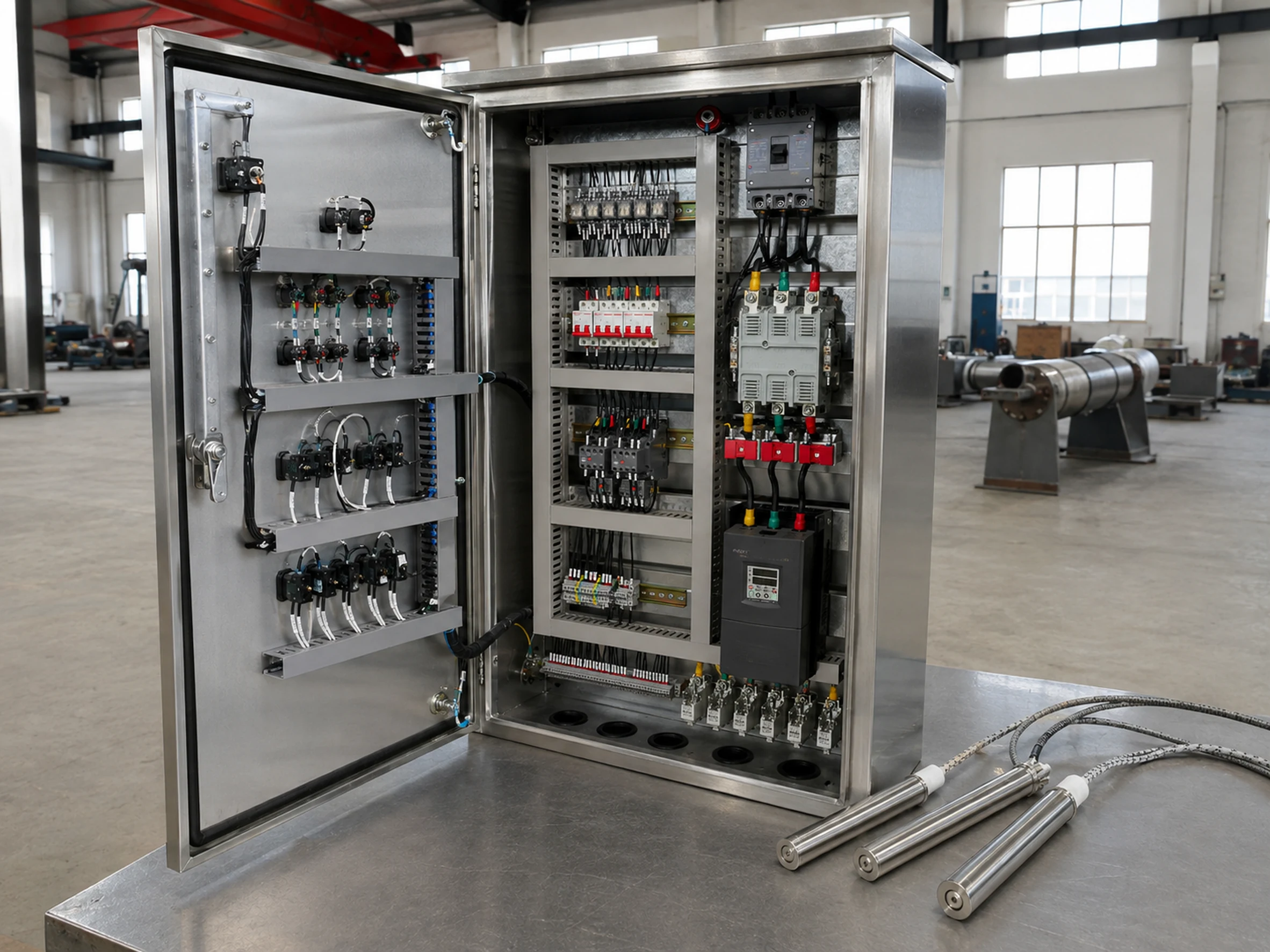
Cartridge heaters are normally controlled by an external temperature controller using a thermocouple or other sensor installed in the heated component. PID control with SSR or SCR switching can provide stable temperature regulation.
Multiple cartridge heaters can be grouped into separate control zones when a mold or platen requires balanced heating. The controller and sensor arrangement should match the thermal mass, heater quantity and required temperature uniformity.
Xiangyuan Machinery can supply a compatible control box or recommend electrical grouping according to the heater quantity, total power and zoning requirements.
Safety Protection
The heater should fit closely in the machined bore so that heat transfers into the metal component. Excessive clearance can raise sheath temperature and reduce operating life.
The heater must not exceed the confirmed voltage, watt density or operating temperature. Leads should be protected from sharp edges, repeated movement, oil, moisture and excessive heat.
The heated equipment should include suitable grounding, independent over-temperature protection, correct sensor placement and insulation-resistance checks before commissioning.
Safety points can include:
- Correct bore diameter and tolerance
- Suitable insertion depth
- Correct voltage and circuit connection
- Watt density matched to heat-transfer conditions
- Over-temperature protection
- Sensor installed near the actual heated zone
- Lead protection from heat and movement
- Insulation resistance check before installation
- Grounding of the heated equipment
- Replacement when sheath, seal or lead damage is found
Typical Applications
Injection Molds
Heating mold blocks, runners and selected tooling areas.
Extrusion Dies
Providing localized heat in dies and plastic-processing equipment.
Packaging Sealing Jaws
Heating sealing bars and jaws in packaging machinery.
Hot Plates and Platens
Heating compact metal plates, platens and press surfaces.
Rubber Machinery
Heating dies, heads and forming equipment.
Plastic Processing Equipment
Localized heating for nozzles, molds and machine components.
Labeling and Coding Equipment
Heating compatible print heads, blocks and sealing components.
Textile and Shoe Machinery
Heating dies, presses and production fixtures.
Laboratory Fixtures
Providing compact insertion heat for test blocks and fixtures.
Heating Rollers
Heating suitable roller bodies and internal metal components.
Industrial Tools and Dies
Localized heat for machined tooling and metal blocks.
Custom Industrial Machines
Drawing-based insertion heating for specialized equipment.
How to Select the Right Cartridge Heater
1. Bore Diameter
Provide the finished hole diameter and dimensional tolerance.
2. Required Heater Fit
Confirm the required insertion clearance and installation method.
3. Overall Length
Provide the total cartridge length.
4. Heated Length
State the required active heating section.
5. Supply Voltage
Provide the operating voltage and circuit arrangement.
6. Required Power
Provide the total wattage or required watt density if known.
7. Operating Temperature
State the normal and maximum operating temperature.
8. Heated Component
Describe the mold, die, metal block or machine component.
9. Bore Depth and Finish
Provide bore depth, surface finish and installation accessibility.
10. Lead Configuration
Specify lead type, length, protection and exit direction.
11. Cold Zones
Provide required unheated lengths at the lead and tip ends.
12. Sheath Material
State oxidation, corrosion or high-temperature requirements.
13. Sensor Option
Confirm thermocouple type and measurement location if needed.
14. Control Method
Provide controller, SSR or SCR and zoning requirements.
15. Drawing and Quantity
Supply the drawing, tolerances, order quantity and testing requirements.
Frequently Asked Questions
Common questions about cartridge heaters for molds, dies, sealing equipment and industrial machinery.
What is a Cartridge Heater?
What information is needed for customization?
Why is the installation fit important?
Can a thermocouple be built into the heater?
Can the heater be supplied with a controller?
Related Heating Solutions
For general straight and formed electric resistance heating elements, see Tubular Heating Element . For stainless steel rod-style heaters used in air, liquid, contact heating and equipment integration, see Stainless Steel Electric Heater Rod . For common two-leg formed tubular heater configurations, see U-Shaped Tubular Heating Element .
Why Choose Xiangyuan Machinery
Xiangyuan Machinery manufactures cartridge heaters according to the customer’s bore, drawing, power, temperature and termination requirements.
Thermal & Material Engineering
Customized diameters, lengths, voltage and power Watt density selected according to fit and heat-transfer conditions
Flexible Mechanical Arrangement
Multiple sheath, lead and terminal options
Control & Safety Integration
Built-in sensor and distributed-wattage options where applicable Drawing-based dimensional and electrical production
Complete Project Supply
Compatible control-box and zoning support Electrical and dimensional inspection according to the confirmed order scope
Send Us Your Cartridge Heater Drawing
Provide the bore diameter, heater diameter, total and heated length, voltage, power, operating temperature, bore tolerance, sheath material, lead configuration, cold-zone requirement, sensor option and quantity. Xiangyuan Machinery will prepare a confirmed specification and quotation.