
CUSTOM AIR DUCT HEATING SOLUTION
Electric Duct Heater
Custom Electric Duct Heaters for Industrial Air Heating, Drying Systems and Process Ventilation
Xiangyuan Machinery designs and manufactures electric duct heaters for industrial air heating systems, drying equipment, ventilation ducts, hot air circulation and process air temperature control applications.
Installed inside or connected to an air duct, the heater transfers electrical energy into controlled heat as air passes across the heating elements. It is suitable for clean air, hot air circulation, drying air, ventilation air and selected low-pressure process gas conditions.
Each electric duct heater can be customized according to airflow rate, duct size, inlet temperature, required outlet temperature, heating power, air velocity, pressure drop, installation direction, material requirement, control method and safety protection requirement.
Product Overview
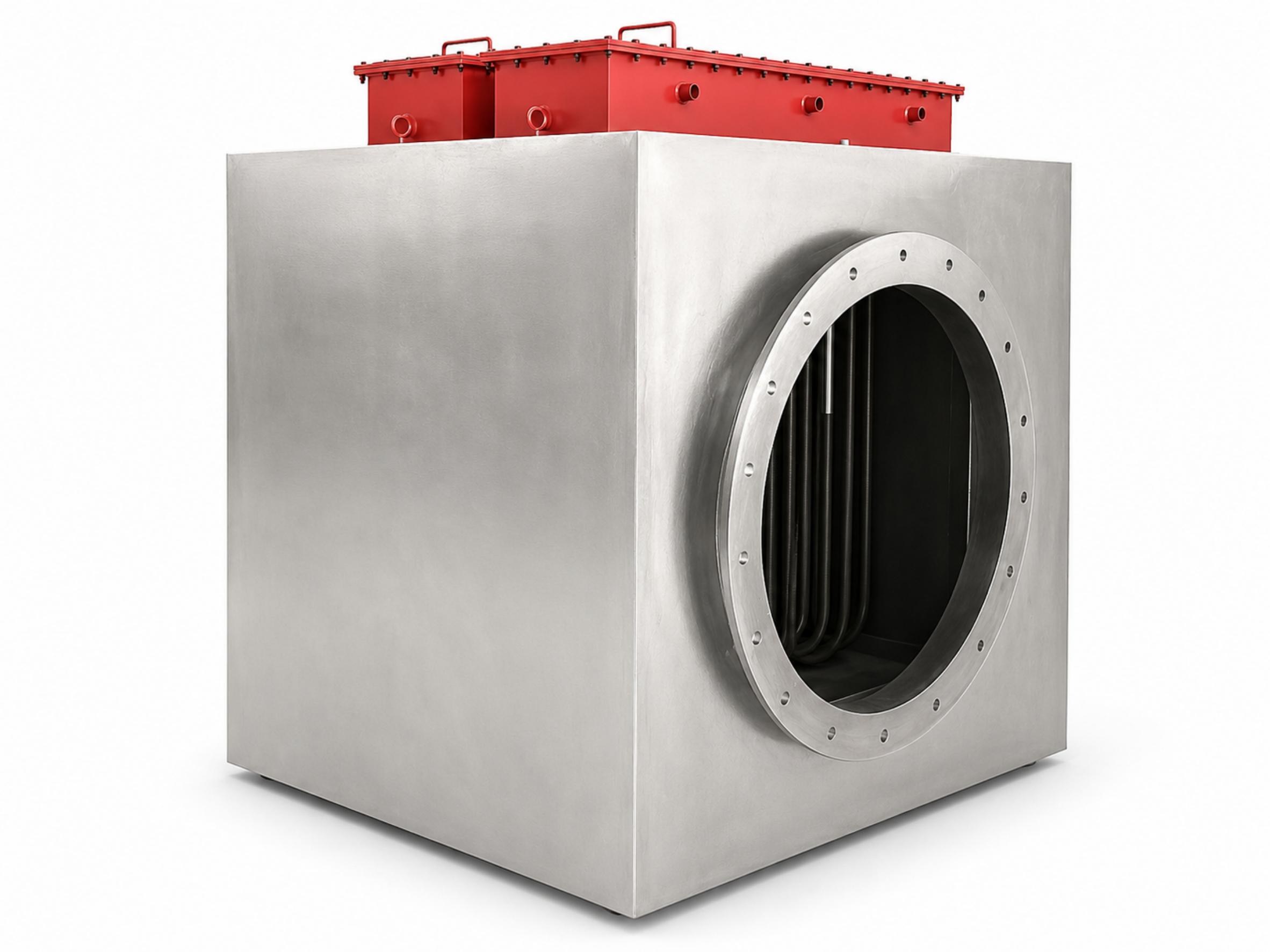
An electric duct heater is an industrial electric heating unit used to heat air or low-pressure process gas flowing through rectangular or round ductwork. It is commonly used in drying lines, hot air circulation systems, ventilation systems, coating equipment, industrial ovens, air handling units and process air heating applications.
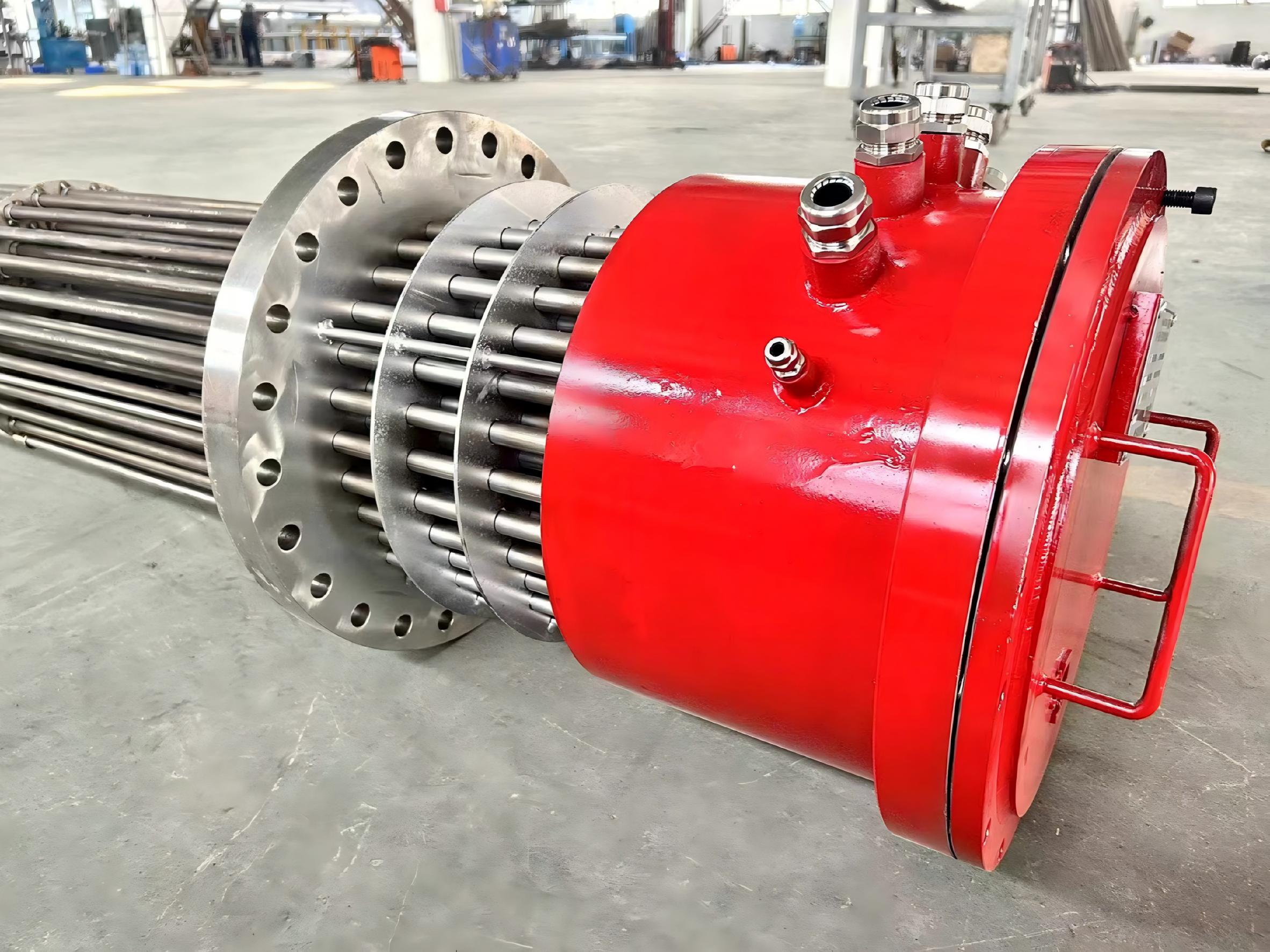
The heater usually consists of a duct shell or mounting frame, electric tubular or finned tubular heating elements, element support plate, terminal box, temperature sensor, insulation layer and optional control cabinet.
Compared with closed inline pressure vessel heaters, duct heaters are more suitable for larger airflow volume, lower-pressure air systems, rectangular or round duct installation and applications where heated air needs to be distributed evenly across a duct section.
The heater can be supplied as a standalone duct heater or as a complete heating system with control cabinet, temperature instruments, airflow interlock, over-temperature protection and staged or SCR power control.
Key Features
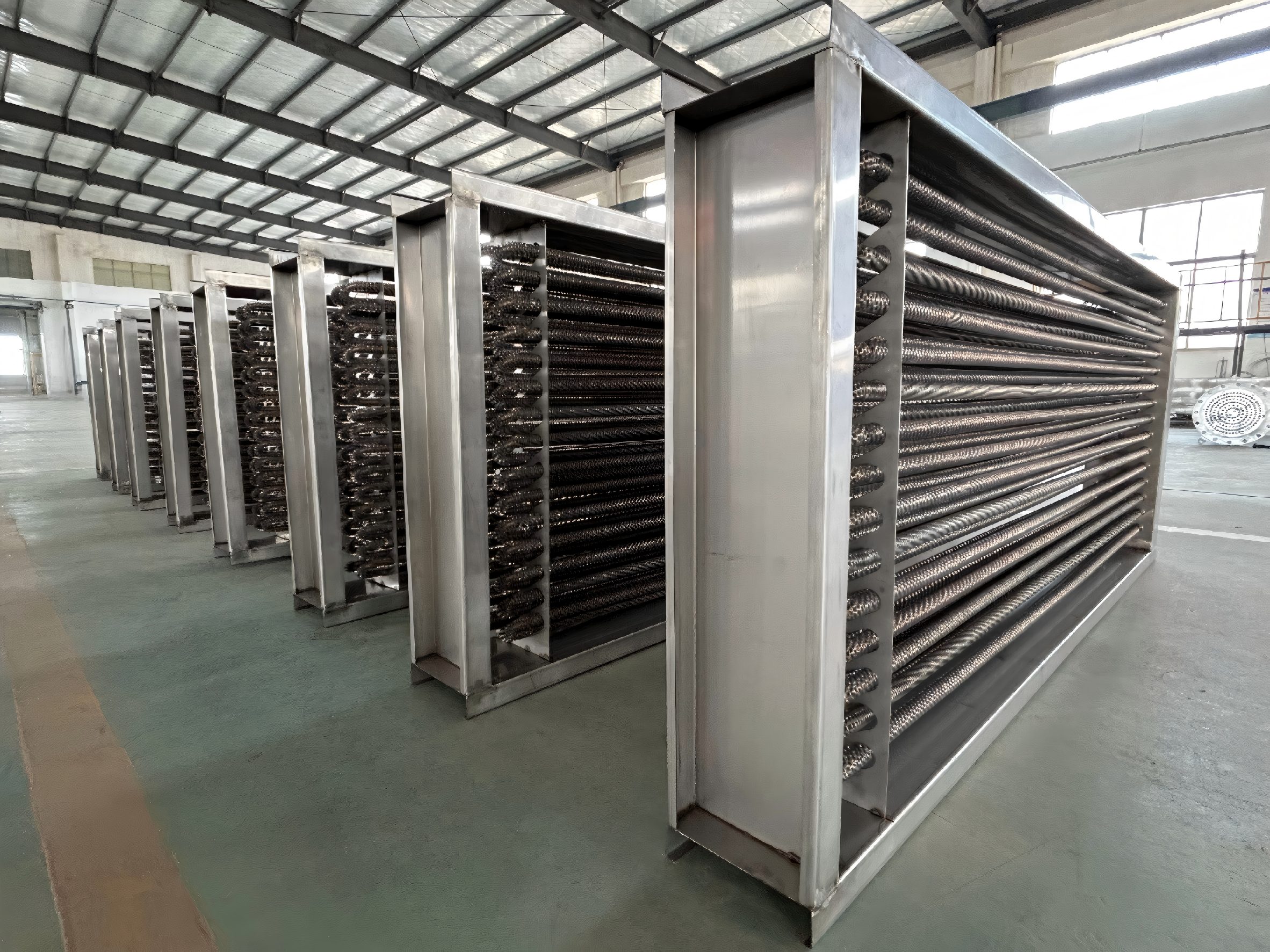
Key design features of the Electric Duct Heater can be customized according to duct size, airflow rate, air velocity, temperature rise, installation direction, heating element layout, control method and safety protection requirements.
Air duct heating design
Designed for heating air, drying air, ventilation air and selected low-pressure process gas flowing through rectangular or round ductwork.
Flexible duct installation
Can be installed in horizontal or vertical duct sections, air handling units, hot air circulation systems or customized duct structures.
Custom duct size and power
Duct size, flange layout, heating power and temperature rise can be engineered according to airflow and process requirements.
Uniform air heating
Heating element layout can be designed to support stable heat transfer and more uniform outlet air temperature across the duct section.
Tubular or finned heating elements
Stainless steel tubular elements, finned tubular elements or customized heating elements can be selected according to air velocity and temperature.
Insulation and heat loss control
External thermal insulation can be supplied to reduce heat loss and improve energy efficiency in medium- and high-temperature air systems.
Airflow interlock protection
Airflow switch, differential pressure interlock or fan interlock can be configured to help prevent overheating caused by insufficient airflow.
Optional complete control cabinet
The duct heater can be supplied with a control cabinet for PID control, SCR power regulation, staged heating control and alarm protection.
Customized for industrial systems
Terminal box position, access cover, insulation thickness, material selection and control logic can be customized for different site conditions.
Typical Technical Parameters
The following parameters are for reference only. Final duct heater design can be customized according to air flow rate, duct size, inlet and outlet temperature, pressure condition, material requirement, and control method.
| Parameter | Customizable Range / Options |
|---|---|
| Product Name | Electric Duct Heater |
| Heating Medium | Air, hot air, ventilation air, drying air, process air and selected low-pressure process gas |
| Heating Power | 2 kW – 1000 kW for common designs; higher power can be achieved by multi-section or multi-unit design |
| Outlet Temperature | Customized according to airflow, inlet temperature, required outlet temperature, heater material and insulation design |
| Duct Type | Rectangular duct, round duct, air handling unit section or customized duct structure |
| Duct Size | Customized according to site duct dimensions and airflow requirement |
| Airflow Rate | Customized according to process airflow, air velocity and required temperature rise |
| Pressure Drop | Reviewed according to airflow rate, duct size, element arrangement and allowable system pressure drop |
| Installation | Horizontal or vertical duct installation; flange-mounted, inserted or customized installation |
| Heating Element | Tubular heating element, finned tubular heating element or customized electric heating element |
| Shell Material | Carbon steel, SS304, SS316L or customized material according to working environment |
| Heating Element Material | Stainless steel, Incoloy 800, Incoloy 840 or selected high-temperature alloy |
| Insulation | External thermal insulation layer available according to air temperature and heat loss requirements |
| Temperature Sensor | Thermocouple, RTD, duct temperature sensor or customized temperature sensor |
| Control Method | Contactor control, staged power control, PID control, SCR power regulation, PLC control, control cabinet optional |
| Protection Options | Over-temperature protection, airflow interlock, fan interlock, differential pressure interlock, leakage protection, grounding protection and emergency stop |
| Application | Drying systems, hot air circulation, ventilation heating, industrial ovens, coating lines and process air heating |
Structure, Materials, Control and Safety
Structure of the Heater
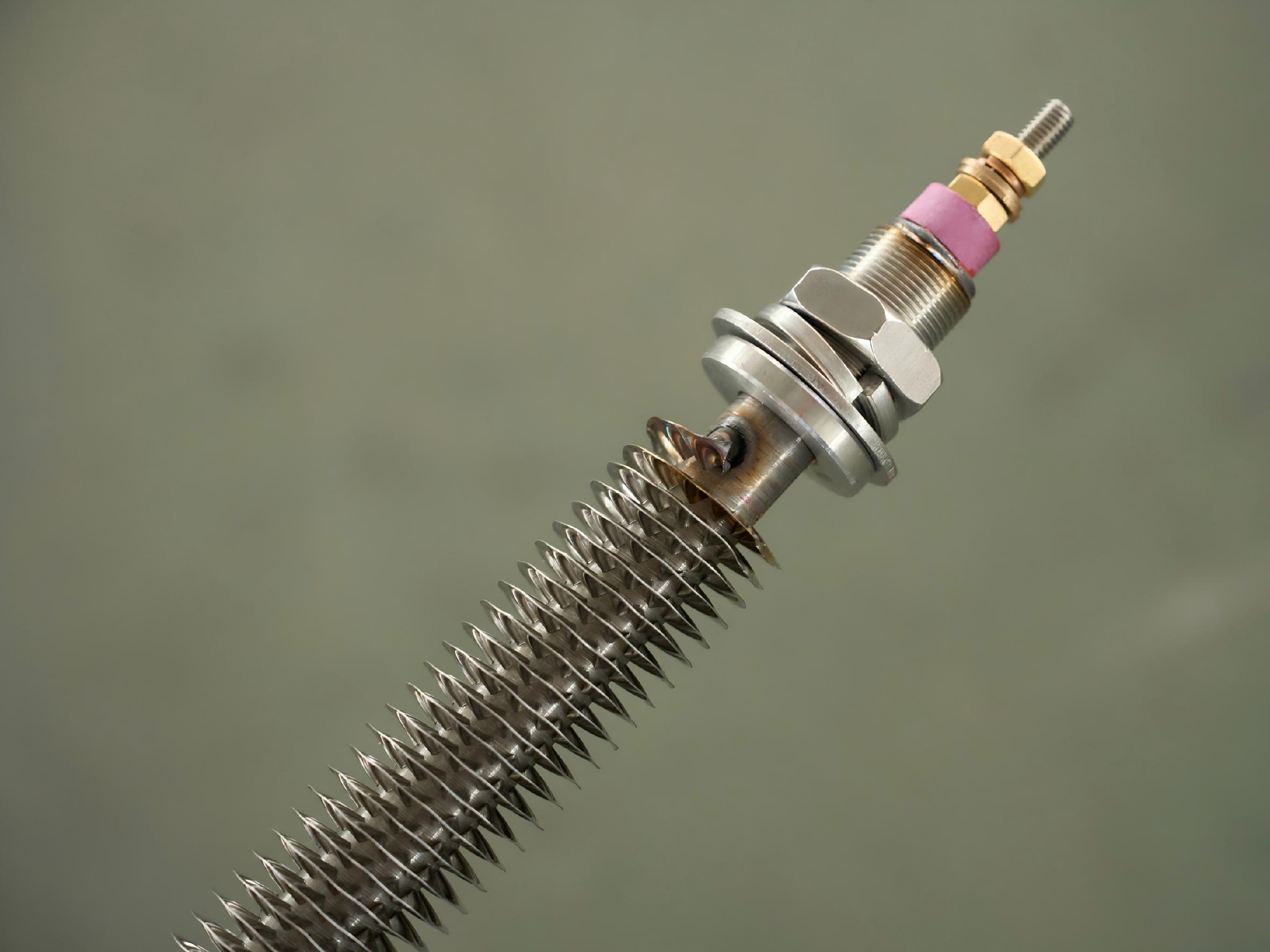
The electric duct heater is installed in a duct section through a flange, frame or customized mounting structure. Air flows through the heating section, passes across the electric heating elements, and absorbs heat before entering the next process or circulation system.
Main structure can include:
- Duct shell or mounting frame
- Flanged or inserted duct connection
- Electric tubular or finned tubular heating elements
- Heating element support plate
- Terminal box or high-temperature terminal chamber
- Temperature sensor port
- Airflow direction design
- Optional access cover for maintenance
- External thermal insulation layer
- Optional control cabinet
The internal heating element arrangement can be adjusted according to airflow velocity, duct size, temperature uniformity, pressure drop and maintenance requirements.
Materials and Customization
Material selection depends on air temperature, humidity, corrosion level, dust content, airflow velocity and installation environment.
For normal clean air heating, carbon steel or SS304 can be used for common duct shell applications. For humid air, corrosive gas or higher-temperature applications, SS316L, SS310S, Incoloy heating elements or selected alloy materials can be considered.
Heating element type, element spacing and watt density should be selected according to air velocity, outlet temperature, surface load and safety margin.
Customization options include:
- Duct size and shape
- Heating power and temperature rise
- Heating element quantity and layout
- Tubular or finned heating element selection
- Flange or mounting frame
- Terminal box position
- Horizontal or vertical installation
- Insulation thickness
- Access cover for maintenance
- Airflow interlock and temperature protection
- Explosion-proof terminal box if required
- Independent control cabinet
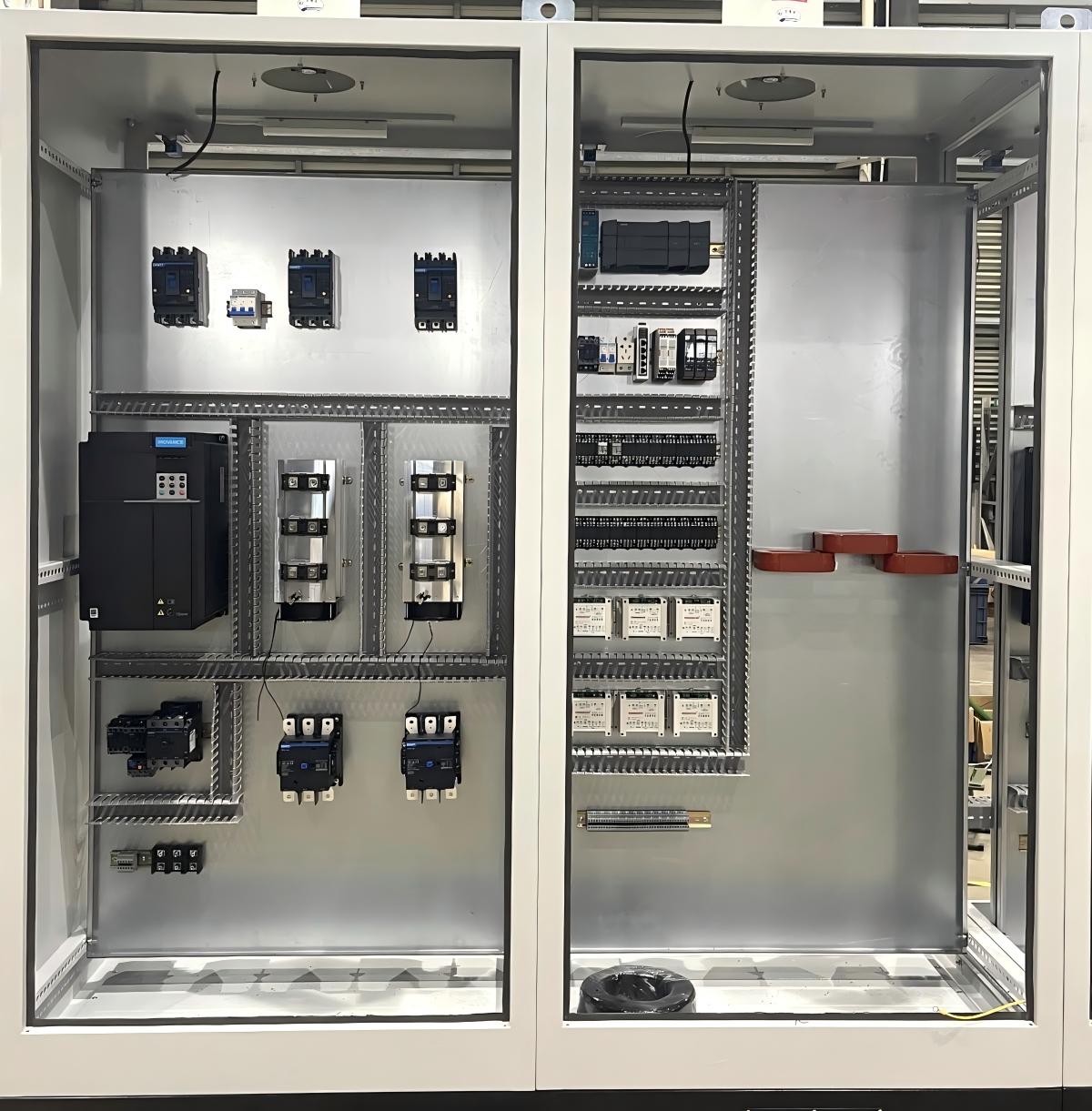
Control System
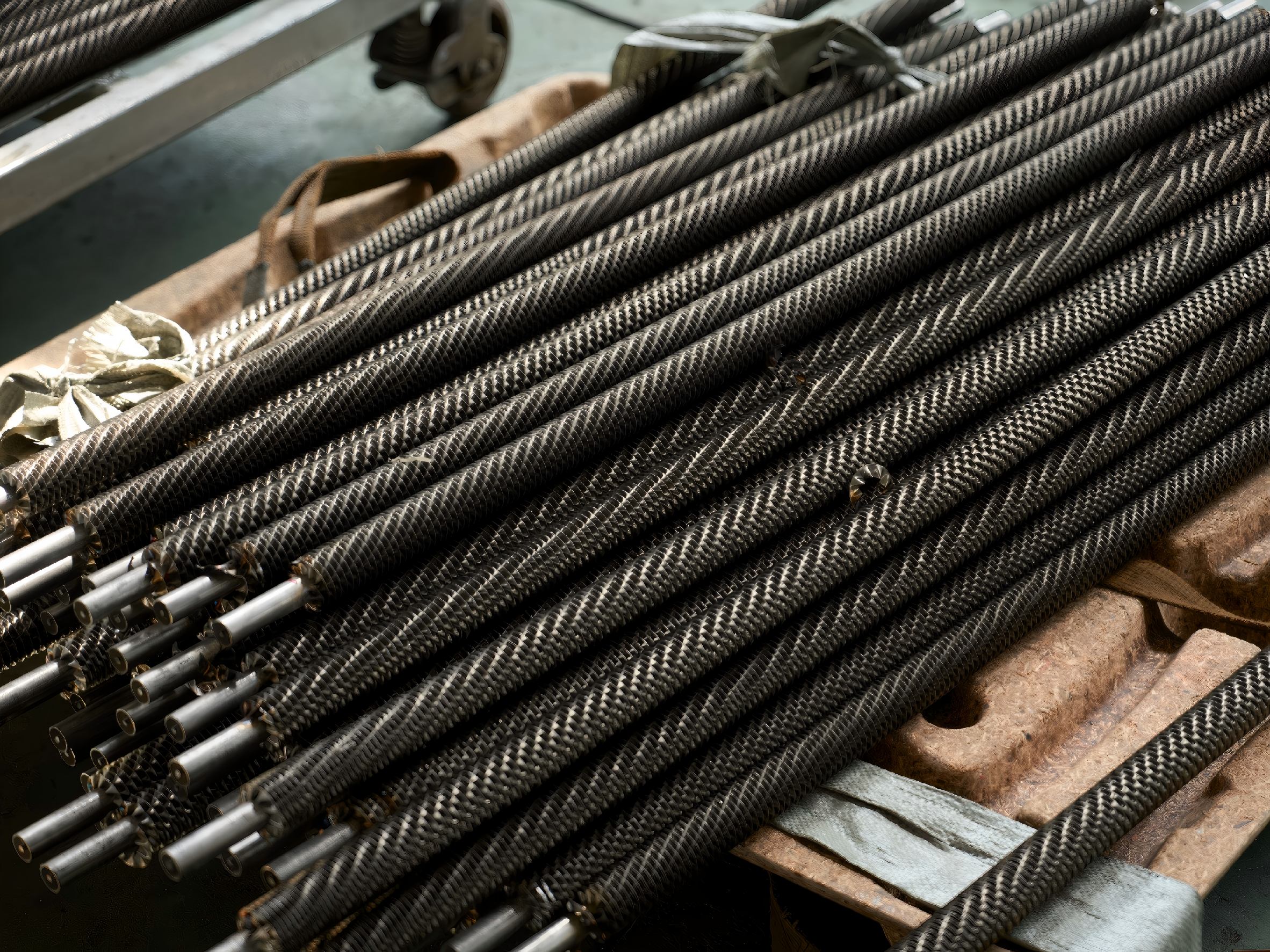
The electric duct heater can be supplied with an independent control cabinet for manual operation, automatic temperature control or PLC-based process control.
Control options can include:
- Outlet air temperature control
- Duct temperature monitoring
- Heating power step control
- SCR / thyristor power regulation
- PID closed-loop control
- Airflow switch or fan interlock
- Differential pressure interlock
- Over-temperature alarm and shutdown
- Local and remote operation
- Signal interface with customer PLC or DCS system
Safety Protection
Electric duct heaters should be equipped with proper airflow and temperature protection because the heating elements depend on continuous air movement for safe heat transfer. Insufficient airflow, blocked ducts, fan failure or abnormal temperature control may cause local overheating.
Available safety protection options include:
- High-limit temperature protection
- Outlet air temperature monitoring
- Duct temperature monitoring
- Heating element temperature monitoring
- Airflow switch interlock
- Fan operation interlock
- Differential pressure interlock
- Overload, short-circuit, leakage and grounding protection
- Emergency stop
- High-temperature terminal box design
- Explosion-proof terminal box or control system when required
Typical Applications
Electric duct heaters are used where air or low-pressure process gas needs to be heated as it flows through ductwork before entering drying, ventilation, circulation or process equipment.
Industrial drying systems
Provides hot air for continuous drying lines, material drying, coating drying and thermal processing equipment.
Hot air circulation systems
Used in recirculating hot air systems where stable air temperature needs to be maintained inside a process loop.
Ventilation air heating
Installed in ventilation ducts or make-up air systems to raise supply air temperature for industrial facilities.
Coating and painting lines
Supports process air heating for surface treatment, coating curing, paint drying and temperature-controlled production lines.
Industrial ovens
Used as duct-mounted air heating equipment for ovens, curing systems, preheating chambers and heat treatment equipment.
Textile drying equipment
Provides stable heated air for textile drying, fabric finishing and continuous hot air processing systems.
Plastic and rubber processing
Used for air preheating, drying and process temperature control in plastic, rubber and polymer processing lines.
Environmental test chambers
Provides controlled air heating for test chambers, laboratory equipment and environmental simulation systems.
Air handling units
Can be integrated into customized air handling sections for industrial air heating and temperature control.
Process ventilation systems
Used in process ventilation lines where air temperature must be raised before filtration, treatment or downstream use.
Food and packaging equipment
Can be used for hot air supply in packaging, drying and temperature-controlled processing when suitable material requirements are met.
Low-pressure process gas heating
Customized duct designs can be applied for selected low-pressure process gas heating conditions after engineering review.
How to Select the Right Duct Heater
To design a suitable electric duct heater, please provide the following airflow, duct and control information when available.
1. Airflow rate
Provide normal airflow rate and maximum airflow rate. This is required for heating power calculation and element surface load review.
2. Duct size and shape
Provide duct width, height, diameter, flange dimensions and whether the duct is rectangular, round or customized.
3. Inlet air temperature
Provide the normal inlet air temperature and the lowest possible inlet temperature during startup or winter operation.
4. Required outlet temperature
Provide the target outlet air temperature and allowable temperature tolerance for the process.
5. Air velocity and pressure drop
Provide air velocity or allowable pressure drop if available. These values affect heater structure and element arrangement.
6. Installation direction
Confirm whether the duct heater will be installed horizontally or vertically, and provide available maintenance space.
7. Required heating power
Provide the required heating power if already calculated. If not, Xiangyuan Machinery can calculate it from airflow and temperature rise.
8. Air composition and humidity
Let us know whether the air is clean, humid, dusty, corrosive, oily or mixed with selected process gas components.
9. Material requirement
Material selection depends on air temperature, humidity, corrosion level, dust content and installation environment.
10. Voltage and frequency
Confirm supply voltage, phase and frequency, such as 380V 3-phase 50Hz or 480V 3-phase 60Hz.
11. Control method
Confirm whether contactor control, staged power control, SCR regulation, PID control, PLC control or remote signal is required.
12. Safety protection requirement
Confirm requirements for over-temperature protection, airflow interlock, fan interlock, differential pressure interlock and emergency stop.
13. Terminal box position
Confirm terminal box direction, wiring access, maintenance space and whether a high-temperature terminal chamber is required.
14. Insulation requirement
Let us know whether external insulation is required to reduce heat loss and maintain safer outer surface temperature.
15. Complete system requirement
Confirm whether you need only the duct heater body, a heater with control cabinet, or a complete hot air heating system.
Frequently Asked Questions
Common questions about electric duct heaters for industrial air heating, process ventilation and drying systems.
What is an electric duct heater?
An electric duct heater is an industrial electric heating unit installed in rectangular or round ductwork to heat air or selected low-pressure process gas as it passes through the duct section.
Where are electric duct heaters commonly used?
They are used in drying systems, hot air circulation systems, ventilation ducts, industrial ovens, coating lines, air handling units and process air temperature control applications.
What information is needed to design an electric duct heater?
Typical design information includes airflow rate, duct size, inlet air temperature, required outlet temperature, air velocity, allowable pressure drop, voltage, installation direction and control requirements.
Can airflow protection be provided?
Yes. Airflow switch interlock, fan interlock, differential pressure interlock, over-temperature shutdown and emergency stop functions can be configured according to the duct system.
Can the duct heater be supplied with a control cabinet?
Yes. The heater can be supplied with a control cabinet using PID control, SCR power regulation, staged control, PLC control or a customer control system interface when required.
Is an electric duct heater the same as a duct-mounted electric heater?
Yes. A duct-mounted electric heater is a common way to describe an electric duct heater installed directly in rectangular or round ductwork. The heater is designed according to airflow rate, duct dimensions, inlet and outlet temperature, air velocity, heating power, installation direction and control requirements.
Related Heating Solutions
For closed-pipeline gas heating applications, review our Electric Inline Process Gas Heater . For replacement heating elements used inside duct heaters, see Finned Tubular Heating Element . For hazardous-area air heating projects, Explosion-Proof Electric Heater configurations can be considered according to site requirements.
Why Choose Xiangyuan Machinery
Xiangyuan Machinery provides custom industrial electric heaters, heating elements and complete electric heating systems for demanding process applications. Each electric duct heater can be engineered according to real airflow conditions, duct size, temperature rise, installation layout, material requirements, control logic and safety protection requirements.
Thermal & Material Engineering
Custom design according to duct size and airflow rate Heating element layout matched to air velocity and temperature rise
Flexible Mechanical Arrangement
Material selection for clean air, humid air and higher-temperature air heating
Control & Safety Integration
Integrated duct heater and control cabinet supply Airflow interlock and over-temperature protection options
Complete Project Supply
Support for non-standard industrial hot air systems Factory inspection before delivery
Need a custom electric duct heater for your air system?
Tell us your airflow rate, duct size, inlet temperature, required outlet temperature, air velocity, voltage, control requirement and installation conditions. Xiangyuan Machinery can customize electric duct heaters for industrial air heating, drying systems, ventilation ducts and process air applications.