

ELECTRIC AIR & PROCESS GAS HEATERS
Electric Exhaust Gas Heater
Custom-engineered electric heating equipment for industrial exhaust gas, tail gas and process off-gas treatment systems.
The Electric Exhaust Gas Heater is designed to raise or maintain the temperature of industrial exhaust gas, tail gas or process off-gas before the gas enters VOC treatment, catalytic reaction, adsorption regeneration, thermal processing or other downstream equipment.
Heating power, gas-contact materials, pressure rating, connection size, outlet temperature, element arrangement and control interlocks can be engineered from the gas composition and operating duty. The heater can be supplied as a standalone unit or with a control cabinet and instruments.
Product Overview
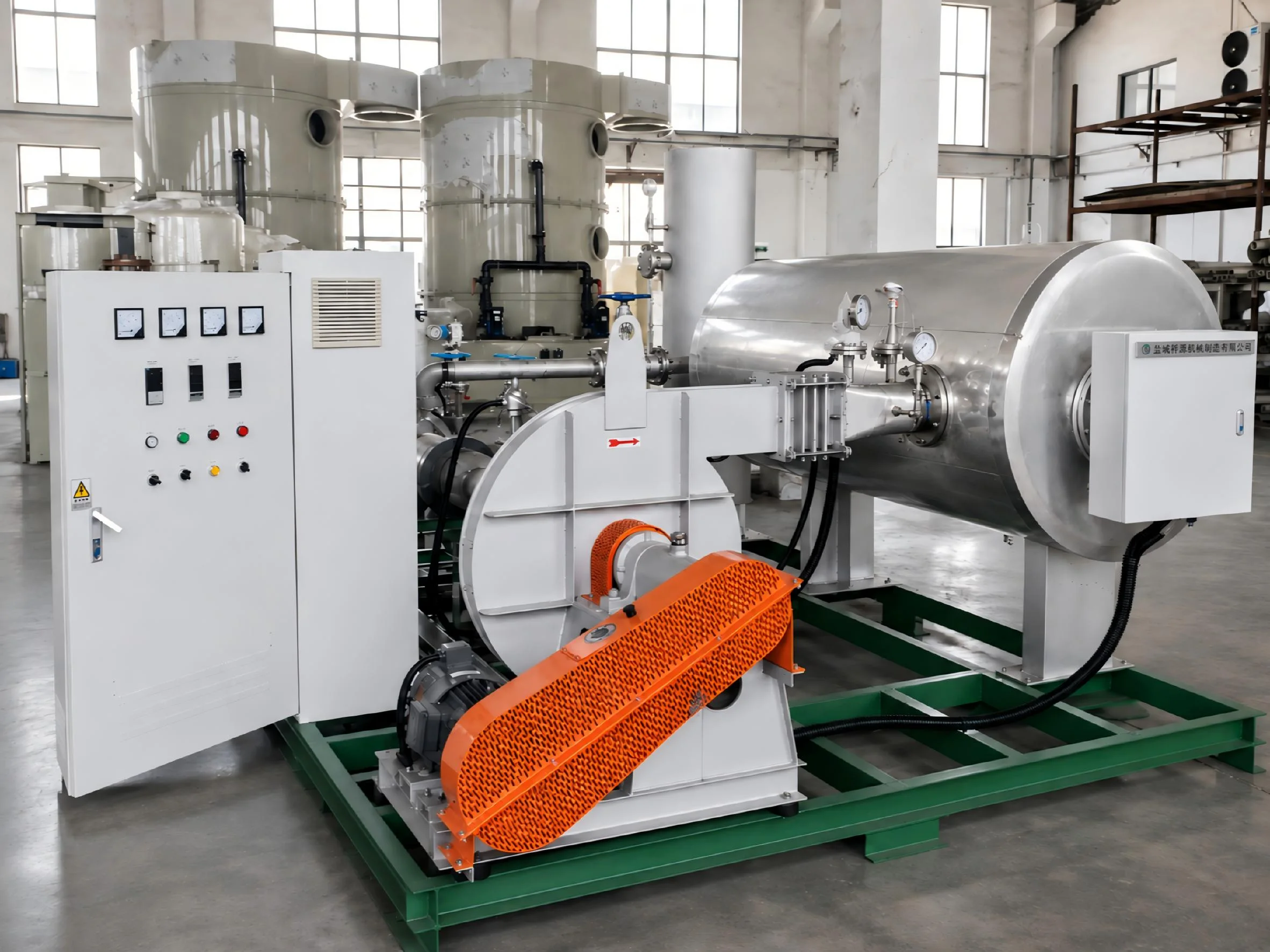
The Electric Exhaust Gas Heater is an enclosed inline heating unit designed for industrial exhaust gas, tail gas and process off-gas streams that require a controlled temperature before entering downstream treatment or reaction equipment.
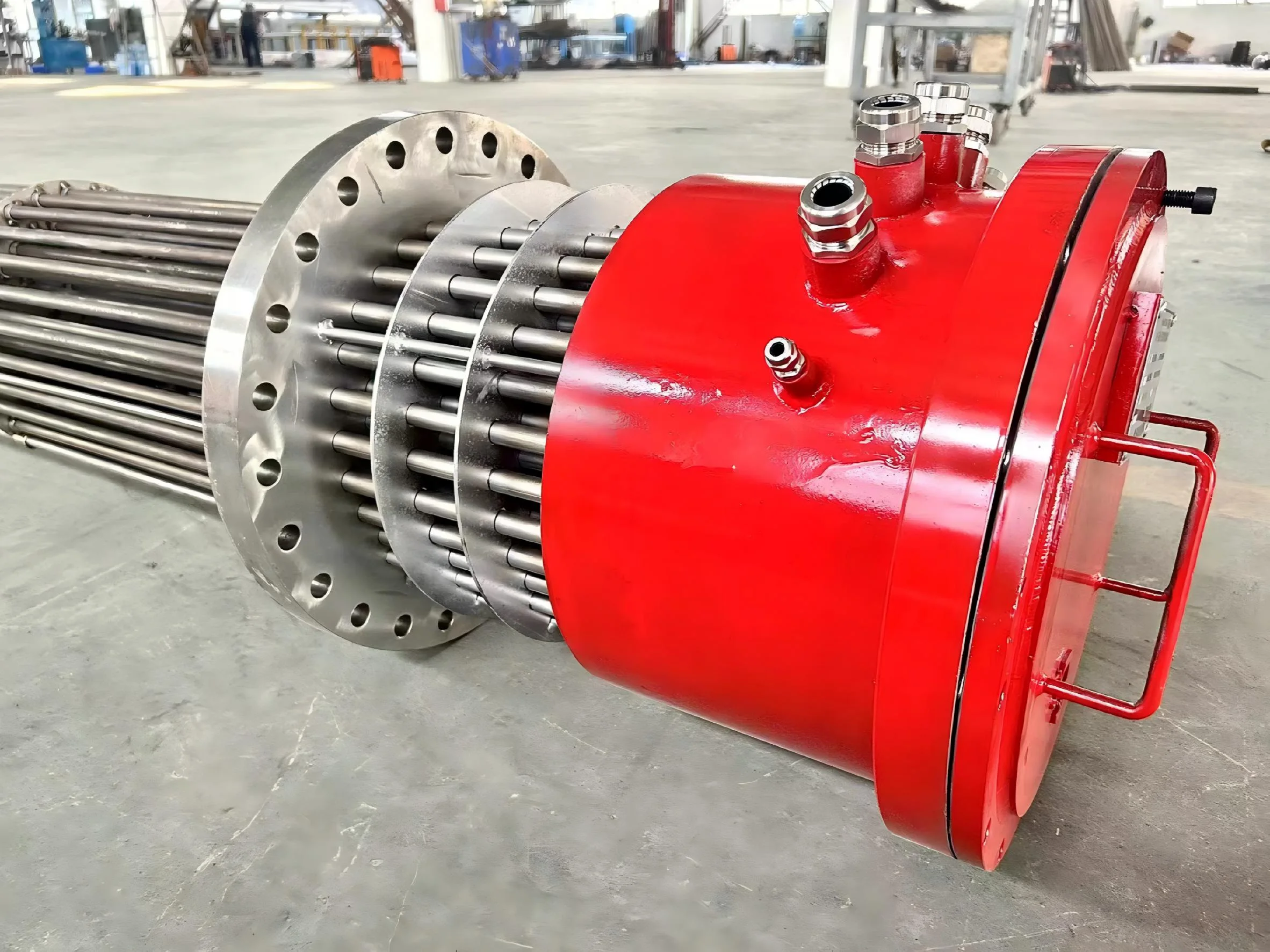
A typical assembly includes a fabricated shell, inlet and outlet connections, electric heating element bundle, element supports, terminal box, thermal insulation, temperature sensors and inspection or drainage connections where required.
Unlike a general Electric Duct Heater, this product is selected around the actual gas composition, possible condensate, dust loading, corrosive components, operating pressure and required gas temperature. These conditions directly affect material selection and element surface temperature.
Xiangyuan Machinery can supply the heater only, a heater with an independent control cabinet, or a coordinated package prepared for connection to a VOC, tail-gas or process-emission system.
Key Features
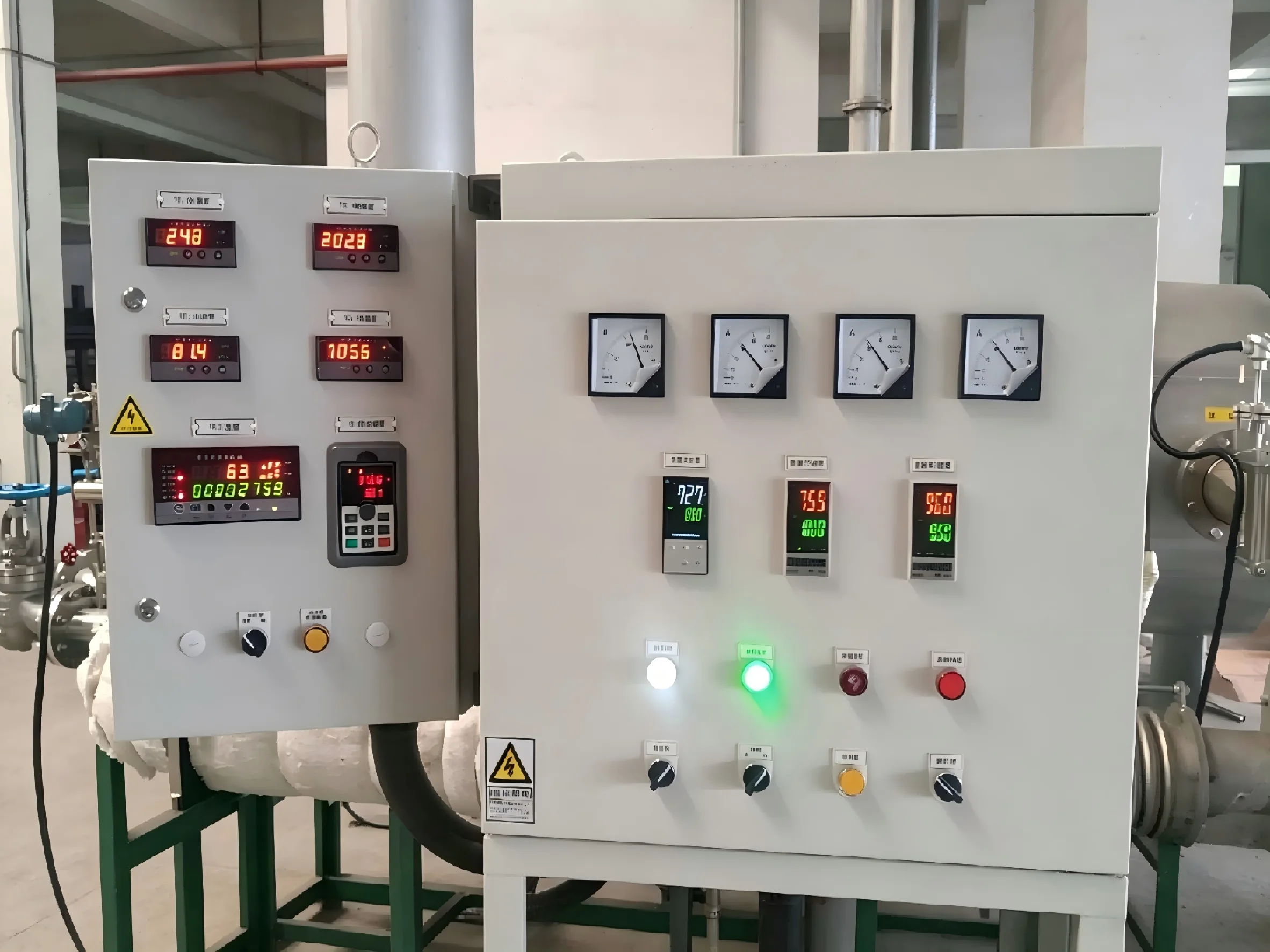
The Electric Exhaust Gas Heater can be engineered around the actual medium, duty, installation and control requirements of the project.
Gas-Specific Thermal Design
Heating duty is calculated from gas flow, composition, inlet temperature and target outlet temperature.
Enclosed Inline Construction
The shell, process connections and heating element arrangement are engineered according to the operating pressure, gas flow, required temperature rise and allowable pressure drop.
Material Compatibility
Gas-contact parts can be selected for moisture, acidic components, solvent vapor, dust and operating temperature.
Controlled Element Surface Temperature
Element loading and staging can be adjusted to reduce local overheating and deposit formation.
Process Interlocks
Flow, pressure and temperature signals can be incorporated into heater-permission and shutdown logic.
Hazardous-Area Configuration
Explosion-proof terminal boxes and matched electrical configurations are available. Relevant explosion-proof products have obtained Chinese explosion-proof certification Ex db IIC T1–T6 Gb.
Typical Technical Parameters
The following parameters are for reference only. Final design is confirmed according to the operating medium, temperature, dimensions and project requirements.
| Parameter | Customizable Range or Options |
|---|---|
| Product Name | Electric Exhaust Gas Heater |
| Heating Medium | Industrial exhaust gas, tail gas, process off-gas or VOC-bearing gas, subject to composition and process-safety review |
| Heating Power | Custom engineered according to gas flow and temperature rise |
| Temperature Range | Customized according to process and gas composition |
| Working Pressure | Atmospheric, low-pressure or pressure-bearing design according to duty |
| Flow Rate / Pressure Drop | Selected according to actual gas flow, operating conditions and allowable pressure drop |
| Shell / Gas-Contact Material | Carbon steel, SS304, SS316L, SS310S or selected alloy according to gas composition, temperature and condensation conditions |
| Heating Element Sheath Material | SS304, SS310S, Incoloy 800/840 or selected alloy |
| Connection | Flange, duct transition or customized process connection |
| Control Method | PID temperature control, SCR/thyristor power regulation, staged power control, PLC/HMI or DCS interface |
| Protection Options | Independent high-temperature limit, confirmed-flow interlock, pressure or differential-pressure monitoring, ground-fault protection, protective grounding and emergency stop |
| Explosion-Proof Option | Explosion-proof terminal box and matched electrical configuration; Relevant explosion-proof products have obtained Chinese explosion-proof certification Ex db IIC T1–T6 Gb. |
| Optional Design | Drainage, inspection opening, insulated housing and customized maintenance access |
Structure, Materials, Control and Safety
Structure of the Heater
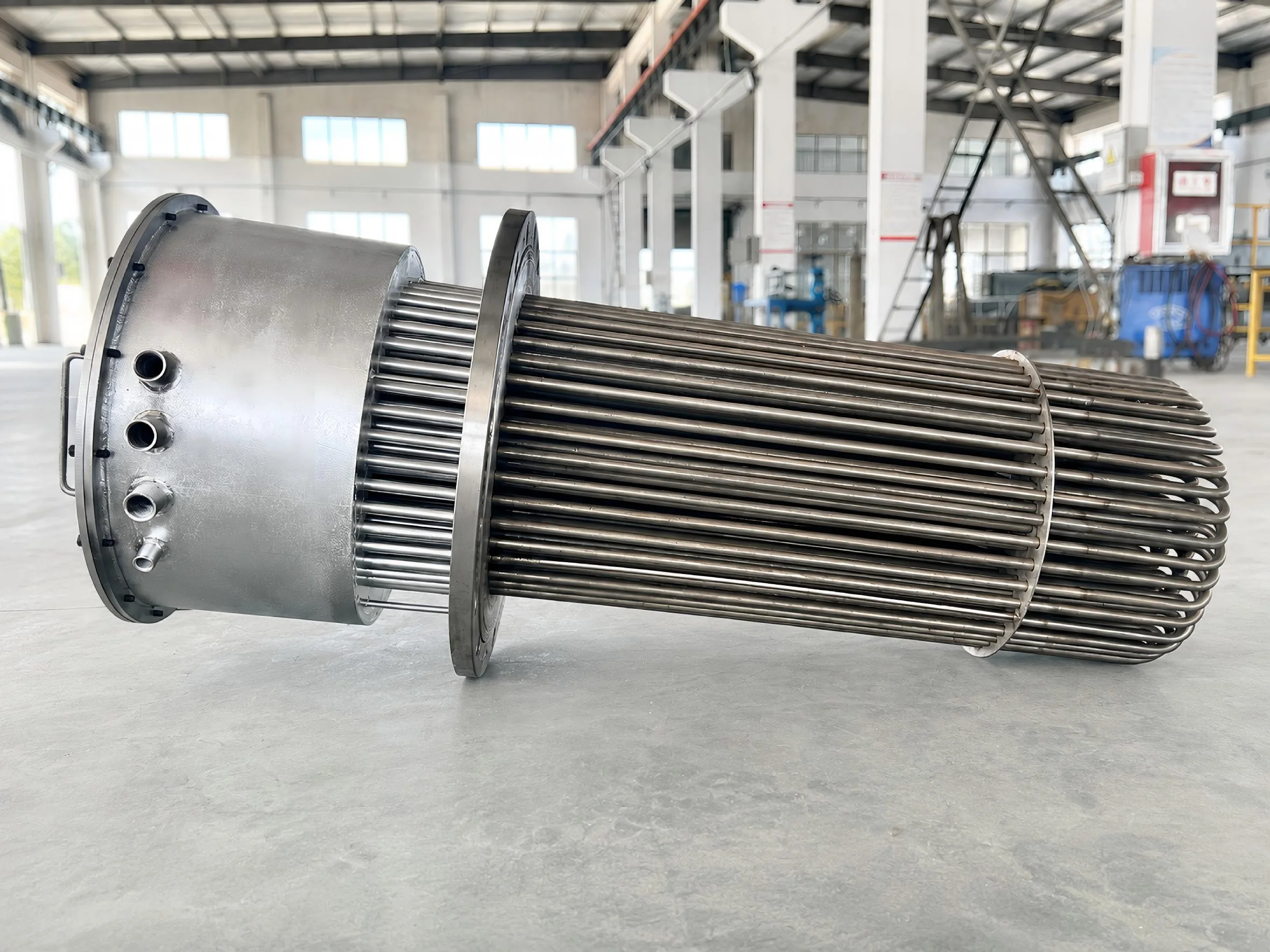
The heater is normally built around a horizontal or vertical fabricated shell with an inlet, an outlet and a removable electric heating element bundle. Internal support or baffle plates may be installed to support the heating elements, improve gas distribution and maintain the required flow path.
The structure can include a flanged element bundle, terminal box, insulation and cladding, temperature-sensor ports, pressure connections, drain or inspection points and mounting supports. The arrangement is adapted to gas cleanliness and maintenance access.
Where dust, condensate or deposits are expected, element spacing, flow direction, drainage and cleaning access should be considered during design rather than copied from a clean-air heater.
Materials and Customization
Material selection depends on exhaust-gas composition, humidity, acidic or alkaline components, solvent vapor, dust, operating temperature and possible condensation. Carbon steel may be used for suitable external shells, while SS304, SS316L, SS310S or selected alloys may be used for gas-contact and heating parts.
Heating elements can be configured with different sheath materials, diameters, watt densities and support spacing. A lower element watt density may be selected for gases that can form deposits, condense or react at elevated temperatures.
The customer should provide available gas analysis and operating ranges. Material and sealing recommendations are then confirmed against the actual duty.

Control System
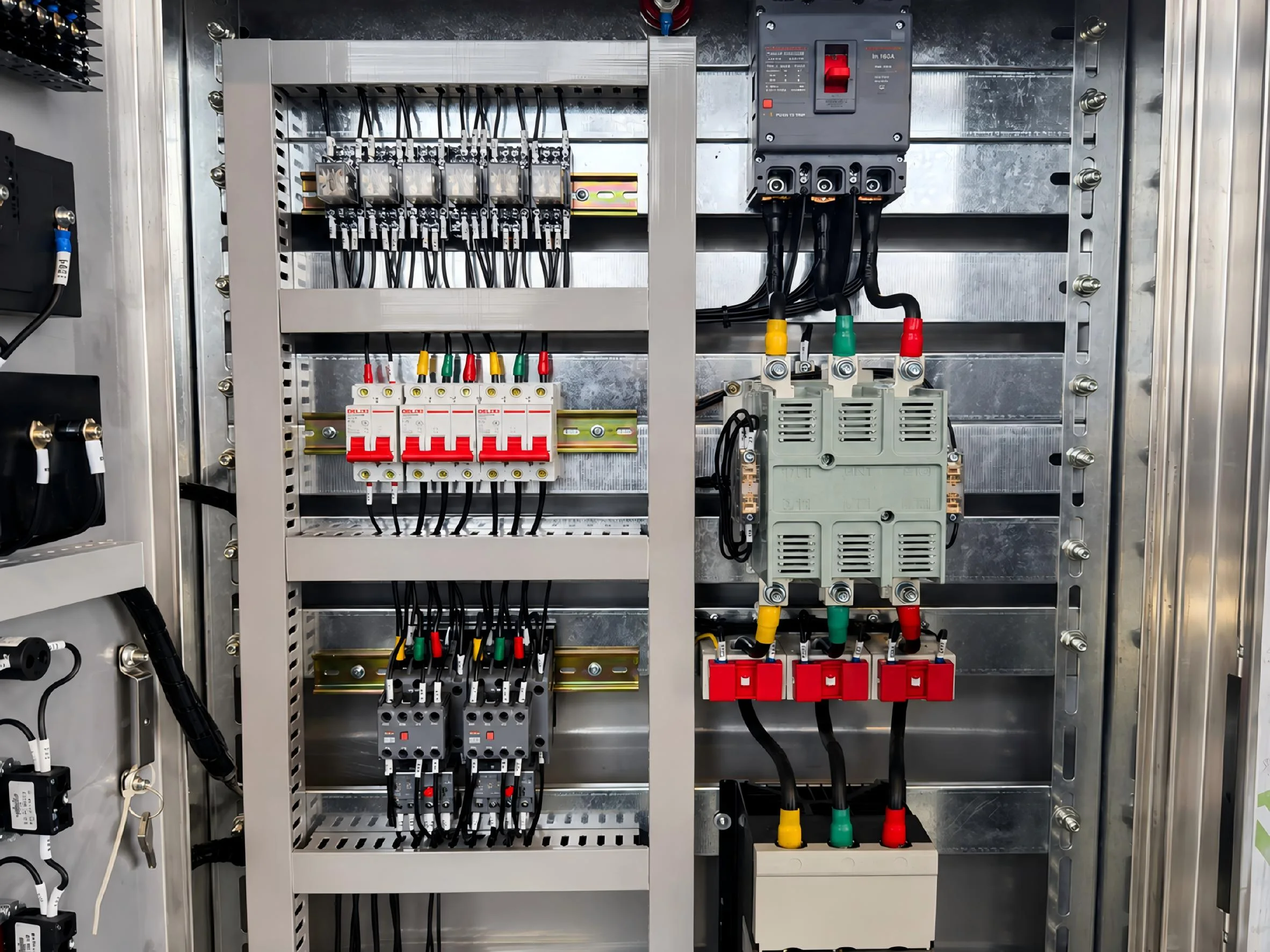
The Electric Exhaust Gas Heater can use an independent control cabinet or connect to the customer’s PLC or DCS. Common options include PID control, SCR power regulation, staged contactor control, PLC logic, HMI and remote status signals.
Outlet-gas temperature is normally the main control variable. Inlet temperature, element sheath temperature, flow, pressure and downstream equipment readiness can also be monitored.
Control logic can include a start permissive from the treatment system, confirmed gas flow before energization, high-temperature alarm, power limitation, emergency stop and a delayed shutdown sequence according to process requirements.
Safety Protection
Typical protection can include independent over-temperature protection, confirmed-flow interlock, pressure or differential-pressure monitoring, ground-fault protection, protective grounding, emergency stop and automatic shutdown.
For hazardous-area applications, the heater can be configured with an explosion-proof terminal box and a matched electrical control arrangement. Relevant explosion-proof products have obtained Chinese explosion-proof certification Ex db IIC T1–T6 Gb.
The final configuration is determined according to the exhaust gas composition, combustible-gas concentration, oxygen content, operating temperature, hazardous-area classification, gas group and required temperature class. Our engineers will confirm these conditions with the customer before equipment selection and production.
Typical Applications
Typical applications for the Electric Exhaust Gas Heater include industrial exhaust-gas, tail-gas and process off-gas heating duties. Final selection should be based on confirmed process data.
VOC Treatment Systems
Preheating process off-gas before catalytic oxidation or other VOC treatment equipment.
Tail-Gas Processing
Raising tail-gas temperature before reaction, separation or emission-control stages.
Adsorption Regeneration
Heating regeneration gas used for activated carbon, molecular sieve or similar systems.
Catalytic Processes
Providing controlled gas inlet temperature for catalytic treatment or conversion.
Chemical Process Off-Gas
Heating mixed process gases where composition and corrosion conditions are confirmed.
Drying and Purging
Heating exhaust or purge streams used in industrial drying and regeneration cycles.
Condensation Prevention
Maintaining gas temperature above a required dew-point margin where applicable.
Emission Equipment Integration
Supplying a heater section for packaged environmental or process-treatment equipment.
How to Select the Right Electric Exhaust Gas Heater
Please provide the following information so Xiangyuan Machinery can select and design the Electric Exhaust Gas Heater for the actual operating conditions.
Gas Composition
List gas components, concentration ranges, oxygen content and combustible constituents.
Gas Flow Rate
State normal, minimum and maximum mass or volume flow.
Inlet Temperature
Give normal and start-up inlet-gas temperature.
Required Outlet Temperature
State target and allowable deviation.
Working Pressure
Provide operating pressure, design pressure and allowable pressure drop.
Condensate / Dust
Describe droplets, condensate, particles or deposit risk.
Material Requirement
List mandatory shell, element or corrosion-resistant materials.
Power Supply
Provide voltage, phase, frequency and available electrical capacity.
Installation
State horizontal or vertical arrangement, connection and available space.
Control Interface
Define local cabinet, PLC/DCS, analog signals and communication needs.
Hazardous Area
Provide zone, gas group and required temperature class where applicable.
Documentation
State drawing, inspection, test and documentation requirements.
Frequently Asked Questions
Common questions about Electric Exhaust Gas Heater selection, customization and industrial use.
What is an Electric Exhaust Gas Heater?
What gas information is required for selection?
How is it different from an Electric Duct Heater?
Can it be supplied with a control cabinet?
Can corrosion-resistant or explosion-proof designs be provided?
How is an Electric Exhaust Gas Heater different from an Electric Flue Gas Heater?
Related Heating Solutions
Related heating solutions: Electric Inline Process Gas Heater, Electric Flue Gas Heater, Explosion-Proof Electric Heater.
Why Choose Xiangyuan Machinery
Xiangyuan Machinery designs and manufactures industrial electric heaters, heating elements and control systems for customized process conditions. The Electric Exhaust Gas Heater is engineered around the customer’s medium, thermal duty, installation limits and safety requirements.
Thermal & Material Engineering
Thermal design based on actual inlet conditions, target temperature and operating duty. Material selection matched to the medium, temperature, pressure and site environment.
Flexible Mechanical Arrangement
Flexible power, connection, installation and maintenance-access arrangements.
Control & Safety Integration
PID, SCR, staged control, PLC/HMI and remote interfaces, with gas-flow, pressure, temperature and downstream-process interlocks as required.
Complete Project Supply
Supply scope can include the heater, control cabinet, instruments and related system components. Manufacturing inspection, electrical testing and technical documentation can be prepared according to project scope.
Tell Us Your Exhaust Gas Heating Conditions
Send the medium, flow rate, inlet and outlet temperatures, operating pressure, power supply, installation dimensions, control method and site requirements. Xiangyuan Machinery will prepare a suitable technical proposal and quotation.
Hazardous-area and explosion-proof configurations are available. Send us your gas composition, flow rate, inlet and outlet temperatures, operating pressure and site classification for technical selection.