

CUSTOM ELECTRIC AIR HEATING EQUIPMENT
Electric Air Heater
Industrial electric air heater for process air, drying, preheating and hot-air circulation systems.
The Electric Air Heater is an industrial electric heating unit designed to raise the temperature of clean air or process air in production lines, drying systems, circulation loops and equipment packages. It can be configured for low-pressure airflow, duct connection or closed-pipeline installation according to the required air volume, pressure and outlet temperature.
Heating power, housing form, heating element material, connection size, control method and safety interlocks can be engineered according to the process. The heater can be supplied as a standalone unit or together with a control cabinet, sensors, fan interface and system piping.
Product Overview
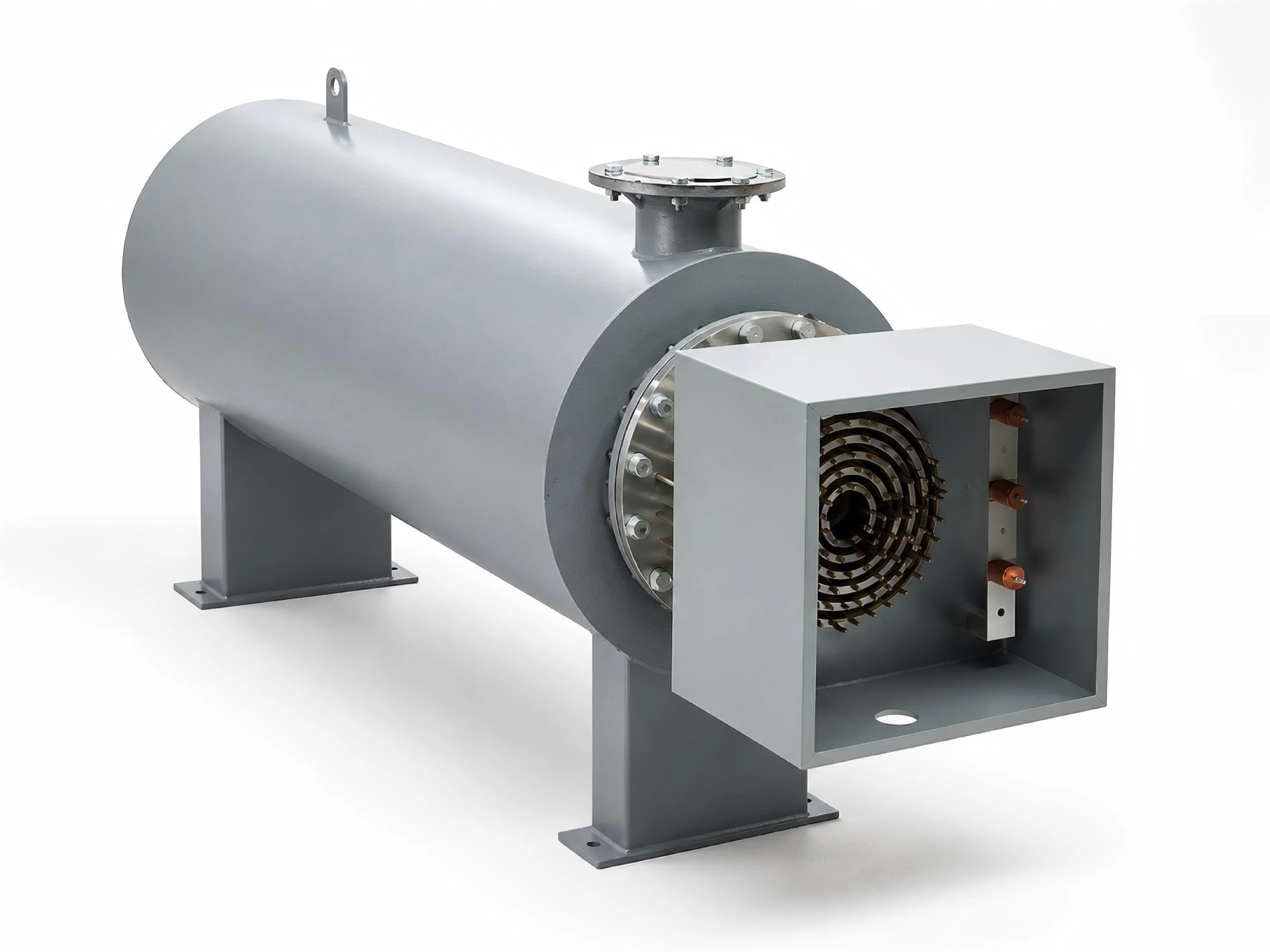
The Electric Air Heater is a custom industrial unit used to heat clean air, process air or recirculated air before the air enters a dryer, oven, production line, ventilation section or other process equipment. The heater is selected according to airflow, inlet temperature, required outlet temperature, allowable pressure drop and operating pressure.
A typical unit includes a heater housing, electric heating element assembly, inlet and outlet connections, thermal insulation, terminal box, temperature sensors and mounting supports. Depending on the project, it can also include a control cabinet, SCR power regulation, fan interlock, differential-pressure switch, valves, instruments and system piping.
This page focuses on general industrial process-air heating. For large-volume, low-pressure ventilation ducts, the Electric Duct Heater is normally the more direct selection. For pressure-bearing nitrogen, compressed air or other process gases in a closed pipeline, the Electric Inline Process Gas Heater should be considered.
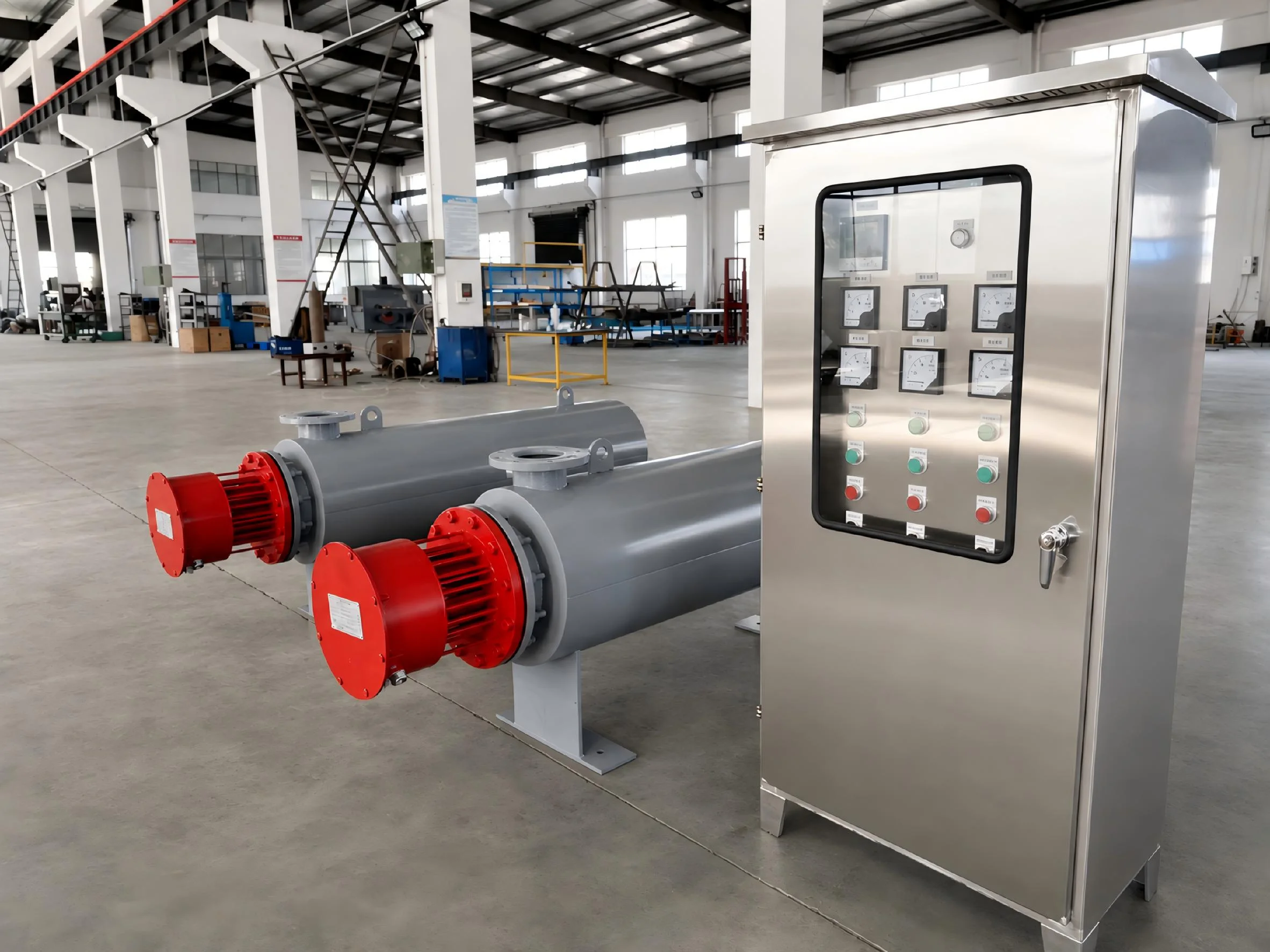
Xiangyuan Machinery can supply the air heater as a standalone heating unit, a heater with an independent control cabinet, or an integrated air-heating package prepared for connection to the customer’s fan, ductwork or production equipment.
Key Features
Custom Heating Duty
Heating power is calculated from airflow, inlet temperature, target outlet temperature and operating conditions.
Airflow-Oriented Design
Housing dimensions, internal air passage and element arrangement are selected to balance heat transfer and allowable pressure drop.
Multiple Element Materials
SS304, SS310S, Incoloy 800, Incoloy 840 and selected alloys are available according to temperature and air composition.
Stable Outlet Temperature
PID control, SCR regulation or staged power control can be used to maintain the required process-air temperature.
Flexible Installation
Inline, duct-connected, horizontal, vertical and equipment-integrated arrangements can be engineered for the site layout.
Insulated Heater Housing
Thermal insulation and external cladding can be supplied to reduce surface heat loss and improve site protection.
Control-System Integration
The heater can interface with fans, PLC systems, DCS signals and upstream or downstream process equipment.
Airflow Safety Interlocks
Fan status, airflow or differential-pressure signals can be interlocked with heater startup and shutdown.
Standalone or Packaged Supply
Supply scope can include the heater only, a heater with control cabinet, or an integrated air-heating package.
Typical Technical Parameters
The following parameters are for reference only. Final design is confirmed according to the operating medium, temperature, dimensions and project requirements.
| Parameter | Customizable Range or Options |
|---|---|
| Product Name | Electric Air Heater |
| Heating Medium | Clean air, process air or recirculated air |
| Heating Power | Typically 2 kW to 2000 kW, or engineered according to required heating duty |
| Inlet / Outlet Temperature | Customized according to inlet condition, target outlet temperature and continuous operating requirement |
| Airflow | Provide the airflow in m³/h or Nm³/h, or the mass flow rate, together with the corresponding pressure and temperature conditions. |
| Working Pressure | Low-pressure airflow or pressure-bearing construction according to the air system |
| Allowable Pressure Drop | Calculated according to fan capacity, duct size, element arrangement and process limits |
| Installation | Inline, duct-connected, horizontal, vertical or equipment-integrated |
| Connection | Flange, rectangular duct connection or custom interface |
| Housing Material | Carbon steel, SS304, SS316L or selected material according to air composition and site environment |
| Heating Element Material | SS304, SS310S, Incoloy 800, Incoloy 840 or selected alloy |
| Control Method | PID control, SCR power regulation, staged control or PLC control |
| Power Supply | 380-415 V, three-phase, 50/60 Hz, or customized for project requirements |
| Protection Options | Over-temperature protection, fan or airflow interlock, differential-pressure monitoring, phase-loss and phase-sequence protection, earth-leakage protection, grounding and emergency stop |
| Optional Supply | Control cabinet, temperature sensors, insulated housing, support frame, system piping and explosion-proof design where applicable |
Structure, Materials, Control and Safety
Structure of the Heater
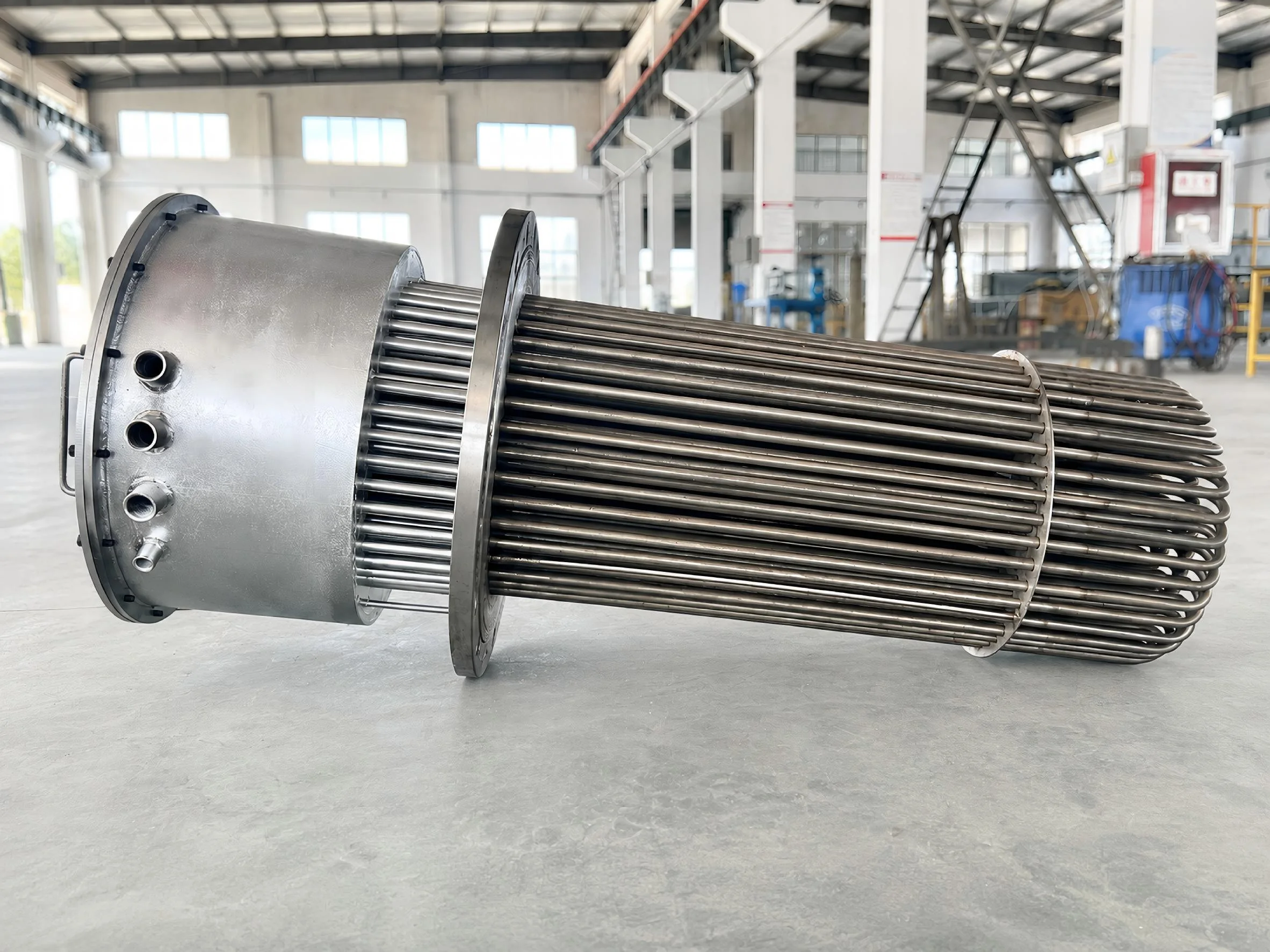
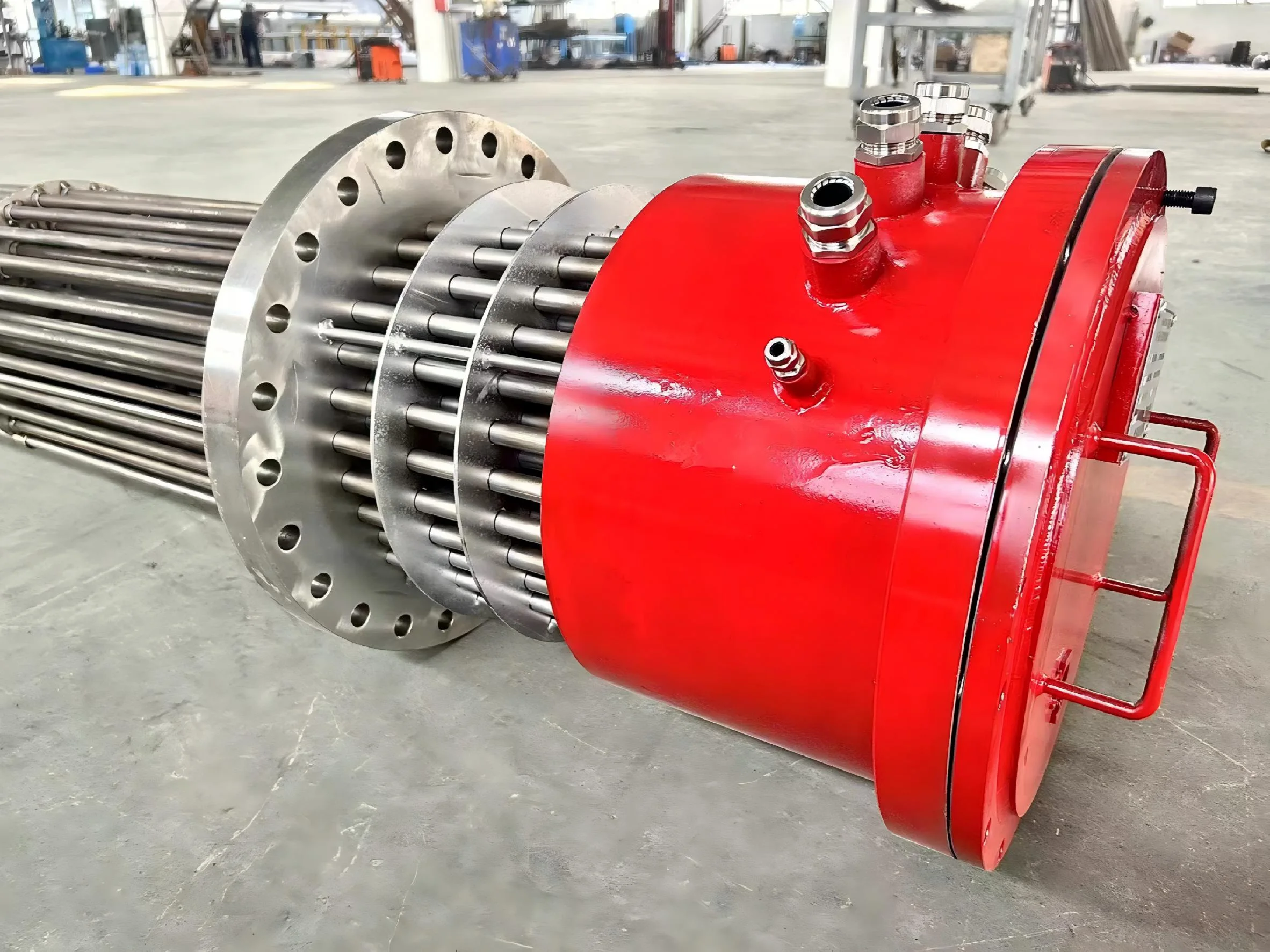
The Electric Air Heater is normally built around a fabricated housing or pressure-bearing shell with an inlet, an outlet and an internal electric heating element assembly. The element arrangement is selected to provide sufficient heat-transfer area while keeping the air passage open and the pressure drop within the system limit.
A typical structure can include a carbon-steel or stainless-steel housing, tubular or finned tubular heating elements, element support plates, terminal box, thermal insulation, external cladding, temperature sensors, lifting points and mounting supports. Flanged removable element bundles can be used when maintenance access is required.
For equipment-integrated projects, the heater can also be supplied with a transition section, fan connection, duct interface, control cabinet, differential-pressure instrument and supporting frame. The final arrangement is confirmed according to airflow direction, installation space and maintenance access.
Materials and Customization
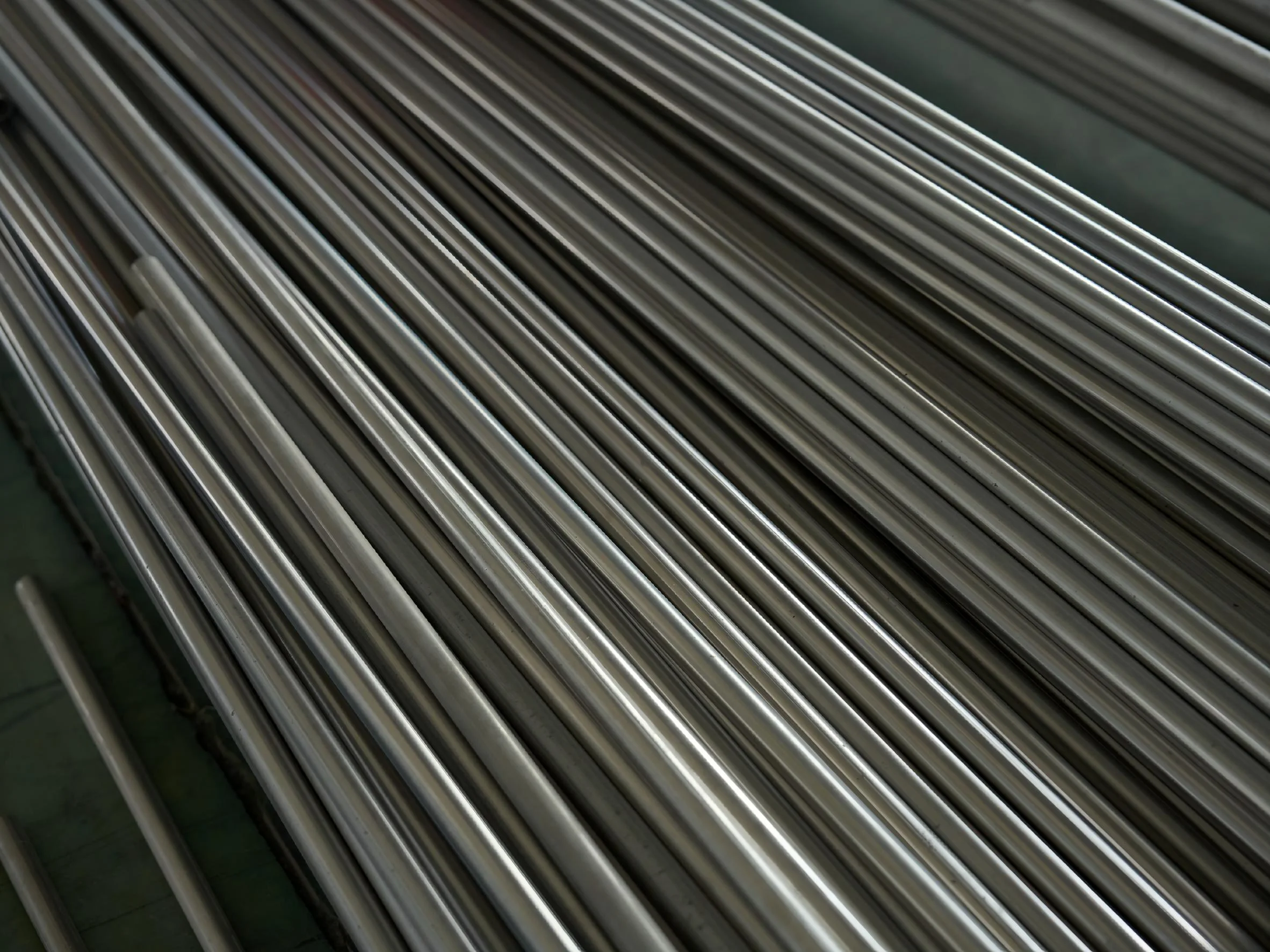
Material selection depends on outlet temperature, air cleanliness, humidity, dust content, corrosive components and operating environment. Carbon steel can be used for the external housing under suitable conditions. SS304 or SS316L can be selected for improved corrosion resistance, while SS310S, Incoloy 800, Incoloy 840 or selected alloys can be considered for heating elements exposed to higher temperatures.
The heater can be customized in heating power, housing shape, connection size, element diameter, element arrangement, insulation thickness, terminal-box direction, mounting orientation and maintenance method. The design should be confirmed from the actual process data rather than selected only by nominal power.
Where air contains moisture, dust, solvent vapor or corrosive components, the customer should provide the composition and concentration so that material compatibility, surface temperature and protection requirements can be evaluated.
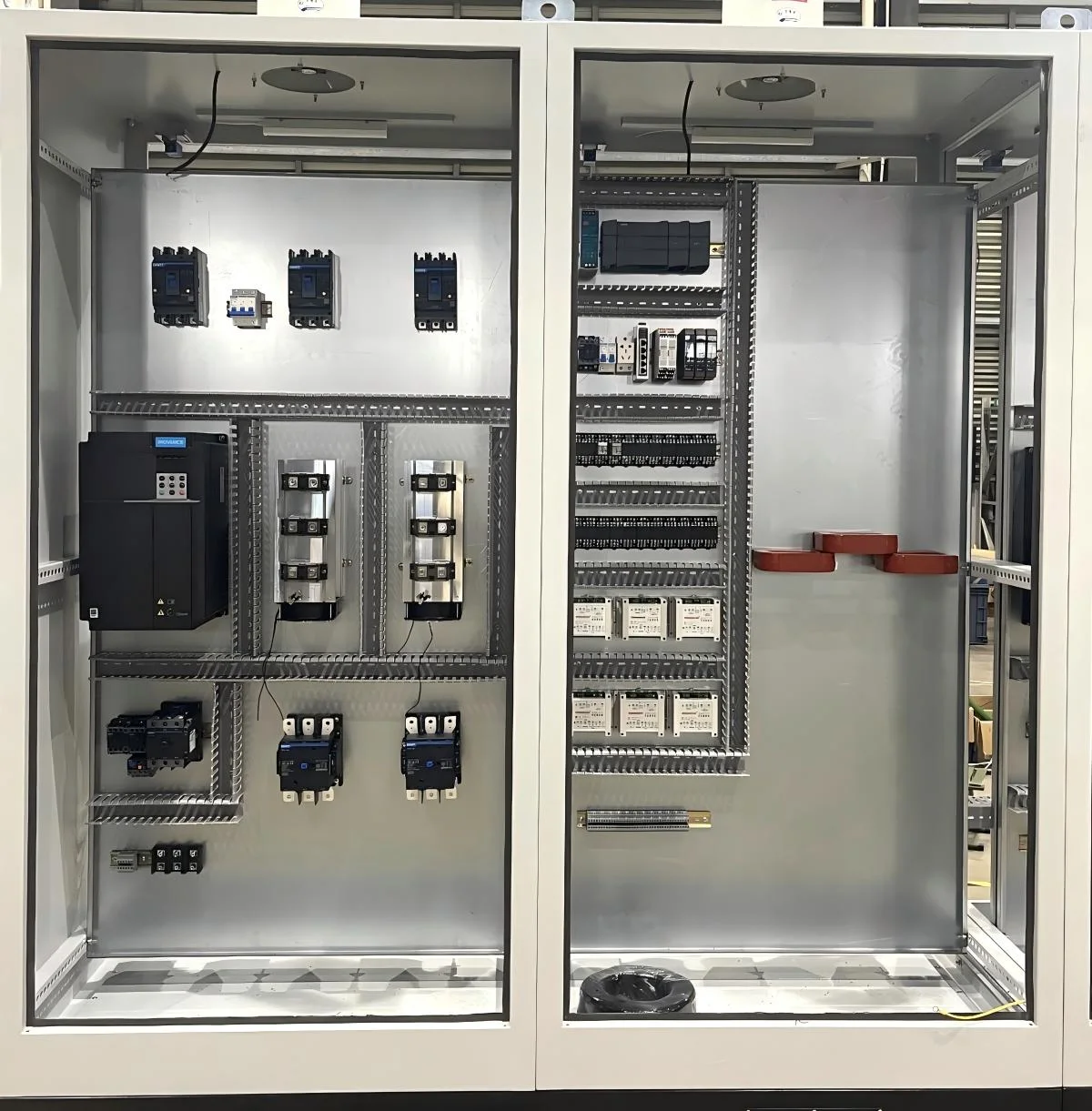
Control System
The Electric Air Heater can be operated by an independent control cabinet or connected to the customer’s PLC or DCS. Common control options include PID temperature control, SCR power regulation, contactor-based staged control, local/remote operation and HMI display.
The primary control signal is normally based on outlet-air temperature. Inlet temperature, heating-element sheath temperature or downstream process temperature can also be monitored where required. Multiple heating stages can be sequenced to match changing airflow and process load.
The control logic can include fan-start confirmation before heater energization, power reduction when airflow decreases, alarm output, remote start/stop, operating-status feedback and delayed fan shutdown for heater cooldown.
Safety Protection
Safety protection should be matched to the airflow and installation method. Typical functions include independent over-temperature protection, fan interlock, airflow switch or differential-pressure monitoring, phase protection, leakage protection, grounding protection and emergency stop.
The heater should not be energized without confirmed airflow. For systems with large thermal inertia, the fan can continue running after power shutdown to remove residual heat. Element-sheath temperature monitoring can be added for high-temperature or variable-flow applications.
For hazardous-area projects, explosion-proof terminal-box and heater configurations can be evaluated according to the confirmed site classification. Certification requirements for the destination market should be confirmed before quotation and final design.
Typical Applications
Industrial Drying Systems
Heating process air for material, component or surface drying.
Hot-Air Circulation Ovens
Supplying controlled heated air to ovens and recirculation loops.
Coating and Paint Drying
Preheating or maintaining drying air for coating and finishing lines.
Powder and Granule Processing
Providing process air for drying, fluidization or temperature conditioning.
Packaging and Printing Lines
Heating air for ink drying, film processing and production-line temperature control.
Electronics Manufacturing
Clean process-air heating for component drying and controlled production steps.
Chemical Process Air
Preheating compatible process air before reactors, dryers or treatment equipment.
Ventilation Air Preheating
Raising incoming industrial ventilation air to the required process temperature.
Combustion Air Preheating
Electric preheating of combustion-support air where process conditions allow.
Environmental Equipment
Heating air before adsorption, desorption, regeneration or emission-treatment sections.
Freeze Protection and Warm-Up
Providing heated air for equipment startup and low-temperature site conditions.
Custom Production Equipment
Integration into machinery requiring a stable source of heated process air.
How to Select the Right Electric Air Heater
1. Airflow
Provide m³/h, Nm³/h or mass flow under the stated operating condition.
2. Inlet Temperature
State the minimum, normal and maximum inlet-air temperature.
3. Required Outlet Temperature
Provide the target temperature and allowable control tolerance.
4. Working Pressure
Confirm whether the system is atmospheric, low-pressure or pressure-bearing.
5. Allowable Pressure Drop
State the maximum pressure loss permitted by the fan or process system.
6. Air Composition
Describe humidity, dust, oil mist, solvent vapor or corrosive components.
7. Operating Mode
Confirm continuous, intermittent, cyclic or variable-load operation.
8. Power Supply
Provide voltage, phase, frequency and available electrical capacity.
9. Installation Method
Choose inline, duct-connected, horizontal, vertical or equipment-integrated installation.
10. Connection Size
Provide flange standard, pipe diameter or rectangular duct dimensions.
11. Site Space
Provide layout limits, airflow direction and maintenance-access requirements.
12. Housing and Element Materials
State corrosion, cleanliness or high-temperature material requirements.
13. Control Method
Confirm PID, SCR, staged control, PLC, HMI or DCS interface requirements.
14. Safety Interlocks
Specify fan, airflow, differential-pressure, over-temperature and emergency-stop signals.
15. Site Classification
Provide indoor or outdoor conditions, ambient temperature, IP requirement and hazardous-area classification where applicable.
Frequently Asked Questions
Common questions about Electric Air Heater selection, customization and industrial use.
What is an Electric Air Heater?
How is it different from an Electric Duct Heater or Electric Inline Process Gas Heater?
What information is required to select the heater?
Can the heater be supplied with a control cabinet?
Can high-temperature or explosion-proof designs be provided?
What is an industrial electric air heater used for?
Can the Electric Air Heater be supplied as a standalone unit for OEM equipment or production lines?
Related Heating Solutions
For large-volume, low-pressure ventilation and drying ducts, see Electric Duct Heater . For pressure-bearing compressed-air heating applications, see Electric Compressed Air Heater . For replaceable air-heating components used in ducts, ovens and dryers, see Finned Tubular Heating Element .
Why Choose Xiangyuan Machinery
Xiangyuan Machinery designs and manufactures industrial electric heaters, heating elements and control systems for customized process conditions. Each Electric Air Heater is selected around the customer’s airflow, temperature rise, pressure condition, material requirement and installation layout.
Thermal & Material Engineering
Custom thermal design based on airflow, inlet temperature, outlet temperature and operating pressure. Experience with air heaters, process-gas heaters, duct heaters and tubular heating elements.
Flexible Mechanical Arrangement
Material options including carbon steel, SS304, SS316L, SS310S, Incoloy 800 and Incoloy 840 where suitable.
Control & Safety Integration
Control options covering PID, SCR, staged control, PLC, HMI and remote signal interfaces. Airflow, temperature and electrical-protection logic can be integrated into the control scheme.
Complete Project Supply
Flexible supply scope: heater only, heater with control cabinet, or an integrated air-heating package. Manufacturing inspection, electrical testing and technical documentation can be prepared according to the project scope.
Request an Electric Air Heater Quote
Send the airflow, inlet and outlet temperatures, operating pressure, air composition, power supply and installation requirements. Xiangyuan Machinery will prepare a suitable technical proposal and quotation.