Thermal & Electrical Engineering
Power, voltage, resistance and heated length are matched to the required furnace duty and available power supply.


ELECTRIC HEATING ELEMENTS
Xiangyuan Machinery manufactures custom electric radiant tube heaters for industrial furnaces, heat-treatment equipment, drying kilns and other thermal-processing systems.
The resistance heating assembly is installed inside a heat-resistant metal radiant tube. Heat is transferred to the outer tube and then radiated into the furnace chamber or toward the workpiece, providing stable indirect electric heating while protecting the internal heating element.
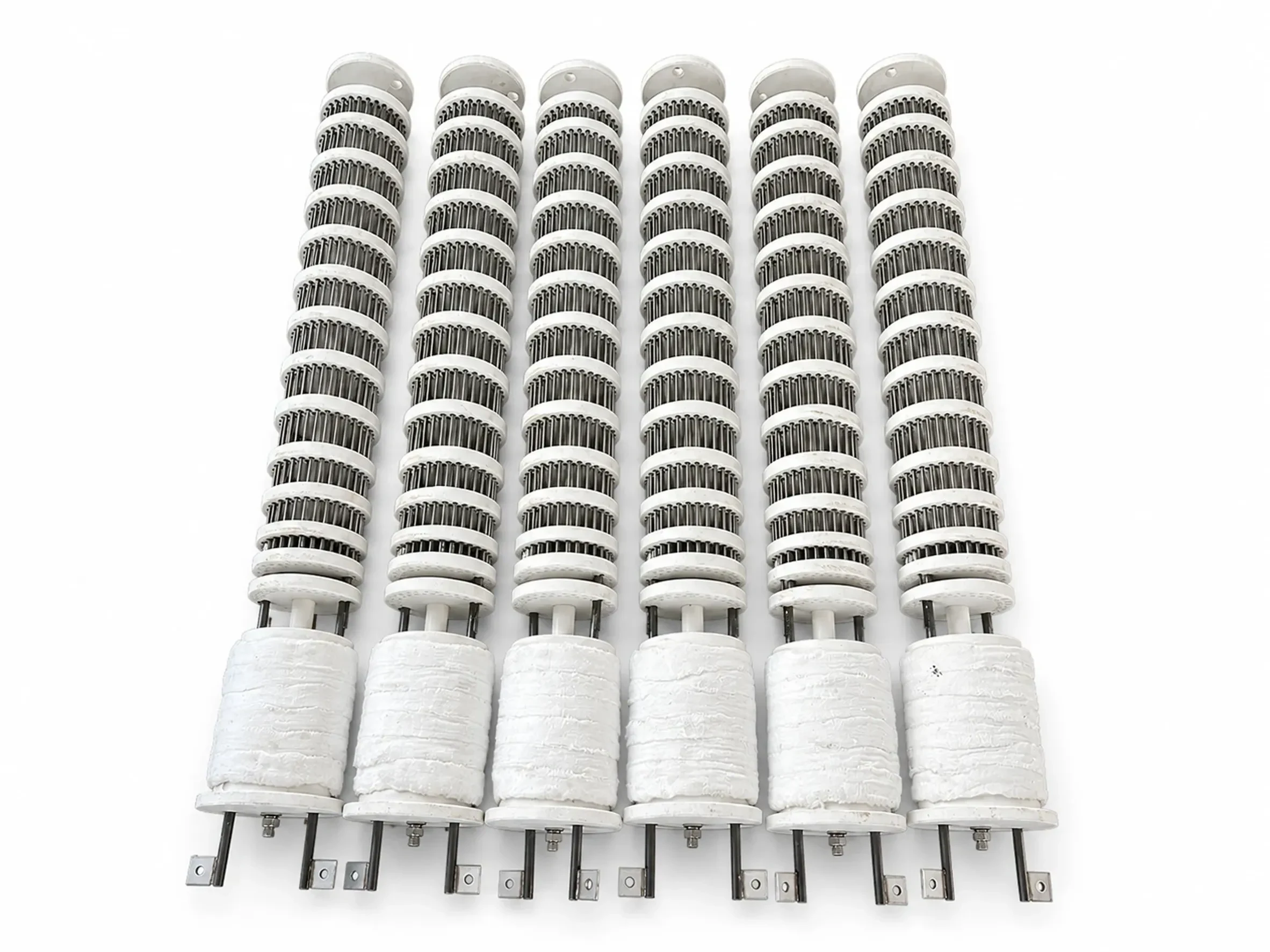
An Electric Radiant Tube Heater is an industrial resistance heating assembly designed for indirect radiant heating inside furnaces and thermal-processing equipment. The internal heating element is supported and electrically insulated inside a heat-resistant metal radiant tube.
During operation, electrical energy is converted into heat by the resistance element. Heat is transferred to the radiant tube surface and then radiated into the furnace chamber or toward the workpiece.
Power, voltage, tube diameter, heated length, flange arrangement and terminal direction can be engineered according to furnace temperature, atmosphere, installation space and process requirements.
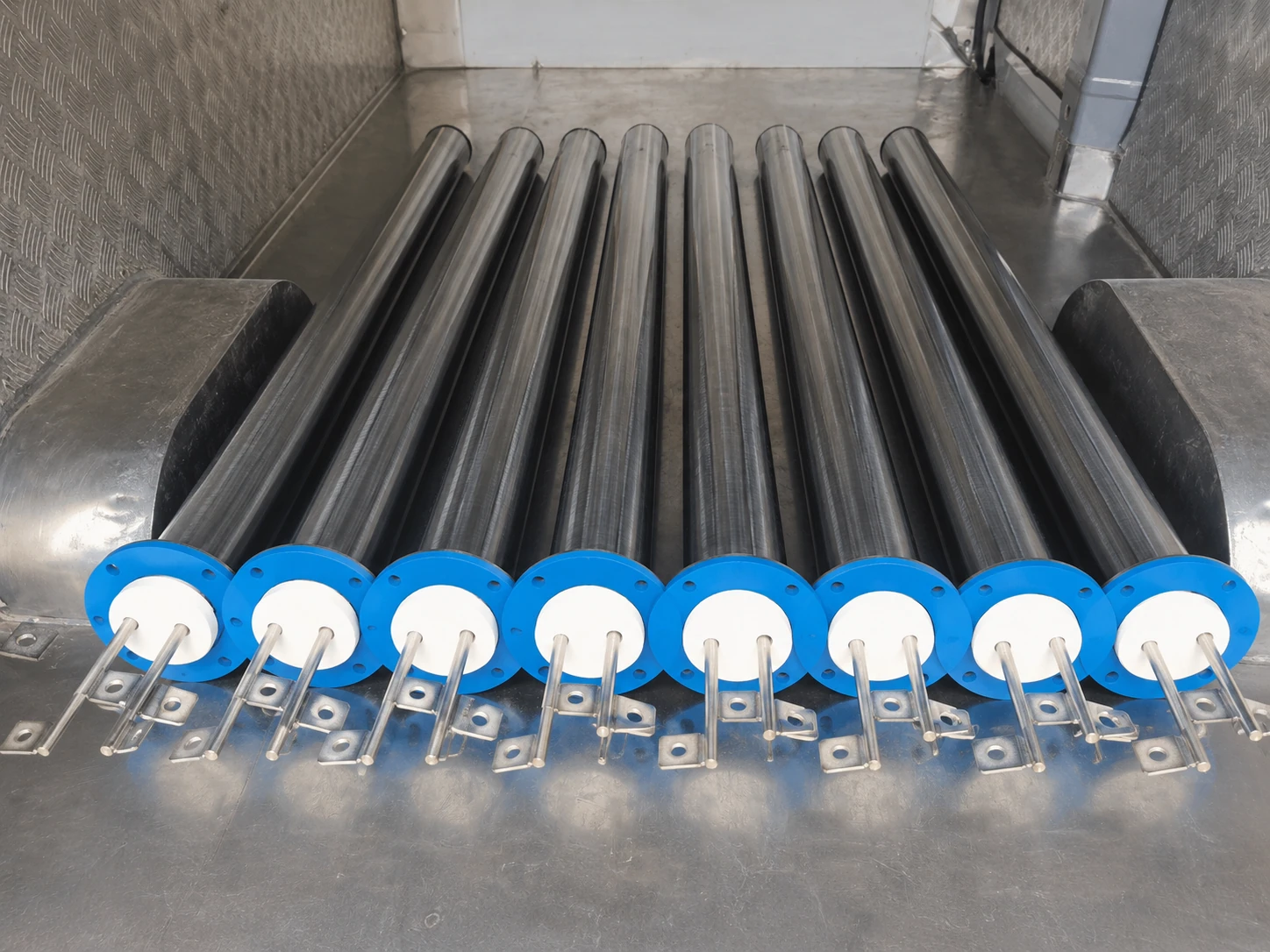
The long radiant-tube surface provides stable indirect heat transfer into the furnace chamber.
Nickel-chromium resistance material can be used as the heating element for high-temperature furnace service.
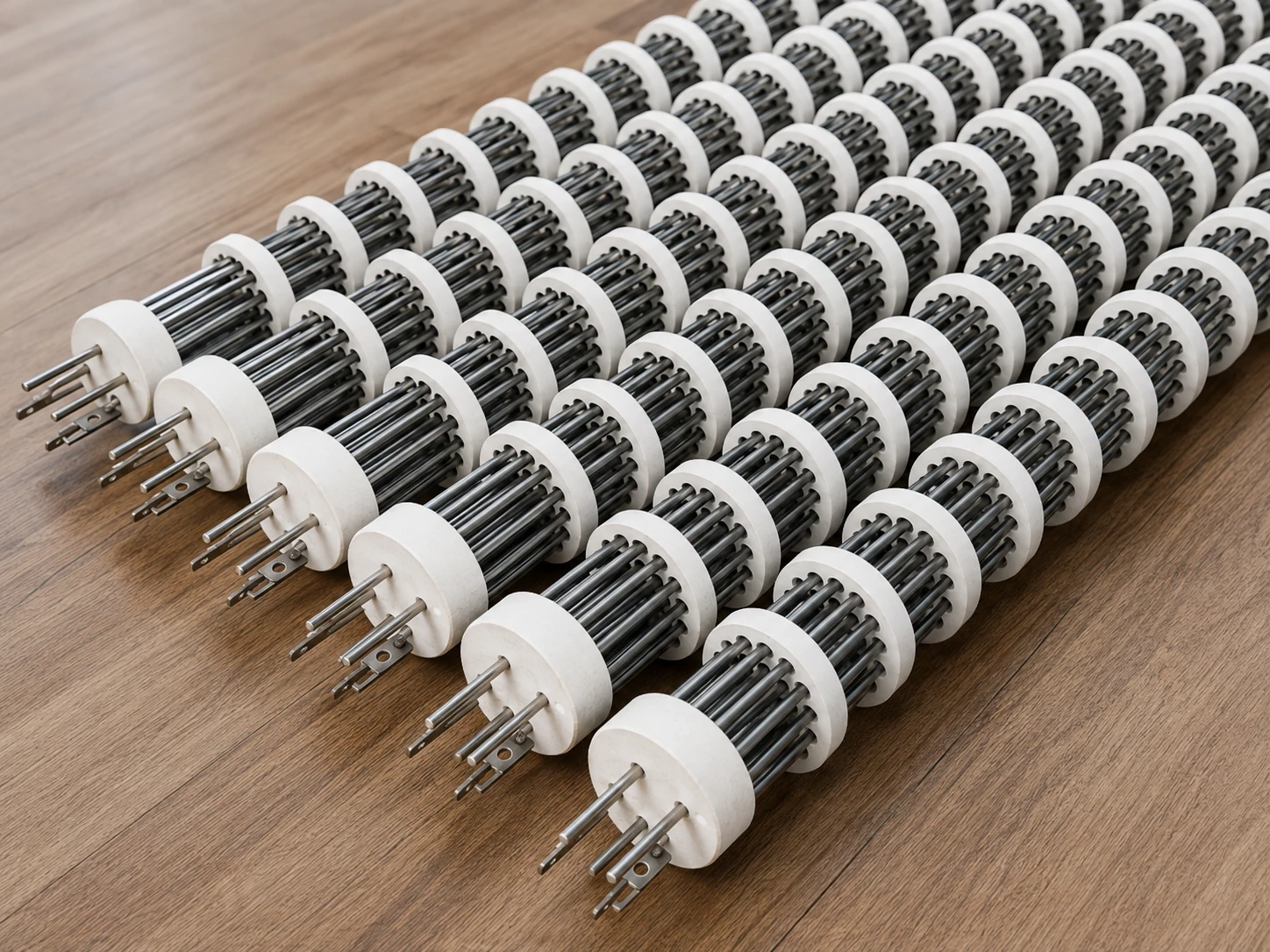
Ceramic supports position the internal heating element and electrically isolate it from the outer metal tube.
Heat-resistant stainless steel tube materials are selected according to furnace temperature and atmosphere.
Power, voltage and resistance are engineered according to the required furnace heat duty and available power supply.
Tube diameter, wall thickness, heated length and overall length can be customized according to the furnace layout.
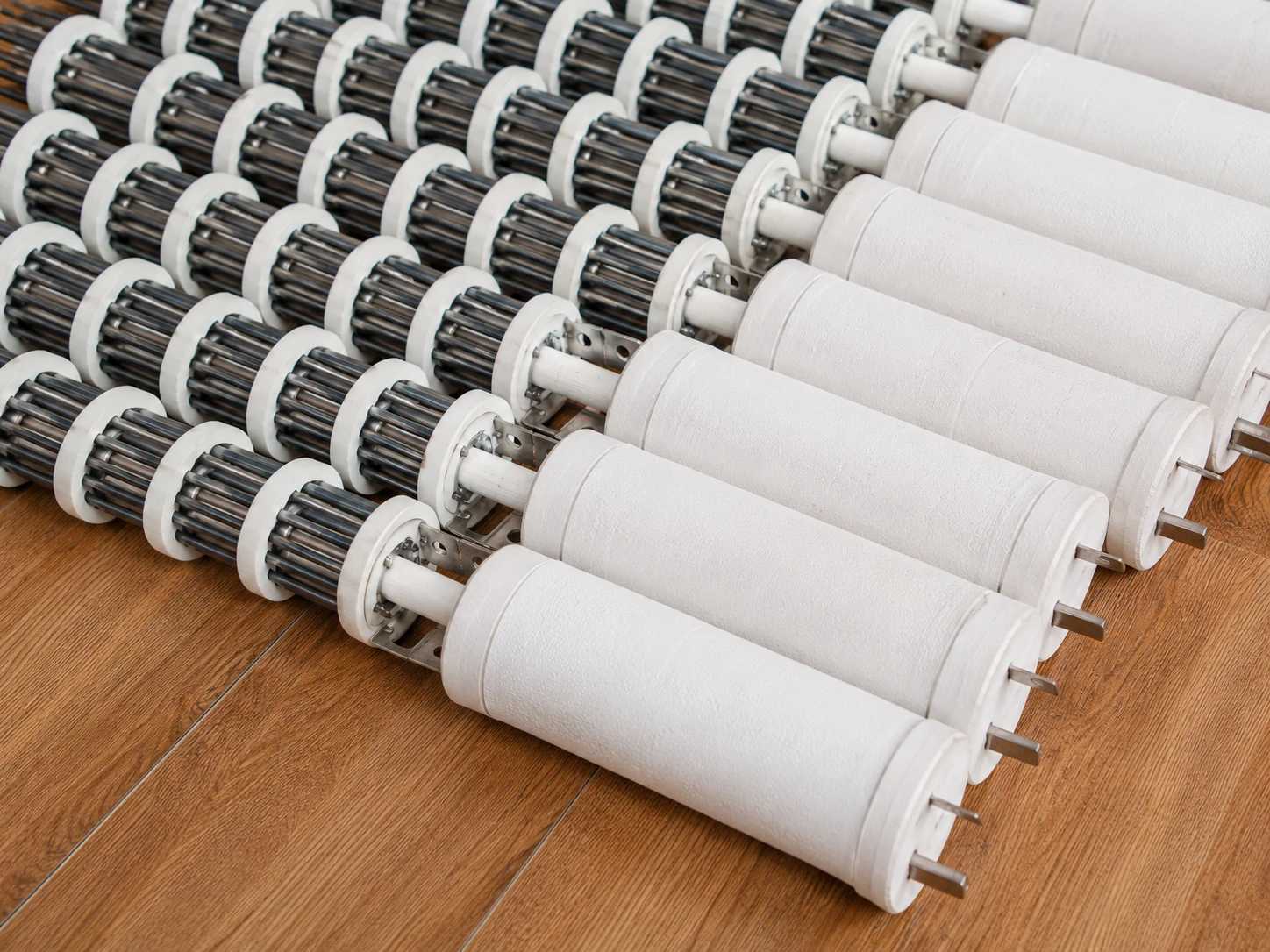
Flanged mounting supports installation from outside the furnace and simplifies removal for maintenance.
Configurations can be evaluated for air, nitrogen and other compatible furnace atmospheres after process review.
Dimensions, flange, terminal arrangement and electrical data are confirmed from approved project requirements or drawings.
The following data are for reference model RT-30-220-S only. Other electrical ratings, dimensions and materials can be engineered according to project requirements.
| Parameter | Reference Specification |
|---|---|
| Reference Model | RT-30-220-S |
| Rated Power | 30 kW (+5% / -10%) |
| Rated Voltage | 220 V AC / single-phase / 50 Hz |
| Connection | Single-phase direct connection |
| Heating Element | Cr20Ni80 |
| Cold Resistance at 20 °C | 1.61 Ω ± 5% |
| Cold Current | 136.4 A |
| Hot Resistance at 750 °C | ≈ 1.77 Ω |
| Hot Current | ≈ 124 A |
| Radiant Tube Surface Temperature | 750 °C continuous; up to 850 °C short-term |
| Maximum Heating-Element Temperature | 1100 °C |
| Radiant Tube Material | 310S (0Cr25Ni20) |
| Radiant Tube Outside Diameter | Φ168 mm |
| Tube Wall Thickness | 8 mm |
| Effective Heated Length | 2200 mm |
| Overall Length | ≈ 2800 mm |
| Cold Insulation Resistance | ≥ 500 MΩ at 500 V DC |
| Hot Insulation Resistance | ≥ 1 MΩ |
| Dielectric Strength | 1500 V AC / 1 min, no breakdown |
| Reference Weight | ≈ 65 kg |
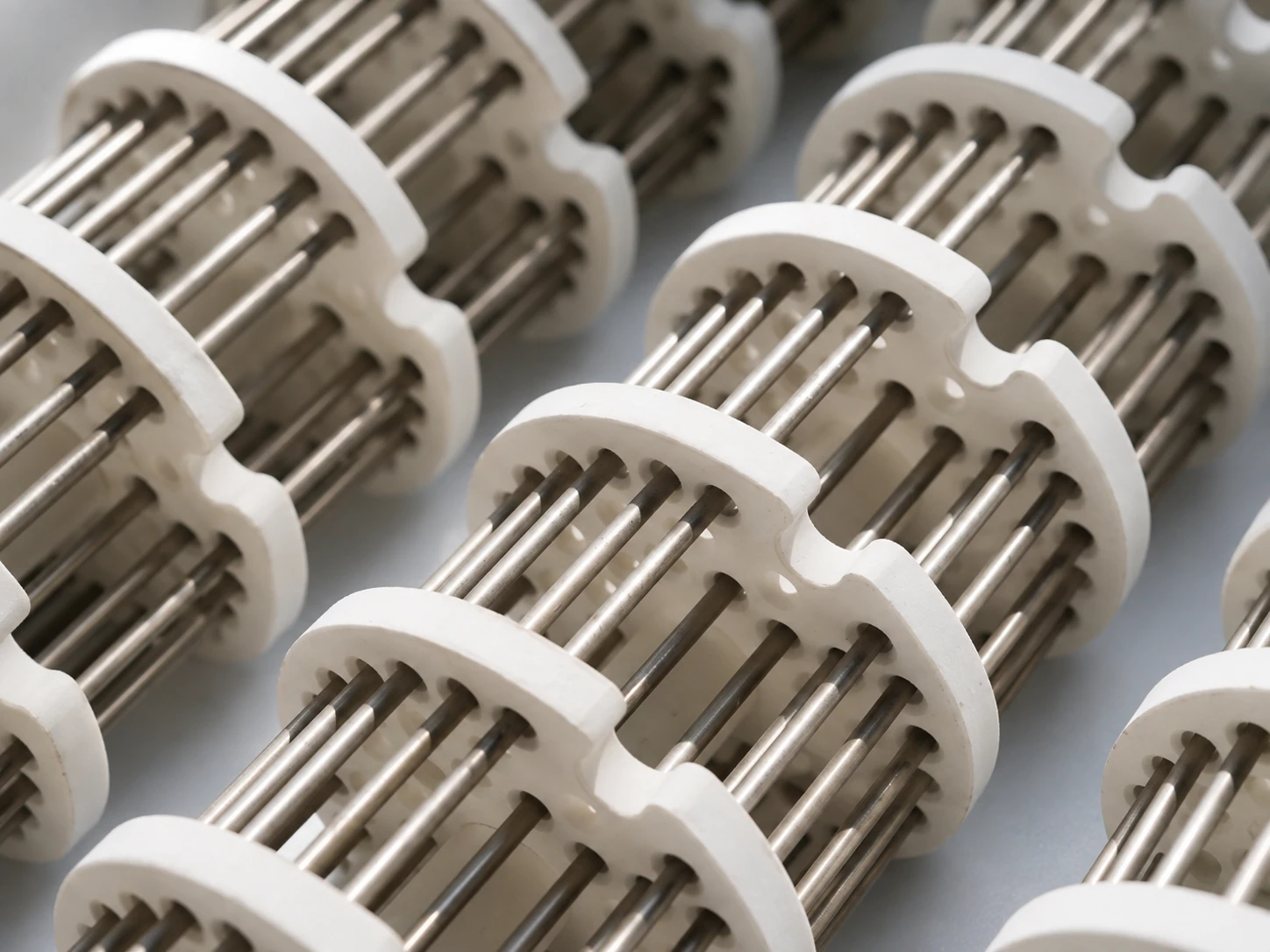
A typical electric radiant tube heater includes:
The internal resistance element generates heat and is supported by ceramic insulation. Heat is transferred to the outer radiant tube and then radiated into the furnace chamber or toward the workpiece.
Material selection depends on furnace temperature, atmosphere, oxidation conditions and expected service life.
For the RT-30-220-S reference configuration:
– Heating element: Cr20Ni80
– Radiant tube: 310S heat-resistant stainless steel
– Radiant tube outside diameter: Φ168 mm
– Tube wall thickness: 8 mm
Tube diameter, wall thickness, heated length, overall length, flange dimensions, terminal arrangement and electrical rating can be customized after the furnace design and process conditions are confirmed.
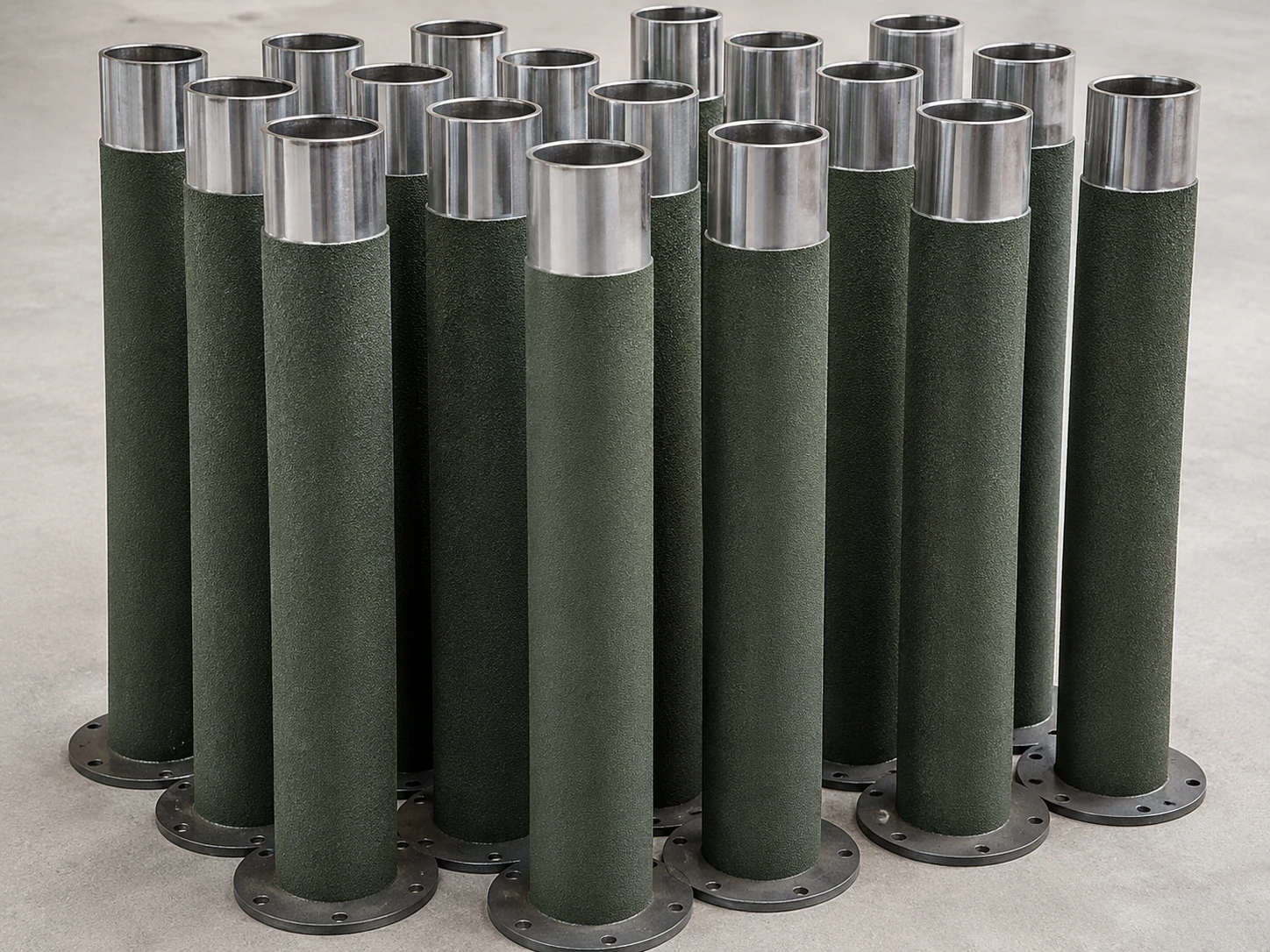
Electric radiant tube heaters are resistance heating devices and should be operated through a properly rated electrical control circuit. Temperature control and power switching are configured according to the furnace system and project requirements.
Control options can include:
– Thermostat or temperature controller
– PID temperature control
– SCR / thyristor power regulation
– Contactor or staged switching
– Current monitoring
– Independent over-temperature cutoff
– PLC or furnace control cabinet integration
The radiant tube metal housing must be reliably connected to protective earth. Electrical work should be carried out only after the upstream power supply has been isolated and verified de-energized.
Recommended protection can include:
– Over-current protection
– Short-circuit protection
– Independent over-temperature cutoff
– Current monitoring
– Protective grounding
– High-temperature terminal protection
– Individual branch protection for multiple heaters
– Adequate terminal-area cooling and maintenance clearance
Radiant heating for annealing, tempering, aging and other controlled heat-treatment processes.
Providing stable radiant heat for metal annealing processes requiring controlled furnace temperature.
Electric radiant heating for controlled reheating and tempering of metal components.
Radiant heating for industrial drying, curing and thermal-conditioning processes.
Configurations can be evaluated for air, nitrogen and other compatible controlled furnace atmospheres.
Radiant heating for continuous production lines where stable thermal input is required along the furnace section.
Electric radiant heating for batch-operated furnaces with cyclic heating and cooling requirements.
Indirect electric heating for industrial ovens used in production, drying or thermal treatment.
Radiant heating for metal-processing equipment requiring controlled non-contact thermal input.
Replacement or customized radiant tube heaters for existing furnace upgrades and heating-system retrofits.
Custom radiant tube heaters for furnace manufacturers and industrial heating-equipment builders.
Customized radiant heating for other compatible high-temperature industrial equipment after process review.
Provide the furnace type and main heating process.
State the normal operating temperature and maximum furnace temperature.
Provide the required heater power or calculated furnace heat load.
Confirm whether the furnace operates in air, nitrogen or another controlled atmosphere, and identify corrosive or combustible components where applicable.
Provide voltage, phase and frequency.
Provide the required outside diameter or available furnace-wall opening.
State the required heated length inside the furnace.
Confirm the required overall length and available external installation space.
Provide flange diameter, bolt-hole arrangement and furnace-wall mounting requirements.
Confirm the insertion depth and position of the heated section inside the furnace.
State the required terminal direction and available maintenance clearance outside the furnace.
Confirm the temperature sensor type, control point and required temperature-control method.
Confirm contactor switching, staged control, SCR/thyristor regulation or other project-specific requirements.
Confirm over-temperature protection, current monitoring, grounding and other required electrical protection.
Supply the drawing, tolerances, quantity, inspection and testing requirements.
Xiangyuan Machinery designs and manufactures industrial electric heaters, heating elements and control systems for customized process conditions. Each Electric Radiant Tube Heater is engineered around furnace temperature, atmosphere, thermal duty, installation dimensions and electrical requirements.
Power, voltage, resistance and heated length are matched to the required furnace duty and available power supply.
Radiant-tube and heating-element materials are selected according to furnace temperature, atmosphere and expected operating conditions.
Tube diameter, flange, insertion depth, terminal orientation and maintenance access can be customized according to the furnace layout.
Electrical resistance, insulation performance, dimensions and connection requirements can be checked according to the confirmed product specification before shipment.
Send us your furnace temperature, atmosphere, required power, voltage, radiant-tube dimensions, heated length, flange arrangement and installation requirements. Xiangyuan Machinery can prepare a technical proposal and quotation according to the confirmed operating conditions.